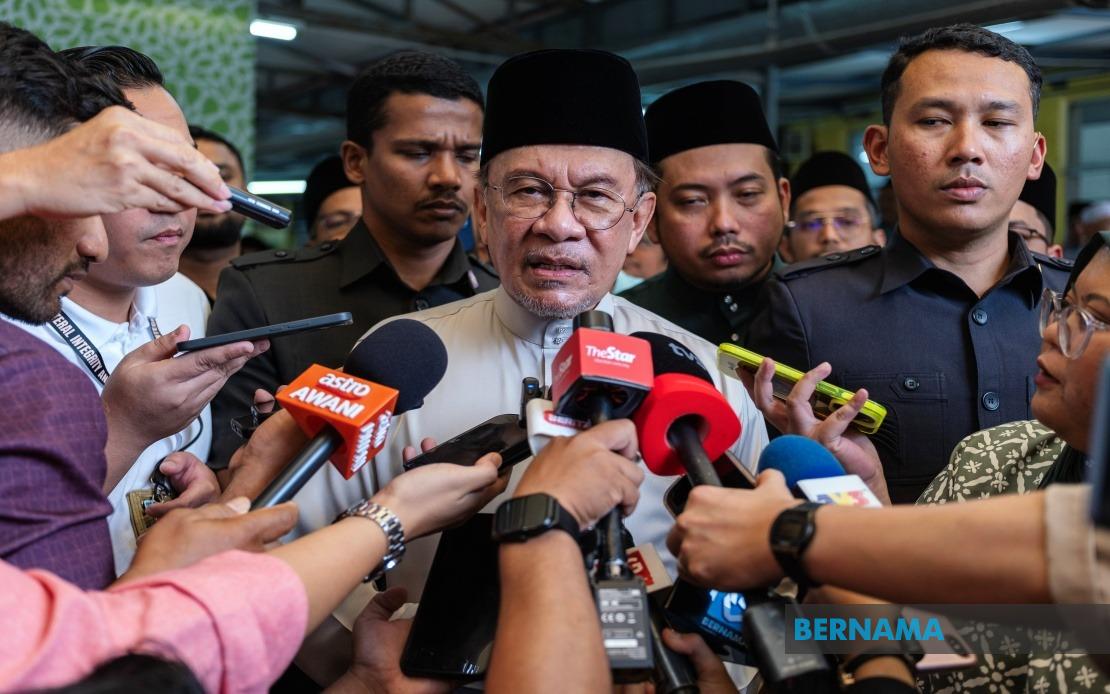
Malaysia will not deviate from its legal position regarding fugitive businessman Low Taek Jho, commonly known as Jho Low, regardless of whether the United States grants him clemency, Prime Minister Datuk Seri Anwar Ibrahim declared on Friday. Speaking after prayers at Taman Kobena, the premier underscored that while Washington's decisions concerning pardons are strictly internal matters, Malaysia's commitment to legal accountability transcends international considerations and political developments.
Anwar's statement comes as international news outlets reported that Jho Low stands among approximately 250 individuals potentially under consideration for presidential clemency by Donald Trump as the United States marks its 250th Independence Day. The timing of such speculation—coinciding with America's national celebrations—intensifies scrutiny on whether the Malaysian fugitive might feature in any pardon announcements. However, Kuala Lumpur has signalled unambiguously that external pressures or diplomatic niceties will not compromise its pursuit of justice.
The prime minister's remarks carry particular weight given Malaysia's extensive legal proceedings against Jho Low, who remains at the centre of investigations into massive financial irregularities linked to the 1Malaysia Development Berhad scandal. The businessman's whereabouts remain unknown, and multiple jurisdictions have sought his extradition and prosecution. By explicitly stating that Malaysia will neither be "influenced, disturbed or affected" by US decisions, Anwar positioned the country's judicial independence as paramount, signalling that rule of law principles supersede diplomatic considerations or the actions of foreign governments.
The Low affair represents one of Malaysia's most complex cross-border legal challenges, involving allegations of embezzlement, money laundering, and asset misappropriation spanning billions of ringgit. The case has implicated financial institutions across multiple continents and prompted regulatory reforms globally. Should the United States grant clemency, it would not invalidate Malaysia's legal claims or outstanding warrants, though it would complicate extradition efforts significantly. The government's emphatic reaffirmation suggests awareness that any ambiguity could be misinterpreted as wavering commitment.
Malaysia's position reflects broader principles increasingly asserted by regional governments concerning judicial sovereignty. As cross-border crime investigations proliferate and international cooperation intensifies, maintaining independent prosecutorial pathways becomes crucial for smaller nations seeking to prevent wealthy suspects from exploiting jurisdictional fragmentation. Jho Low's alleged ability to evade capture across multiple territories—reportedly through sophisticated networks and financial resources—exemplifies vulnerabilities that countries like Malaysia face when pursuing high-profile fugitives.
The diplomatic undertones merit consideration as well. Malaysia-US bilateral relations remain strategically important, particularly regarding regional security, economic partnerships, and maritime concerns in the South China Sea. By framing any US pardon as an "internal matter" while simultaneously reiterating Malaysia's independent stance, Anwar navigated a delicate balance. The formulation respects American sovereignty while establishing clear boundaries around Malaysian interests, preventing potential misinterpretation that acceptance of US clemency decisions implies Malaysia's acquiescence.
Historically, Malaysia has demonstrated persistence in pursuing significant financial crimes, particularly those threatening institutional credibility and public trust. The 1MDB investigation catalysed unprecedented international cooperation, recovering substantial assets and prompting legislative reforms. Jho Low's continued fugitive status represents an unfinished chapter that successive administrations have maintained focus upon. The current government's explicit reiteration suggests no change in this priority, signalling both domestically and internationally that accountability remains non-negotiable.
Beyond the Jho Low matter, Anwar separately announced that the United States has proposed contributing RM1 million toward restoring Tugu Negara, the National Monument, as part of next year's National Day commemoration. The premier indicated the proposal would receive Cabinet consideration at the following week's meeting. This initiative, while distinct from the pardon discussion, underscores the bilateral relationship's multifaceted nature, encompassing both substantial security and economic engagements alongside cultural preservation endeavours that reflect shared democratic values.
The restoration project carries symbolic significance for Malaysia, as the monument commemorates the nation's struggle for independence and sovereignty—themes resonating with the government's emphasis on judicial autonomy in the Jho Low case. International contributions to such national sites often signal respect for partner nations' historical narratives and institutional identity. The timing of this announcement, paired with Anwar's firm statements on legal matters, presents Malaysia as a country balancing international cooperation with steadfast principles.
Moving forward, Malaysia's approach to the Jho Low situation will likely establish precedent for how developing economies respond when wealthy fugitives leverage international jurisdictions and diplomatic channels. The government's public commitments create accountability mechanisms, making any future policy shifts politically costly domestically. This calculated transparency serves dual purposes: reassuring citizens that justice remains attainable and signalling to international partners that Malaysia expects consistent application of extradition principles regardless of individuals' wealth or political connections.
The broader context extends to Southeast Asia's ongoing struggle with financial crime and corruption. Malaysia's experience with the 1MDB scandal prompted regional discussions about strengthening asset recovery mechanisms, improving financial transparency, and enhancing cross-border prosecutorial cooperation. Jho Low's case—spanning multiple ASEAN nations and extending to Europe and North America—demonstrates how regional coordination remains insufficient without individual countries maintaining determined, independent positions. Anwar's statements reinforce that Malaysia intends to remain a steadfast participant in these efforts.
Ultimately, the premier's remarks represent more than mere reiteration of existing policy. They constitute a deliberate public statement that Malaysia's legal commitments transcend diplomatic expediency or the decisions of more powerful nations. In an era when multilateral pressure often shapes outcomes for countries seeking international legitimacy and investment, maintaining independence on matters of principle requires explicit, repeated affirmation. Malaysia's stance on Jho Low exemplifies this determination to preserve judicial integrity despite potential international complications.

