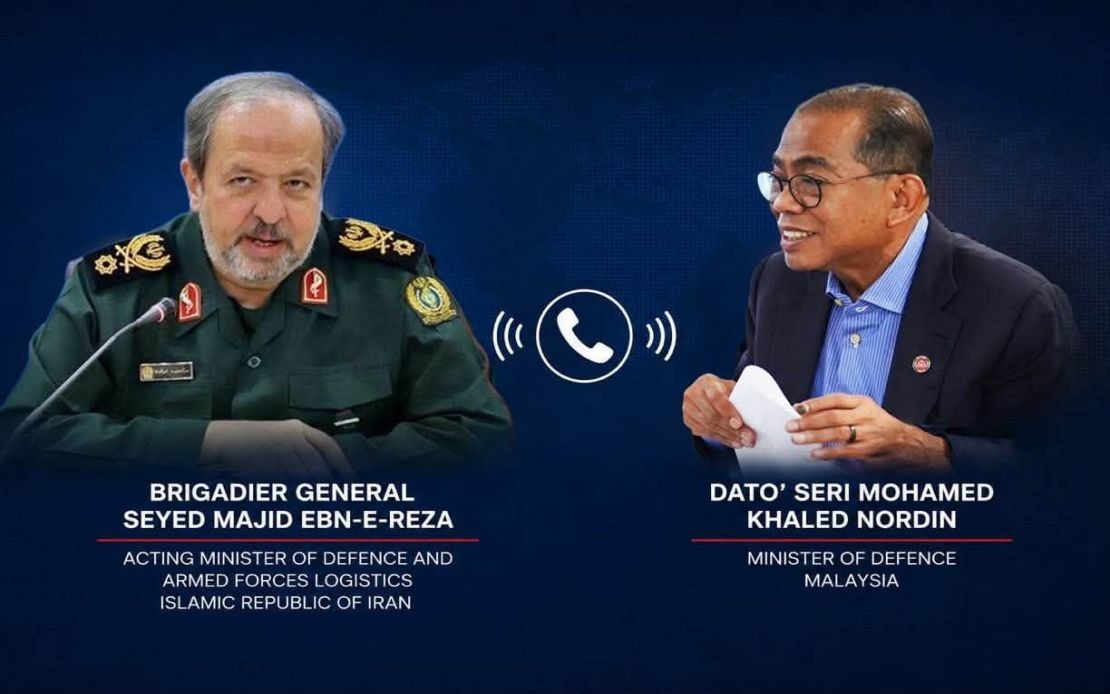
Malaysia is moving to expand its defence relationship with Iran, reflecting broader efforts to strengthen ties across the Muslim world and secure strategic regional interests. Defence Minister Datuk Seri Mohamed Khaled Nordin conveyed the country's commitment during a recent telephone conversation with Iran's Acting Minister of Defence and Armed Forces Logistics, Brigadier General Seyed Majid Ebn-e-Reza, signalling that both nations view the partnership as rooted in long-standing friendship and mutual respect.
The centrepiece of Malaysia's approach is the proposed Memorandum of Understanding on defence cooperation, which Nordin hopes will soon be formalised as a binding instrument between the two countries. Such an agreement would provide an official framework for military exchanges, intelligence sharing protocols, and coordinated training initiatives—moving defence relations beyond ad hoc engagement towards a structured, sustainable partnership. For Malaysia, which maintains a delicate balance between engagement with various regional powers while prioritising ASEAN centrality, such formal arrangements allow for deepened cooperation without compromising strategic flexibility.
A tangible opportunity to advance this relationship emerges through Iran's planned participation in next year's Langkawi International Maritime and Aerospace Exhibition, or LIMA. This premier regional defence and aerospace platform attracts military delegations, defence contractors, and government officials from across Asia and beyond. Iran's presence would not only expose Malaysian and regional defence establishments to Iranian technological capabilities and procurement interests, but also signal to the international community Malaysia's openness to inclusive regional dialogue on security matters.
The defence minister's comments also reflect Malaysia's humanitarian concerns regarding the broader West Asian conflict. Nordin explicitly conveyed Malaysia's condolences for Iranian casualties—including military personnel, security forces, and civilians—killed in ongoing regional tensions. This expression of sympathy carries diplomatic weight, positioning Malaysia as a nation that acknowledges Iran's suffering while maintaining a principled stance on conflict resolution. By doing so, Malaysia signals to both Iran and the wider international audience that it approaches regional security challenges with empathy rather than purely transactional calculation.
Critically, Nordin emphasised Malaysia's preference for diplomatic settlement over military escalation, calling for sustained ceasefire efforts and space for dialogue-based solutions. This position aligns with ASEAN's established principle of non-interference in regional conflicts while supporting peaceful resolution mechanisms. For Malaysia, maintaining this balanced stance is essential to preserving its credibility as a neutral interlocutor capable of engaging with diverse parties in regional disputes without becoming entrapped in zero-sum geopolitical competition.
The defence minister's recognition of Iran's self-reliant defence industrial base—describing the nation as having demonstrated resilience through independently developed military capabilities—underscores Malaysia's respect for Iranian sovereignty and technological achievement. This acknowledgment contrasts sharply with dismissive Western characterisations and reflects Malaysia's broader non-aligned perspective that values technological autonomy and defence self-sufficiency as legitimate national aspirations. For a developing nation like Malaysia, which itself seeks to build indigenous defence capabilities, this recognition carries particular resonance.
Malaysia's emphasis on maritime security, specifically mentioning the critical importance of safeguarding the Strait of Hormuz, reveals the practical stakes underlying the defence relationship. As a maritime nation dependent on freedom of navigation and unobstructed passage through vital sea lanes—including through the Malacca Strait, which serves as Malaysia's own strategic corridor—Kuala Lumpur recognises that chaos in the Hormuz Strait threatens regional prosperity and stability. By praising Iran's cooperation in facilitating safe passage during regional tensions, Malaysia tacitly acknowledges Iran's role as a guardian of shipping security and implies expectation of continued responsible maritime conduct.
The broader context of Malaysia-Iran defence cooperation reflects Southeast Asian hedging strategies in an increasingly multipolar world. As great power competition intensifies, ASEAN nations including Malaysia seek to avoid forced alignment by maintaining simultaneous engagement with multiple powers—in this case, balancing relations with Iran against ties with Western nations and Arab Gulf states. This approach requires sophisticated diplomatic messaging and genuine cooperation initiatives that demonstrate Malaysia's independent agency rather than subordination to any single power's interests.
For Iran, Malaysia's outreach represents valuable diplomatic recognition and potential military-technical cooperation opportunities amid international sanctions and regional isolation. Iranian participation in LIMA could facilitate contacts with other regional defence establishments and showcase Iranian capabilities to potential partners and customers across Asia. From Malaysia's perspective, deepening ties with Iran provides leverage in regional diplomacy, access to an alternative security perspective, and opportunities for technology exchange in sectors where Iran has developed distinctive expertise.
The proposed defence MoU, once formalised, would likely include provisions for military training exchanges, joint exercises or coordination protocols, defence industry engagement, and intelligence sharing within agreed parameters. Such arrangements, while not approaching the depth of Malaysia's partnerships with Western nations or closer ASEAN neighbours, would position Malaysia as a genuinely non-aligned player capable of maintaining substantive relationships across ideological divides.
This deepening engagement also carries implications for Malaysia's standing within regional forums and its relationship with Arab Gulf partners, particularly Saudi Arabia and the United Arab Emirates, who view Iran with considerable suspicion. Malaysia must navigate these sensitivities carefully, presenting its Iran engagement as consistent with ASEAN principles of dialogue and peaceful resolution rather than as alignment against Gulf interests. The defence relationship should not undermine Malaysia's existing partnerships but rather enhance its credibility as a bridge-builder capable of engaging all parties in regional security architecture.
Ultimately, Malaysia's willingness to strengthen defence cooperation with Iran reflects the nation's mature foreign policy approach—one that prioritises stability, peaceful resolution of disputes, and the principle that security challenges are best addressed through sustained dialogue rather than isolation. By formalising defence ties through a dedicated MoU and welcoming Iranian participation in regional platforms like LIMA, Malaysia demonstrates that building bridges across regional divides remains possible even amid significant international tensions.

