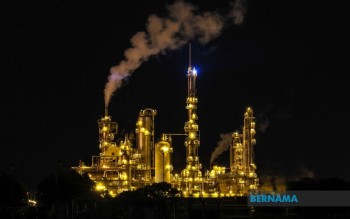
Malaysia's government is considering establishing a national petroleum reserve to bolster energy security amid volatile geopolitical conditions, but planners should adopt a measured, financially sustainable approach rather than attempting to replicate the massive reserve stockpiles maintained by wealthier nations, according to industry analysis. Prime Minister Datuk Seri Anwar Ibrahim recently signalled that the administration would examine both the necessity and practical implementation of such reserves. However, experts caution that any such initiative must be carefully calibrated to Malaysia's economic circumstances and competing budget demands.
Mohd Sedek Jantan, investment strategy director at IPPFA Sdn Bhd, emphasises that Malaysia's path should diverge fundamentally from models pursued by the United States and Japan, where vastly larger economies and sovereign wealth can support immense strategic stockpiles. The underlying principle, he argues, is not about achieving the world's largest reserve but rather determining what volume of petroleum storage genuinely serves Malaysia's specific vulnerability profile and financial constraints. This distinction matters considerably because blanket adoption of foreign models often fails to account for fundamentally different economic structures and priorities.
The core tension policymakers must navigate involves resource allocation in a nation with finite budget capacity. Every ringgit committed to petroleum reserves represents money unavailable for other essential services such as healthcare infrastructure, educational advancement, or food security programmes. Sedek underscores that sound governance demands subjecting any reserve investment to rigorous cost-benefit analysis, ensuring that public funds deliver genuine value. This scrutiny becomes especially critical when considering that Malaysia already grapples with pressing developmental needs across multiple sectors.
Yet the economist simultaneously cautions against dismissing reserves entirely based on upfront costs alone. The economic damage inflicted by a major petroleum supply disruption—whether triggered by regional conflict, shipping blockades, or production failures—could potentially dwarf the expense of establishing appropriate protection beforehand. This paradox means that prudent planning requires understanding not just what reserves cost to build, but what inaction might cost the broader economy should crisis strike. The calculation must therefore encompass both the tangible investment required and the intangible risk of vulnerability.
Sedek advocates for a methodical, stage-by-stage implementation framework that begins with comprehensive analysis rather than immediate infrastructure development. Before constructing physical storage facilities or acquiring petroleum inventories, the government should commission detailed studies examining the optimal reserve volume, financing mechanisms, and operational structures. This foundation-first approach allows policymakers to understand precisely what reserve size serves Malaysia's needs without wasteful over-provisioning. The research phase also provides opportunity to explore whether partnerships with private-sector entities might reduce public expenditure or enhance operational efficiency.
A critical element of any reserve strategy involves determining whether the framework can adapt to changing circumstances without becoming financially stranded. Sedek emphasises that reserves must remain scalable and commercially viable, meaning they should be designed to expand or contract with Malaysia's evolving energy position. If Malaysia's domestic production changes, consumption patterns shift, or regional energy dynamics transform, the reserve infrastructure should accommodate these developments without becoming an inflexible financial burden. This forward-looking perspective prevents investing heavily in a structure that becomes obsolete or unaffordable as conditions evolve.
The analyst specifically rejects the notion that Malaysia should pursue reserve-building primarily as a matter of national prestige or regional standing. The actual objective is functional—ensuring the nation can weather petroleum supply shocks without catastrophic economic disruption. This distinction redirects focus away from competing with other nations' reserve volumes and toward pragmatic assessment of what genuinely protects Malaysia's interests. The smartest reserve, in Sedek's formulation, prioritises effectiveness and sustainability over scale or international comparison.
Implementation sequencing also carries weight in Sedek's recommended approach. The government should conduct risk assessment and develop a clear economic case before moving to gradual physical implementation. This prevents the false economy of rushing to build storage infrastructure without understanding what that infrastructure should contain or how it should function. Premature construction often leads to facilities that prove inadequate, over-scaled, or misaligned with actual needs—all outcomes that waste public resources while potentially failing to enhance genuine security.
For Malaysia specifically, this framework holds particular relevance given the nation's geographic position and energy profile. While Malaysia possesses oil and gas reserves, it also faces potential vulnerabilities to maritime disruptions and regional supply instability. A reserve strategy must account for these specific risks rather than adopting generic approaches. Furthermore, Malaysia's role as a middle-income nation with substantial developmental needs means that reserve investments compete more acutely with other priorities than they do in wealthier economies.
The economist's recommendations ultimately propose that Malaysian policymakers view petroleum reserves not as a symbol of national strength but as a practical risk-management tool. This reframing encourages decisions grounded in economic analysis rather than international peer comparison or political messaging. By insisting on rigorous cost-benefit assessment, scalability, and private-sector partnership possibilities, Sedek's framework aims to ensure that if Malaysia does establish reserves, they deliver genuine security value while respecting fiscal realities and maintaining space for other essential investments.
Moving forward, the government's commitment to studying the question provides opportunity to engage this analysis seriously. The research phase should bring together energy economists, geopolitical analysts, and budget experts to examine Malaysia's specific vulnerabilities and appropriate responses. Only through such thorough groundwork can the nation determine whether—and to what extent—petroleum reserves fit within a broader energy security and economic resilience strategy tailored to Malaysian circumstances rather than borrowed wholesale from different national contexts.

