When tensions between the United States and Iran threatened to choke off one of the world's most critical maritime chokepoints, Malaysia faced a familiar vulnerability: its food security depends heavily on global supply chains. The potential closure of the Strait of Hormuz raised immediate alarm bells about disruptions to oil shipments needed for fertiliser production and plastic supplies essential for food packaging. Consumers across the region braced for the familiar squeeze of shortages and inflation, tightening household budgets in anticipation of rising food costs. Yet Malaysia's experience has diverged markedly from the doom forecasts that greeted the February 2025 escalation of regional conflict.
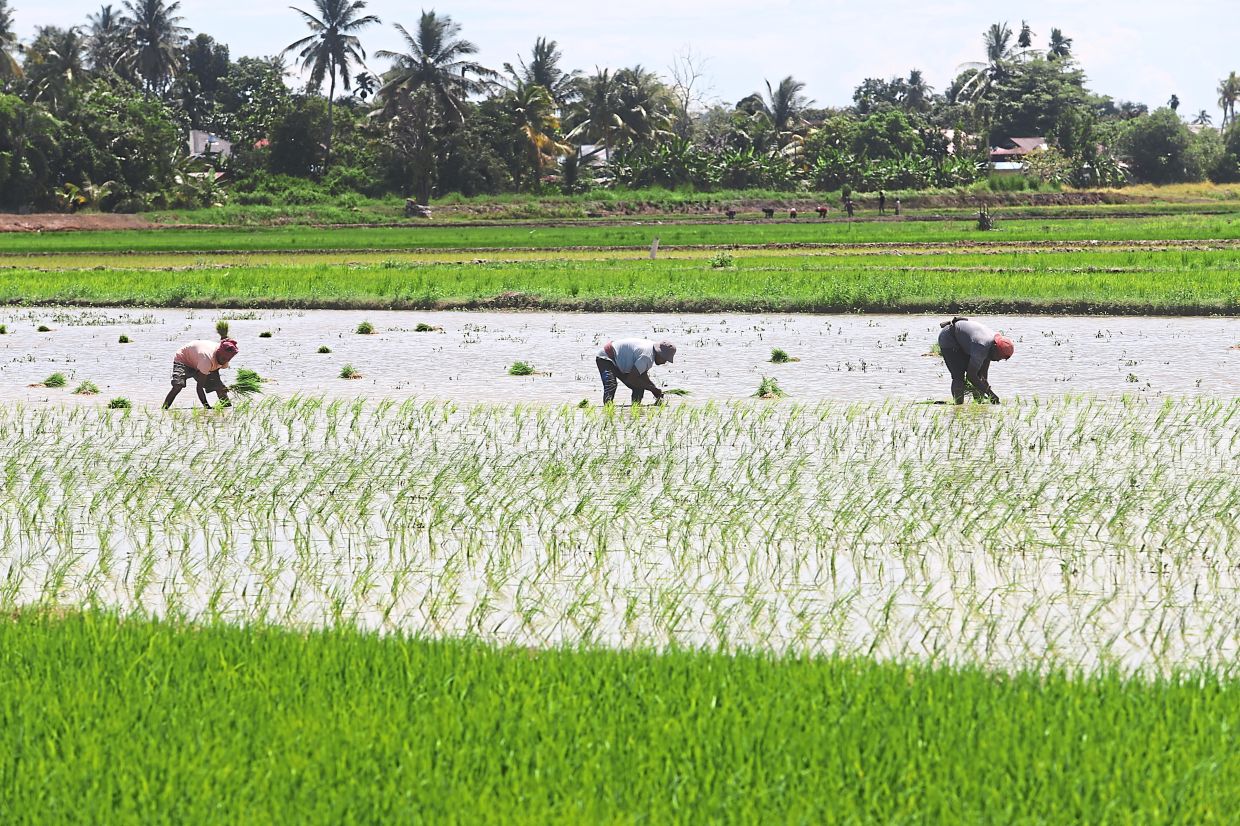
The relative stability in Malaysia's food prices reflects deliberate government intervention rather than good fortune. Facing the prospect of external economic shocks, policymakers deployed a multi-layered approach centring on direct financial relief to farmers, the segment of the economy most exposed to volatile input costs. The Ministry of Finance substantially expanded the Budi Agri-Komoditi diesel subsidy for agricultural machinery from RM300 to RM400 monthly in April, representing a significant 33 percent boost to help farmers navigate persistently high fuel costs. Simultaneously, the government nearly doubled the ploughing incentive scheme, known locally as IPKP, from RM160 to RM300 per hectare for the 2026 planting season. These measures were coupled with advance payments of RM200 per hectare to Peninsular Malaysian farmers, designed to ease cash flow pressures during critical land preparation phases.
The philosophy underpinning these initiatives reflects recognition that farm-level cost pressures inevitably cascade through retail food chains. By buffering farmers against input inflation, particularly rising diesel and transportation expenses, the government created space for agricultural output to remain robust without proportional increases in consumer prices. Prof Datuk Dr Nasir Shamsudin, an agricultural economist at Putra Business School and professor emeritus at Universiti Putra Malaysia's Faculty of Agriculture, characterises these interventions as effective short-term stabilisers. The RM400 monthly assistance directly offsets diesel and logistics costs, while the enhanced IPKP incentive improves farmers' financial position before planting, creating conditions for sustained production volumes.
Empirical evidence suggests the strategy has worked. Food inflation in Malaysia remained remarkably subdued at 1.4 percent year-on-year in May 2026, a marginal uptick from 1.2 percent in April—figures that stand starkly against the inflationary pressures buffeting many trading partners. This resilience occurred despite the geopolitical turbulence that prompted economists to warn of commodity price spikes and supply chain paralysis. Prime Minister Datuk Seri Anwar Ibrahim highlighted the government's commitment to these measures in a May Facebook post, characterising smallholders and entrepreneurs as economic anchors deserving protection from global uncertainty. The decision to extend Budi Agri-Komoditi reflected this philosophy, treating agricultural support not as temporary handout but as structural policy.
Beyond immediate relief measures, Budget 2026 signals longer-term commitment to agricultural stability through substantial allocations. The government earmarked RM2.62 billion for diverse subsidy and assistance programmes spanning paddy price support, crop cultivation incentives, fertiliser distribution, seed provision, and production encouragement schemes. The fishing community received RM160 million to fund living allowances reaching RM300 monthly and catch bonuses, while RM55 million was dedicated to supporting domestic fruit growers through incentive schemes and infrastructure development for pineapples, soursop, water apple, and pomelo. This architectural approach—combining immediate cost relief with targeted sectoral investment—aims to distribute support across multiple food production domains rather than concentrating assistance narrowly.
The government has publicly confirmed that Malaysia maintains sufficient emergency food stocks to weather extended supply chain disruptions. Chicken, eggs, fish, milk, and fruit supplies represent at least one month of national consumption, while rice inventories including strategic reserves extend coverage to five or six months. Fertiliser stocks similarly provide approximately nine months of agricultural input security. These buffer positions provide genuine insulation against the kind of sudden logistical shocks that previously cascaded rapidly into consumer price inflation. The existence of such reserves reflects long-term planning rather than reactive crisis management, suggesting recognition that global supply chain stability cannot be taken for granted.
Yet Prof Nasir emphasises that the full benefit of current subsidies depends on efficient transmission through complex supply chains and reinforcement by productivity improvements. Short-term price stability achieved through fiscal transfers masks a deeper structural challenge: Malaysia must ultimately reduce agricultural production costs through technological modernisation and operational efficiency rather than perpetual government subsidy. He advocates for sustained investment in farm mechanisation, precision agriculture techniques, climate-adapted crop varieties, efficient irrigation infrastructure, enhanced post-harvest facilities, and integrated supply logistics—interventions that permanently lower unit costs rather than temporarily suppressing prices through transfers.
The government is already piloting complementary strategies addressing long-term resilience. The Agriculture and Food Security Ministry is promoting a transition toward organic fertilisers, biological fertilisers, and Effective Microorganisms products to reduce dependence on chemical fertilisers whose prices fluctuate with global commodity markets. A RM5.5 million project approved under the 13th Malaysia Plan aims to strengthen circular economy approaches by converting agri-food waste into compost and organic fertiliser inputs. These initiatives address a critical vulnerability: chemical fertiliser supply chains expose Malaysian agriculture to precisely the kind of global market disruptions that Middle Eastern tensions represent.
Malaysia's fundamental structural challenge remains its role as a substantial net food importer. Despite improvements in domestic production capacity, the country continues importing significant quantities of staple foods including rice, wheat, dairy products, and meat. The 2024 agri-food trade deficit reached RM39.34 billion, crystallising Malaysia's dependence on global markets and consequent exposure to international price shocks and logistics disruptions. This import reliance extends beyond obviously imported commodities—sectors appearing domestically self-sufficient often depend critically on imported agricultural inputs including seeds, breeding stock, and processed feeds. This layered import dependence means that even when domestic production volumes appear adequate, global supply chain disruptions create hidden vulnerabilities.
Addressing this structural dependence requires reimagining Malaysia's agricultural development model. The current policy framework appropriately combines immediate price stabilisation measures protecting consumers and farmers with medium-term investments in productivity and supply chain resilience. However, the longer-term trajectory must progressively reduce the ratio of imported to domestically-produced food calories through strategic sector development. This does not mean autarky—Malaysia lacks the climate and land resources for complete food self-sufficiency—but rather strategic expansion of production for categories where import substitution is genuinely feasible and economically rational. The Middle Eastern conflict, while contained thus far in its economic impact on Malaysian food security, provides fresh urgency to these transformation efforts.
The immediate stability in Malaysia's food prices represents a success of targeted intervention during a geopolitical crisis. Yet it also reveals the country's underlying fragility: Malaysia can moderate inflation short-term through subsidy and reserve drawdown, but cannot indefinitely insulate consumers from global supply shocks through these mechanisms alone. The government's parallel investments in agricultural modernisation, waste valorisation, and fertiliser diversification suggest recognition of this reality. As global supply chains face recurring disruptions from geopolitical tensions, climate extremes, and pandemic risks, Malaysia's food security ultimately depends on gradually rebalancing the proportion of staples produced domestically versus imported, achieved through sustained productivity improvements and strategic sectoral development rather than perpetual fiscal transfers.

