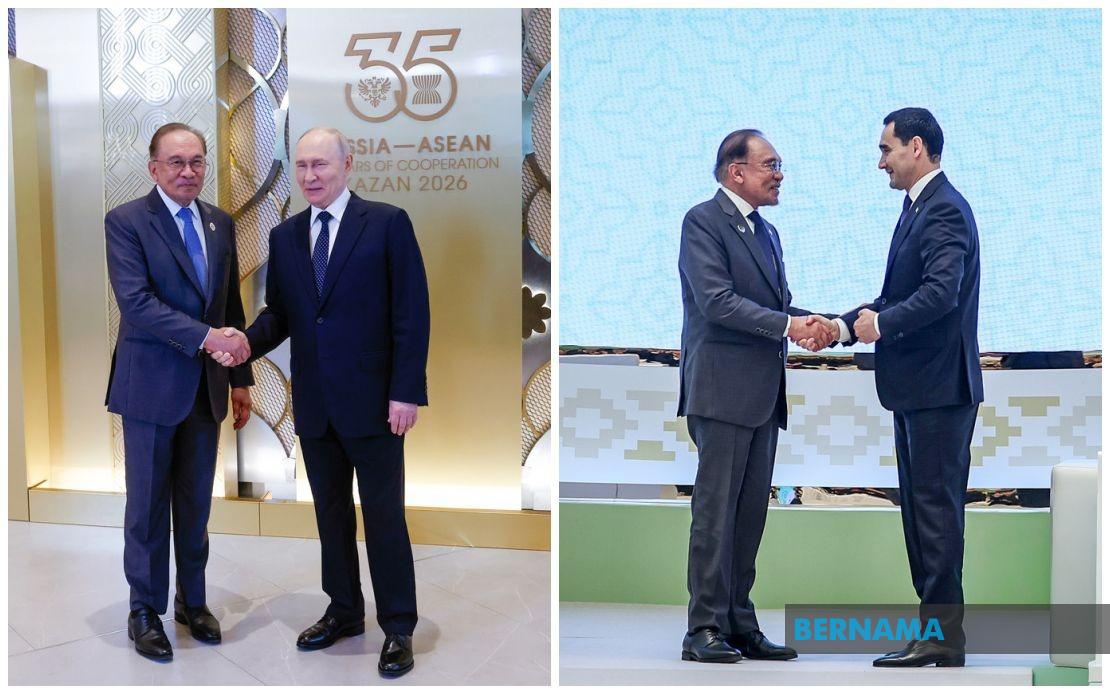
Prime Minister Datuk Seri Anwar Ibrahim's recent diplomatic missions to Russia and Turkmenistan represent a significant diplomatic achievement with far-reaching implications for Malaysia's energy independence and economic growth. Malaysian cabinet ministers have publicly endorsed the outcomes of these visits, characterising them as major breakthroughs that position the nation more securely within global energy markets and reinforce its standing as a credible international partner.
The centrepiece of the Russian engagement is Moscow's commitment to supply Malaysia with crude oil and petroleum products over a 20-year horizon. This arrangement transcends the traditional annual or seasonal renewal cycles that have historically constrained Malaysia's energy planning and created vulnerability to price volatility and supply disruptions. Housing and Local Government Minister Nga Kor Ming has framed this development within the government's broader energy diversification strategy, arguing that the long-term stability provided by the Russian accord directly supports the MADANI Government's ability to maintain the BUDI MADANI RON95 petrol subsidy programme at RM1.99 per litre without sacrificing fiscal prudence.
For Malaysian consumers already grappling with cost-of-living pressures, the preservation of the capped RON95 price represents tangible relief. However, the deeper significance lies in structural resilience. By locking in a two-decade supply agreement with Russia, Malaysia reduces its exposure to the volatile dynamics that have periodically disrupted Middle Eastern supplies and driven global oil prices to economically damaging peaks. This insulates not merely the retail petrol market but critical downstream industries—petrochemicals, power generation, aviation—from sudden supply shocks.
Parallel to the Russian energy accord, Petronas has been appointed operator of a major gas field in Turkmenistan, a nation sitting atop some of the world's largest natural gas reserves. This represents a qualitative step forward for the Malaysian national oil company. Petronas currently ranks 139th on the Fortune Global 500 list, and Human Resources Minister Datuk Seri R. Ramanan has suggested that successful execution of the Turkmenistan project could propel the company toward the top 100—a trajectory that would substantially enhance its market valuation and geopolitical influence.
The appointment itself speaks to international confidence in Petronas's technical capabilities and managerial competence. Operating a supermajor gas field in Central Asia is a complex undertaking requiring expertise in deepwater engineering, geopolitics navigation, and supply chain logistics across challenging terrain. That Turkmenistan has selected Petronas over established Western majors signals recognition of the company's credentials and also reflects broader international momentum toward diversifying operational partnerships beyond traditional players.
For Malaysia specifically, the Turkmenistan opportunity unlocks several pathways. First, it strengthens Petronas's financial returns and shareholder value, thereby enhancing state coffers. Second, the project will generate employment and technology transfer opportunities for Malaysian engineers, geologists, and skilled workers across the project lifecycle. Third, it positions Malaysia as an active participant in Central Asian energy infrastructure development—a geopolitical space increasingly contested between Russia, China, and Western powers. By securing operational influence over a critical gas field, Malaysia enhances its diplomatic standing and access to future projects in the region.
The timing of these initiatives also carries strategic weight. Global energy markets remain unsettled by the repercussions of the Ukraine conflict, which has destabilised European gas supplies and intensified competition for alternative sources. For an energy-importing nation like Malaysia, which relies on imported hydrocarbons to fuel both domestic consumption and manufacturing exports, the ability to access reliable long-term supplies from both Russia and Central Asia reduces dependency on volatile Middle Eastern markets and expensive spot purchases on global bourses.
Energetcally and diplomatically, these arrangements reflect Prime Minister Anwar's broader foreign policy doctrine of constructive engagement with non-aligned powers. Malaysia maintains hedged relationships across the geopolitical spectrum—strong ties to the United States and allied democracies while simultaneously nurturing partnerships with Russia, China, and other non-Western powers. This balancing act has historically provided Malaysia with room to manoeuvre and access to diverse supply chains and markets unavailable to nations locked into rigid bloc alignments.
The Human Resources Minister's emphasis on human capital development through the Turkmenistan project highlights secondary benefits often underappreciated in energy diplomacy discussions. Major resource projects demand training in advanced technologies, management practices, and safety protocols. Malaysian participation in Turkmenistan's gas sector development creates learning opportunities that enhance the country's technical workforce and exportable expertise. As Malaysia seeks to diversify beyond commodity-dependent growth models, the ability to position its workforce and companies as globally competitive operators in high-value sectors becomes strategically crucial.
The Petronas appointment also carries implications for ASEAN regional dynamics. As Southeast Asia's principal energy operator with significant technical reach, Petronas serves as a vehicle through which Malaysian influence extends into broader Asian energy markets. A strengthened Petronas enhances Malaysia's ability to shape regional energy cooperation frameworks and position itself as a trusted intermediary in multilateral energy infrastructure discussions across Asia.
These diplomatic and commercial wins do not occur in isolation from Malaysia's domestic political context. The MADANI Government's emphasis on energy security and subsidy sustainability reflects popular anxieties about cost-of-living pressures and economic resilience. By securing long-term supplies at predictable prices and expanding Petronas's revenue-generating opportunities, the government can demonstrate tangible economic management credentials to voters concerned about inflation and employment.
Looking forward, the success of these arrangements will depend substantially on execution. Long-term supply contracts are only valuable if honoured and if geopolitical circumstances do not intervene to disrupt implementation. The Turkmenistan gas project requires sustained technical excellence and operational stability across years of development and production. Nevertheless, as strategic positioning exercises, these initiatives represent meaningful progress in anchoring Malaysia's energy future and expanding the global footprint of Malaysian institutions.