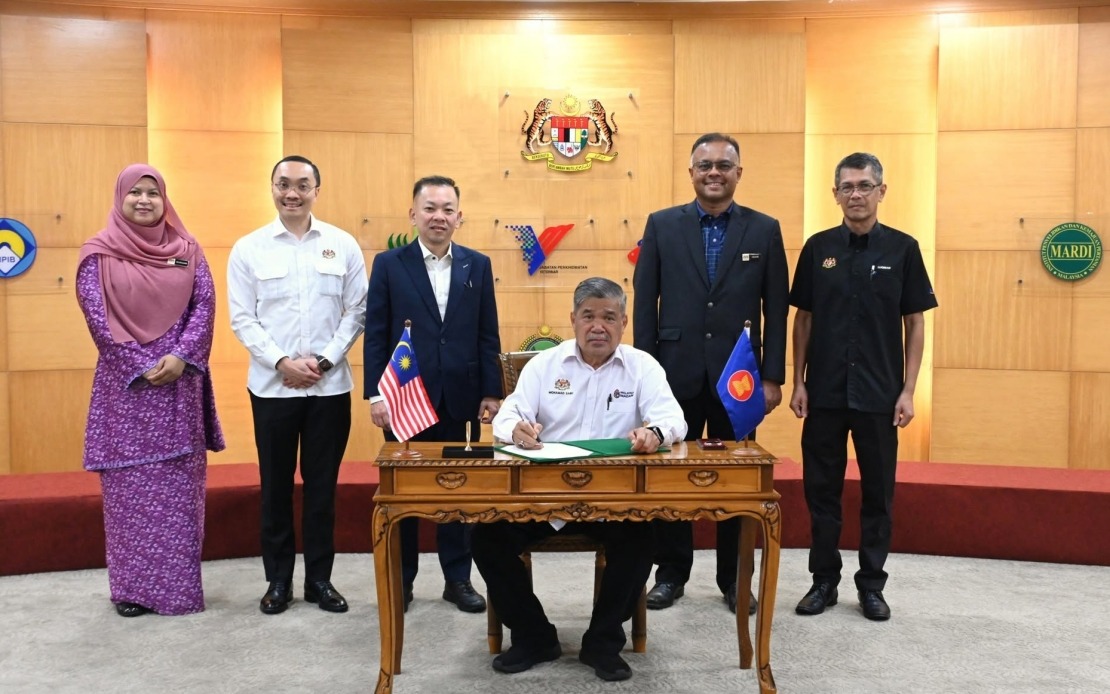
Malaysia has taken a significant step forward in securing new international market opportunities and advancing its agricultural sustainability agenda through two Memoranda of Understanding signed under the ASEAN banner. Datuk Seri Mohamad Sabu, the Minister of Agriculture and Food Security, inked both agreements on behalf of Malaysia at the ASEAN Ministers on Agriculture and Forestry Meeting, positioning the country to capitalise on expanded trade channels for its agri-food, agri-commodity and forestry sectors whilst simultaneously gaining entry to climate-conscious farming practices that could reshape domestic production methods.
The first agreement, formally titled the ASEAN Cooperation in Agriculture and Forest Products Scheme, represents a coordinated regional approach to addressing interconnected challenges facing food systems across Southeast Asia. By bringing together all ASEAN member states under a unified framework, the pact establishes five foundational pillars that collectively aim to fortify the region's agricultural resilience and market position on the global stage. These pillars encompass bolstering food security throughout the bloc, streamlining the movement of agricultural and forestry goods across borders, channelling private sector capital into agricultural enterprises, ensuring the conservation of natural resources for future generations, and presenting a unified ASEAN voice in international agricultural negotiations and policy discussions.
Within this broader ASEAN mechanism, Malaysia has been designated specific leadership roles that leverage the country's established strengths in certain commodity sectors. The Ministry of Plantation and Commodities will assume responsibility for coordinating regional efforts on palm oil and cocoa, two products where Malaysia maintains substantial market presence and technical expertise. Meanwhile, the Ministry of Agriculture and Food Security will champion Malaysia's broader agri-food portfolio across the ASEAN framework. This delineation of responsibilities not only acknowledges Malaysia's competitive advantages but also creates structured opportunities for coordinated market promotion, enabling member states to launch joint campaigns defending these products against mounting international scrutiny and protectionist measures.
The scope of market access improvements extends well beyond the traditional commodity focus. The agreement encompasses broader agricultural categories including livestock products, specialty herbs, medicinal plant derivatives, and diverse forest-based goods such as wild mushrooms, tree nuts, and honey products. For Malaysian agricultural exporters, this expanded categorisation opens pathways into markets where demand for premium, traceable, and sustainably-sourced products continues to climb, particularly across developed economies increasingly conscious of supply chain ethics and environmental impact. Small and medium-sized enterprises operating in these segments stand to benefit substantially from the reduction of trade barriers and standardised regional certification mechanisms.
Complementing this intra-ASEAN initiative is the second MoU, negotiated between the entire ASEAN bloc and China, which charts an ambitious five-year cooperation programme spanning eighteen distinct areas of agricultural and forestry collaboration. This agreement reflects the deepening economic integration between Southeast Asia and its northern neighbour, channelling Chinese technical expertise and investment capital towards agricultural development across the region. The framework prioritises low-carbon farming methodologies—increasingly essential as global markets impose environmental compliance requirements on imported food products—alongside sustainable forest management practices that reconcile productivity with conservation imperatives.
The ASEAN-China cooperation specifically targets supply chain vulnerability, a persistent concern across the region following years of disruption from extreme weather events and transnational disease outbreaks. By establishing formal mechanisms for disaster risk management and agricultural insurance products, the agreement provides practical safeguards for producers facing climate-related uncertainties. The inclusion of cross-border pest and disease control protocols addresses a longstanding challenge in Southeast Asia, where agricultural threats routinely cross national boundaries and require coordinated regional response to prevent widespread crop losses. Such collaborative frameworks prove particularly valuable for Malaysia given its geographical position and economic dependence on stable agricultural production.
Technology transfer constitutes a crucial dimension of the ASEAN-China arrangement, particularly regarding climate-smart agricultural methods. Malaysian farmers and agricultural enterprises will gain access to proven low-carbon production techniques developed and refined within the Chinese agricultural research ecosystem, supported by coordinated policy frameworks and research partnerships. This technological exchange becomes increasingly valuable as Malaysia seeks to transition towards more sustainable agricultural models whilst maintaining productivity and profitability—a balance that many domestic producers struggle to achieve independently. Enhanced access to research and development expertise through this mechanism could accelerate the adoption timeline for conservation agriculture, precision farming, and other resource-efficient methodologies.
For Malaysia specifically, these MOUs carry substantial implications for the country's food security strategy and export competitiveness. The agreements arrive at a critical juncture when Malaysian agriculture faces mounting pressures from climate volatility, land constraints, and shifting international consumer preferences. By securing formalised access to larger regional markets and advanced agricultural technologies simultaneously, Malaysia enhances its capacity to absorb domestic production growth whilst adapting to environmental challenges. The frameworks also position the country as a reliable supplier within an increasingly integrated ASEAN food system, reducing risks of supply chain fragmentation that could disrupt trading partners dependent on Malaysian exports.
The regional dimension of these agreements merits particular attention for Malaysian policymakers and agricultural stakeholders. Rather than pursuing bilateral arrangements that might fragment the market, these multilateral mechanisms strengthen ASEAN cohesion around shared agricultural objectives, potentially elevating the bloc's bargaining position in future international negotiations over agricultural trade, environmental standards, and food safety protocols. As larger economic powers increasingly impose conditions on agricultural imports, a unified ASEAN approach backed by formalised cooperation frameworks provides significantly greater leverage than individual member states could exert alone.
Implementing these agreements will require substantial coordination across multiple Malaysian government agencies, private sector entities, and regional partners. The transition towards climate-smart practices demands investment in farmer education, infrastructure upgrades, and certification systems—costs that require careful cost-benefit analysis but promise long-term competitive advantages. Export promotion initiatives must adapt to emphasise sustainability credentials alongside traditional quality and price considerations, reflecting the preferences of contemporary global consumers and regulatory regimes. Successfully operationalising these MOUs could transform Malaysia's agricultural sector from a defensive posture—protecting traditional markets—into an offensive strategy for capturing emerging opportunities in sustainable, climate-resilient food production.

