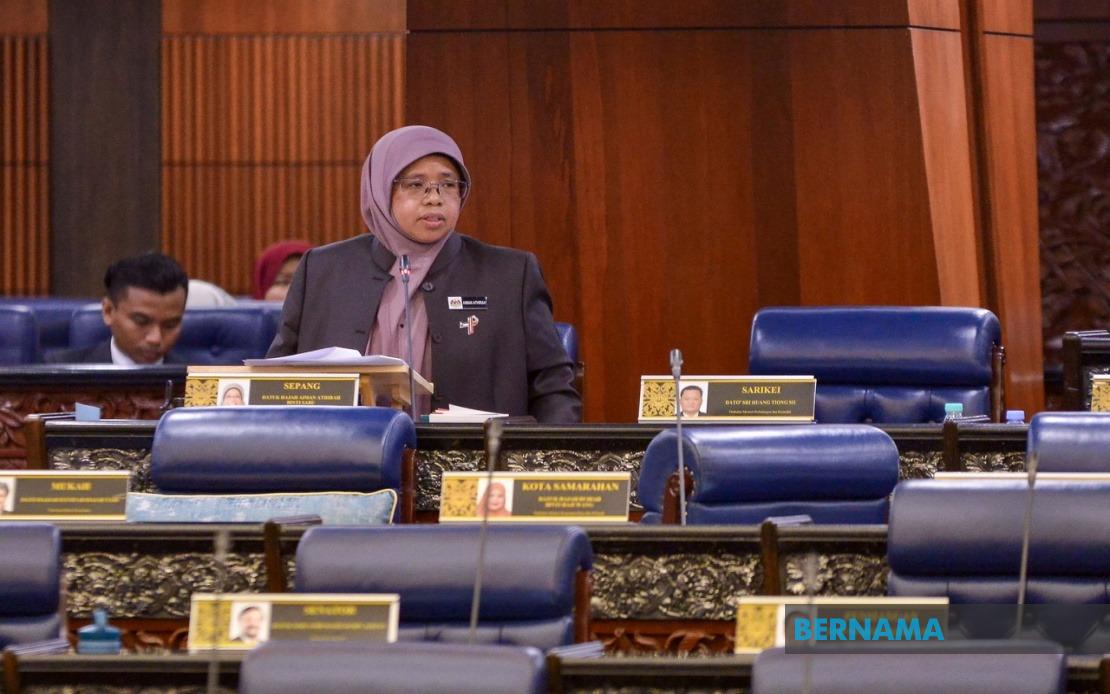
The Malaysian government is reshaping its approach to housing development by anchoring policy decisions in rigorous data analytics, aiming to break the cycle of overbuilding, price inflation, and project abandonment that has frustrated buyers and investors alike. Deputy Housing and Local Government Minister Datuk Aiman Athirah Sabu outlined the comprehensive evidence-based framework during parliamentary Question Time, emphasising that this shift represents a fundamental change in how planners determine where homes should be built, what types should be prioritised, and at what price points they should be marketed to match genuine household affordability.
The government now draws on multiple data sources—the Department of Statistics Malaysia (DOSM), the National Property Information Centre (NAPIC), and the Malaysian Urban Observatory (MUO)—alongside supply figures from housing agencies across states and territories. This convergence of information enables policymakers to move away from speculative development patterns driven by investor expectations and instead focus on residential needs assessed at state and district levels. By layering household income surveys, market demand indicators, and existing supply pipelines, the ministry can theoretically prevent the kind of supply-demand mismatches that have left thousands of properties unsold and countless projects suspended.
A significant milestone in this recovery effort came through the revival of distressed projects. Since establishing the Special Task Force on Delayed, Sick and Abandoned Private Housing Projects in December 2022, authorities have successfully resuscitated 1,615 projects encompassing 190,422 housing units with a gross development value of RM150.8 billion. For context, this scale of intervention addresses a persistent problem that has eroded consumer confidence, tied up household savings, and created legal complexities for buyers trapped in projects abandoned by developers facing cash flow crises. The task force's work represents not merely administrative tidying but a recognition that market failures in housing require government intervention to protect purchasers and stabilise the sector.
The National Affordable Housing Council, chaired by the Prime Minister, functions as the coordinating body ensuring that federal-level initiatives align with state government priorities and that bottlenecks in implementation are identified and resolved quickly. This multi-level governance structure acknowledges that housing challenges manifest differently across Malaysia—Klang Valley demand pressures differ fundamentally from those in Johor Bahru, Penang, or Kota Kinabalu. By centralising oversight while preserving space for localised adaptation, the council attempts to achieve both consistency in policy intent and flexibility in execution.
A cornerstone of affordability reform is the National Housing Policy 2026-2035, which is undergoing finalisation. This updated policy framework moves away from static, nationwide affordable housing thresholds to dynamic pricing models calibrated to regional and district-level median household incomes. The methodology involves analysing the 2024 Household Income and Basic Amenities Survey data by DOSM, allowing the ministry to set price ceilings that actually reflect what residents in specific areas can realistically service through mortgage commitments. This granular approach contrasts sharply with earlier one-size-fits-all affordability definitions that bore little relation to local economic realities.
For first-time homebuyers navigating not only the purchase price but also renovation and maintenance costs, the government has extended the Housing Credit Guarantee Scheme (SJKP). The scheme now provides guarantees covering up to 120 per cent of a property's value, with the additional 20 per cent cushion explicitly designated to address renovation, repairs, and ancillary expenses. This recognition that total housing costs extend beyond mortgage payments represents a maturation in policy thinking; younger buyers and lower-income households often underestimate the financial demands of homeownership beyond the initial down payment and monthly instalments.
The emphasis on financing accessibility within this broader affordability framework addresses a critical tension in Malaysian housing. Even where prices are theoretically affordable, if mortgage qualification criteria remain restrictive or loan-to-value ratios are tight, purchasers cannot translate affordability into actual home ownership. By linking credit guarantees to housing development targets and pricing strategies, the government attempts to ensure that improved supply and rational pricing translate into expanded homeownership, not merely inventory correction.
For Malaysian and Southeast Asian observers, these developments signal a regional trend toward moving housing policy from purely market-driven models toward evidence-informed intervention. Countries including Singapore, Thailand, and the Philippines grapple with similar affordability crises and speculative overbuilding. Malaysia's turn toward data-driven planning and supply-side revival through task forces offers a case study in how middle-income nations attempt to recalibrate housing markets when conventional mechanisms fail. The viability of this approach will depend partly on implementation discipline and partly on whether data-driven recommendations actually override political pressure to permit developments that planners deem unwarranted.
The scale of revival effort—1,615 projects and nearly 190,000 units—underscores the magnitude of the abandoned-housing problem that accumulated prior to institutional reforms. Each suspended project represents not abstract economic loss but individual households whose savings are locked in properties they cannot occupy or sell. The task force's revival work therefore carries emotional and financial weight that extends beyond sector statistics. Success in completing these projects rebuilds buyer confidence; failure perpetuates the perception that housing purchases in Malaysia are inherently risky.
Looking ahead, the 2026-2035 housing policy's success will hinge on several factors: whether state governments adopt the federal framework rather than pursuing competing agendas, whether developers respond to data-justified pricing by moderating expectations, and whether the National Affordable Housing Council can sustain political will when electoral cycles tempt governments to permit prestige projects that ignore demand data. The government's commitment to evidence-based planning represents a rational response to housing dysfunction, yet rational policy often encounters resistance from entrenched interests benefiting from the status quo.

