The Malaysian government is undertaking a comprehensive review of Section 97 of the Child Act 2001, with plans to introduce a fixed and transparent detention period for individuals convicted of serious offences as minors. The move represents a significant policy shift aimed at creating greater clarity within the criminal justice system whilst honouring both victims' rights and international human rights standards that protect children.
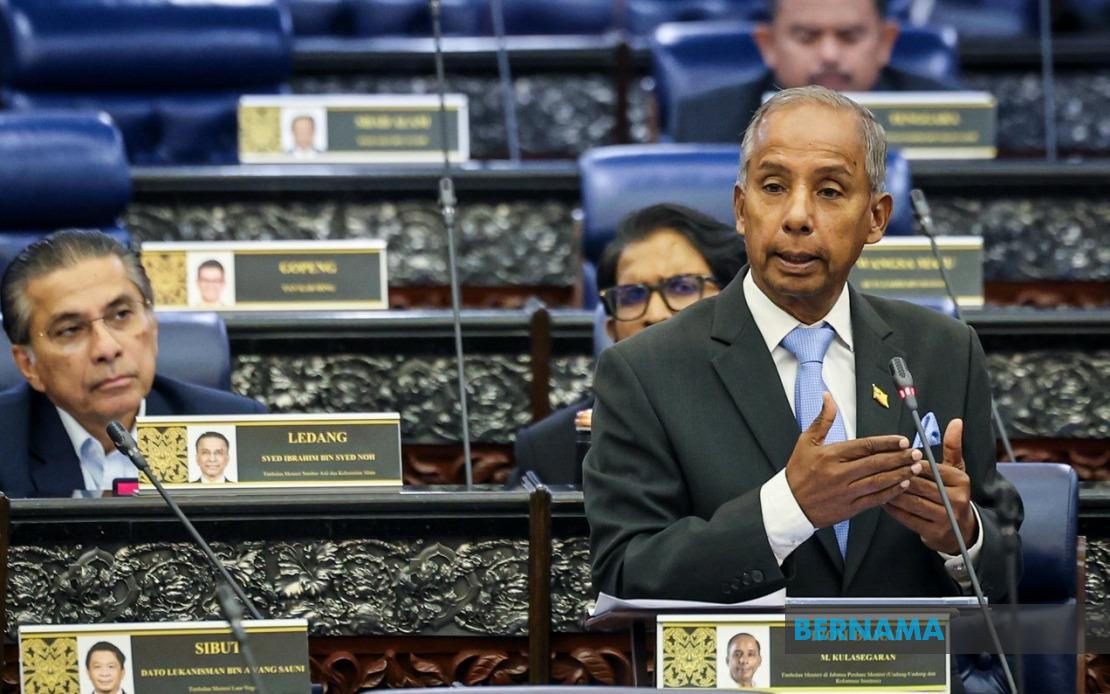
The initiative stems from recommendations made by a specially formed government committee established following the abolition of mandatory capital punishment and life imprisonment sentences in 2023. M. Kulasegaran, Deputy Minister in the Prime Minister's Department (Law and Institutional Reform), outlined the government's commitment to finding equilibrium between several competing interests: delivering justice for victims, maintaining public safety, and providing genuine opportunities for rehabilitation of young offenders who have matured within the prison system.
The current legal framework presents significant practical challenges. Under Section 97, the death penalty cannot be imposed on individuals who were children at the time of their offence. Instead, courts must order detention at the pleasure of the King or the relevant state ruler, depending on jurisdiction. However, this formulation creates an indefinite detention scenario for some prisoners, with no legally defined endpoint to their incarceration regardless of rehabilitation progress or changed circumstances.
The human cost of this ambiguity became starkly apparent during recent prison visits. Kulasegaran documented the case of one individual detained for nearly 25 years after entering prison at age 17. This person has no experience of modern technology, understanding of contemporary society, or any certainty about when—or if—release might occur. Such cases highlight how the current legal provisions can result in de facto life sentences for individuals whose formative years have been spent entirely within the penal system.
Statistics reveal the scope of the problem. Forty individuals currently remain detained under Section 97, each facing similar uncertainty regarding the duration and purpose of their confinement. Many have served decades without knowledge of their release prospects, creating serious questions about whether indefinite detention serves rehabilitative purposes or functions merely as hidden punishment beyond the courtroom's view.
This review aligns with Malaysia's international obligations under the Convention on the Rights of the Child, which emphasises that detention of young persons should be used only as a last resort and for the shortest appropriate period. The government seeks to demonstrate that criminal justice reform can protect both children's welfare and community safety without requiring perpetual incarceration of individuals who committed offences in their youth.
The special committee tasked with this responsibility has already met multiple times and is progressing toward concrete recommendations. Officials indicate that proposed amendments will introduce specificity to detention periods, allowing courts to set defined timescales rather than perpetual detention at the pleasure of the Crown. This would represent a fundamental shift from indeterminate to determinate sentencing for this vulnerable population.
The challenge lies in calibrating penalties appropriately. Any reformed framework must remain sufficiently rigorous to satisfy public safety concerns and acknowledge the seriousness of offences serious enough to warrant removal from society. Simultaneously, it must recognise that individuals sentenced as children may undergo significant psychological, social, and moral development during their imprisonment, potentially rendering their original risk assessments outdated after decades of incarceration.
Such legislative reform carries particular significance for Southeast Asia, where several nations grapple with similar questions regarding juvenile offenders and indeterminate sentencing. Malaysia's approach could establish a regional precedent for balancing accountability with developmental perspectives on youth criminality.
The government's framing explicitly emphasises consistency in justice delivery. By establishing clearer legal parameters, Malaysian courts would apply more uniform standards rather than relying on discretionary detention at state pleasure. This enhances predictability and transparency, enabling both offenders and society to understand the proportionality of sentences.
These amendments also reflect broader global trends questioning the utility of lengthy incarceration for rehabilitation purposes. Criminological research increasingly suggests that extended imprisonment without hope of release diminishes rather than encourages rehabilitation, potentially creating more dangerous individuals upon eventual release than might result from determinate sentences with structured rehabilitation programming.
The government's commitment to balancing competing interests represents sophisticated policy thinking. Rather than treating children's welfare, victim protection, and public safety as inherently opposed, officials seek a framework that legitimately addresses all three concerns through transparent, fixed detention periods coupled with robust rehabilitation mechanisms. This approach acknowledges that young offenders are not interchangeable with adult criminals, whilst respecting that serious offences require serious consequences.

