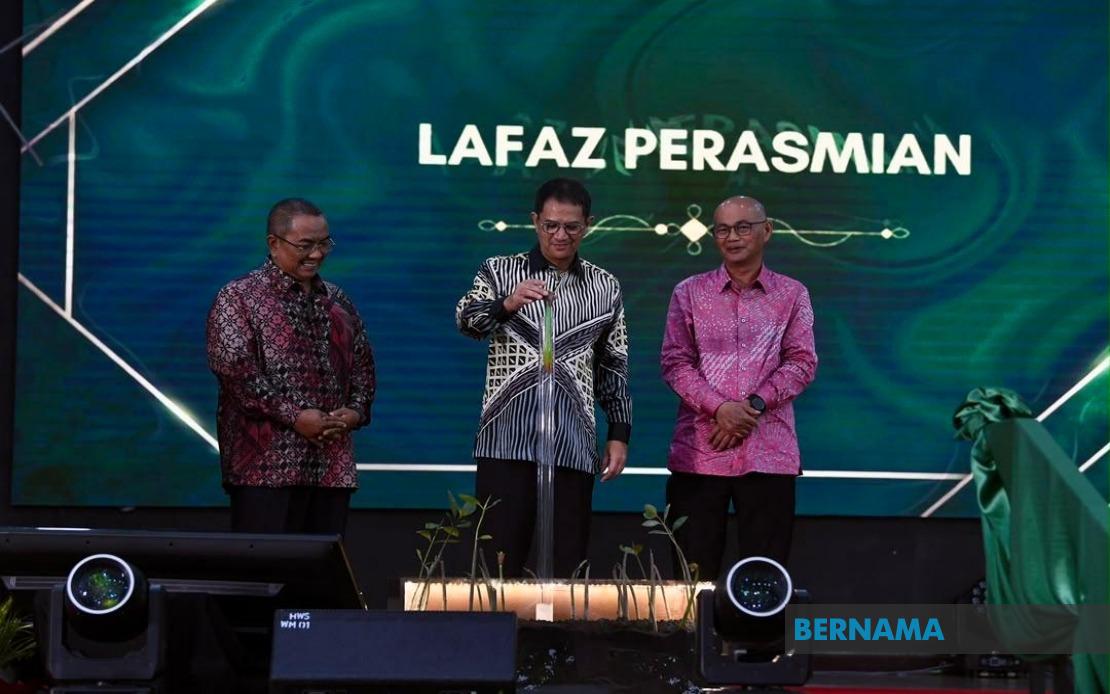
Malaysia's mangrove conservation efforts have reached a significant milestone with the restoration of approximately 3,965 hectares of forest cover across the nation through an ambitious tree-planting initiative that has already introduced more than 9.3 million mangrove saplings and compatible coastal species into degraded wetland areas. The achievement was highlighted by Natural Resources and Environmental Sustainability Minister Datuk Seri Arthur Joseph Kurup during the National-level International Day for the Conservation of the Mangrove Ecosystem 2026 celebration held in Alor Setar, where he underscored the government's unwavering dedication to reviving the country's critical coastal habitats that have faced sustained pressure from development and environmental degradation.
The scale of investment behind this restoration work reflects official recognition of mangroves' ecological and economic importance. The National Coastal Mangrove and Suitable Species Tree Planting Programme has absorbed RM71.3 million in funding through to 2025, resources directed toward comprehensive activities spanning initial planting operations, ongoing maintenance regimes, scientific research initiatives, environmental monitoring systems, and community education campaigns designed to build public understanding of these ecosystems' significance. This financial commitment demonstrates a departure from short-term conservation gestures toward sustained, multi-faceted efforts that acknowledge the complexity of restoring degraded mangrove systems to ecological functionality.
Looking forward, policymakers have signalled continued momentum in this space. The 13th Malaysia Plan allocates an additional RM2 million specifically for mangrove forest conservation and preservation activities scheduled for 2026, with implementation extending across Peninsular Malaysia, Sabah, and Sarawak. This geographically comprehensive approach recognises that mangrove degradation affects all major regions of the country, requiring coordinated interventions that respect local ecological conditions and developmental contexts across Malaysia's diverse coastal zones.
The restoration programme operates through an inter-agency framework that pools expertise and resources across multiple governmental entities. Forestry Peninsular Malaysia serves as the coordinating body, working alongside the Sabah Forestry Department and Sarawak Forest Department to ensure alignment across state boundaries. The Forest Research Institute Malaysia contributes scientific capacity, providing evidence-based guidance for species selection, planting methodologies, and long-term monitoring protocols. This institutional architecture attempts to overcome the fragmented governance structures that have historically impeded effective coastal conservation in Malaysia, where jurisdictional overlaps and competing priorities have sometimes undermined sustained environmental protection efforts.
Community engagement has emerged as a critical component of the initiative's sustainability architecture. Non-governmental organisations and local communities have been repositioned from peripheral stakeholders to active participants in conservation activities, contributing labour, local ecological knowledge, and social legitimacy to restoration efforts. Arthur emphasised that NGO involvement and community participation prove essential for ensuring that conservation gains persist beyond government funding cycles and political cycles, embedding environmental stewardship within local social structures where mangrove forests provide livelihoods, cultural value, and protective functions against coastal hazards.
The ecosystem services provided by mangrove forests carry particular salience for Malaysia's economic and security interests. These densely vegetated tidal wetlands function as nurseries for commercially important fish and crustacean species, supporting the fishing industry that remains economically significant across coastal regions. Simultaneously, mangrove root systems stabilise shorelines and attenuate storm surge impacts, providing natural disaster risk reduction that becomes increasingly valuable as climate change intensifies extreme weather events. The carbon sequestration capacity of mangrove vegetation addresses both climate mitigation imperatives and international commitments Malaysia has undertaken regarding emissions reduction.
The celebration of mangrove conservation efforts at the national level reflects evolving policy priorities that increasingly frame environmental protection as integral to economic strategy rather than ancillary to development goals. The theme selected for the 2026 commemoration—"Mangrove Ecosystems Towards Blue Economy Sustainability"—explicitly links mangrove conservation to ocean-based economic development, a framing that attempts to reconcile environmental and economic objectives. This positioning carries implications for competing coastal land use claims, signalling that mangrove restoration sits alongside, rather than subordinate to, maritime economic expansion.
The academic and technical community has been mobilised to strengthen the knowledge foundation undergirding restoration efforts. The concurrent National Mangrove and Coastal Ecosystem Seminar 2026, organised jointly by Forestry Peninsular Malaysia and the Forest Research Institute Malaysia, assembled researchers, technical personnel, and government representatives to examine twelve scholarly papers and fifteen technical posters addressing mangrove management and conservation science. Nine exhibition booths facilitated practitioners' engagement with emerging methodologies and technologies applicable to restoration contexts. This structured knowledge exchange mechanism aims to disseminate best practices across Malaysia's diverse coastal environments, where mangrove species composition, tidal regimes, soil conditions, and surrounding land use patterns create distinct ecological circumstances requiring context-specific management approaches.
Recognition ceremonies accompanying the conservation milestone serve both celebratory and incentivising functions within Malaysia's environmental governance landscape. Kedah Raja Muda Tengku Sarafudin Badlishah Ibni Sultan Sallehuddin's presentation of certificates of appreciation to four NGOs and community groups formalises and celebrates non-state contributions to ecosystem restoration, potentially encouraging sustained organisational commitment to mangrove conservation activities and signalling official validation of community-based environmental work. Such recognition mechanisms address persistent challenges in sustaining volunteer engagement and NGO operations in conservation work, where long-term commitment frequently depends upon external validation and institutional support.
The mangrove restoration achievements announced this year must be contextualised within broader regional and global patterns of coastal ecosystem loss that continue to characterise Southeast Asia. Despite these restoration successes, mangrove forests across the region face relentless conversion pressures from aquaculture expansion, urban development, and agricultural extension. Malaysia's restoration efforts therefore carry significance beyond national borders, contributing to regional biodiversity conservation and climate resilience efforts in a subregion where mangrove ecosystems anchor critical ecological and livelihood systems for millions of people. The programme's emphasis on science-based management and multi-stakeholder collaboration offers operational lessons potentially applicable across Southeast Asian mangrove landscapes.

