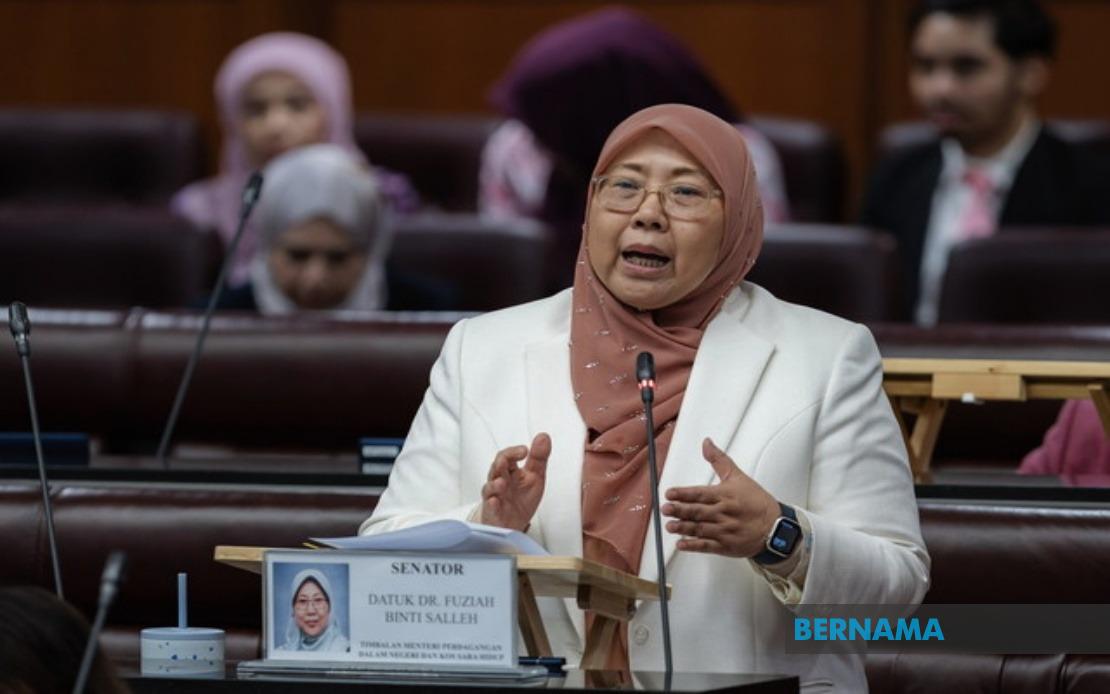
The Malaysian government has reinforced its position that artificial intelligence developers must obtain permission from copyright holders before using their works for model training, placing the onus on tech companies to secure proper licensing agreements and compensation arrangements. Deputy Domestic Trade and Cost of Living Minister Datuk Dr Fuziah Salleh made this statement during parliamentary questions at the Dewan Negara, addressing growing concerns within Malaysia's creative industry about how their intellectual property rights are protected in an era of rapid AI advancement.
The requirement, rooted in Section 27 of the Copyright Act 1987, applies universally to all copyrighted material regardless of whether it is being used for artificial intelligence applications or conventional commercial purposes. Fuziah emphasised that this principle remains constant, meaning content creators—whether authors, musicians, journalists or visual artists—retain their fundamental rights to control how their work is exploited. The statement comes as countries worldwide grapple with balancing innovation in artificial intelligence against the protection of creative workers' livelihoods and intellectual property.
Under Malaysia's existing legal framework, copyright owners have several mechanisms through which they can manage and monetise the use of their work by AI developers. These include direct licensing agreements negotiated between individual creators and technology companies, rights assignments that transfer specific usage rights, or engagement with Collective Management Organisations that represent groups of creators. These CMOs, which already operate in Malaysia's music, publishing and audiovisual sectors, could potentially become crucial intermediaries in ensuring creators receive fair compensation when their work is used for machine learning purposes.
Senator Datuk Wu Him Ven's supplementary question specifically prompted the government's clarification, reflecting genuine uncertainty in Malaysia's business and creative communities about the regulatory status of AI training datasets. Wu's inquiry sought confirmation that licensing and royalty mechanisms would be established to guarantee proper remuneration for local creators whose work might be incorporated into AI systems without their knowledge or consent. The government's response indicates that current law already provides a framework, though the specific mechanisms for enforcing these protections in practice remain underdeveloped.
A significant gap in Malaysia's current approach to AI regulation is the absence of any dedicated study examining how artificial intelligence-generated content affects employment and earnings within the local creative industries. When asked by Senator Wan Martina Wan Yusoff whether such an impact assessment had been conducted, Fuziah acknowledged that no formal study has been completed. This represents a substantial oversight, particularly given Malaysia's substantial creative economy and the government's aspirations to develop domestic technology capabilities.
The government's cautious approach reflects the genuine complexity of regulating artificial intelligence in real-time. Fuziah noted that Malaysia is engaged in ongoing consultations with stakeholders across technology, creative and business sectors while simultaneously studying regulatory models adopted by other countries. This incremental approach, while prudent, may leave creative workers in a vulnerable position during the interim period as AI adoption accelerates. Several nations, including the European Union and parts of the United States, have advanced further in developing specific frameworks addressing AI training and copyright, and Malaysia appears to be learning from their experiences before implementing domestic changes.
The rapidly evolving nature of artificial intelligence technology itself complicates regulatory efforts. AI systems improve and adapt continuously, and their training methodologies evolve faster than policy frameworks can typically accommodate. Fuziah's acknowledgment that "AI is evolving very quickly" reflects this reality, suggesting that the government recognises any legal framework established today may require substantial revision within a few years. Malaysia's decision to maintain dialogue with stakeholders rather than rushing into legislation reflects this understanding, though it also means prolonged uncertainty for creators.
Court precedent remains absent in Malaysia regarding copyright violations involving AI technology, indicating that the legal implications of using copyrighted material for machine learning have not yet been tested through the Malaysian judiciary. This absence of case law means that creators and technology companies operate in a grey zone where legal boundaries have not been definitively established. The lack of litigation could suggest either strong voluntary compliance or, alternatively, insufficient awareness among creators of their rights and potential remedies.
Malaysia's Copyright Act 1987 currently recognises copyright protection only for works demonstrating originality achieved through human effort, skill and intellectual contribution. This distinction carries important implications for artificial intelligence. Works generated entirely by AI systems without substantial human creative input fall outside the current scope of copyright protection, meaning AI-produced content theoretically cannot be copyrighted under Malaysian law. This creates a potential legal vacuum: AI-generated works exist outside the copyright framework, yet they may incorporate or derive from copyrighted source material, raising unresolved questions about liability and compensation.
The implications for Malaysia's creative industries are substantial. Local content creators—particularly in publishing, music, photography and visual arts—face uncertainty about whether their work might be harvested for AI training without compensation or consent. Meanwhile, Malaysian technology companies seeking to develop competitive AI systems must navigate unclear requirements about licensing and royalty obligations. The government's current position places responsibility on developers to obtain permissions, but without clearer guidelines, implementation remains ambiguous.
For Southeast Asian context, Malaysia's approach mirrors cautious stances adopted by several neighbouring economies still developing comprehensive AI regulations. The region's creative industries, though smaller than those in developed nations, constitute meaningful employment and export sectors. How Malaysia resolves the tension between protecting creators and enabling innovation could influence regulatory approaches across ASEAN, particularly as other member states face similar pressures from technology companies and creative communities.
The government's commitment to ongoing stakeholder engagement suggests that clearer policies will eventually emerge, but the timeline remains uncertain. Malaysian creators would likely benefit from earlier clarity rather than prolonged ambiguity. As artificial intelligence becomes increasingly embedded in content creation, data analysis and commercial operations, the absence of definitive legal guidance creates risk for all parties—creators lack security, technology companies lack certainty, and potential disputes may proliferate until precedent is established.

