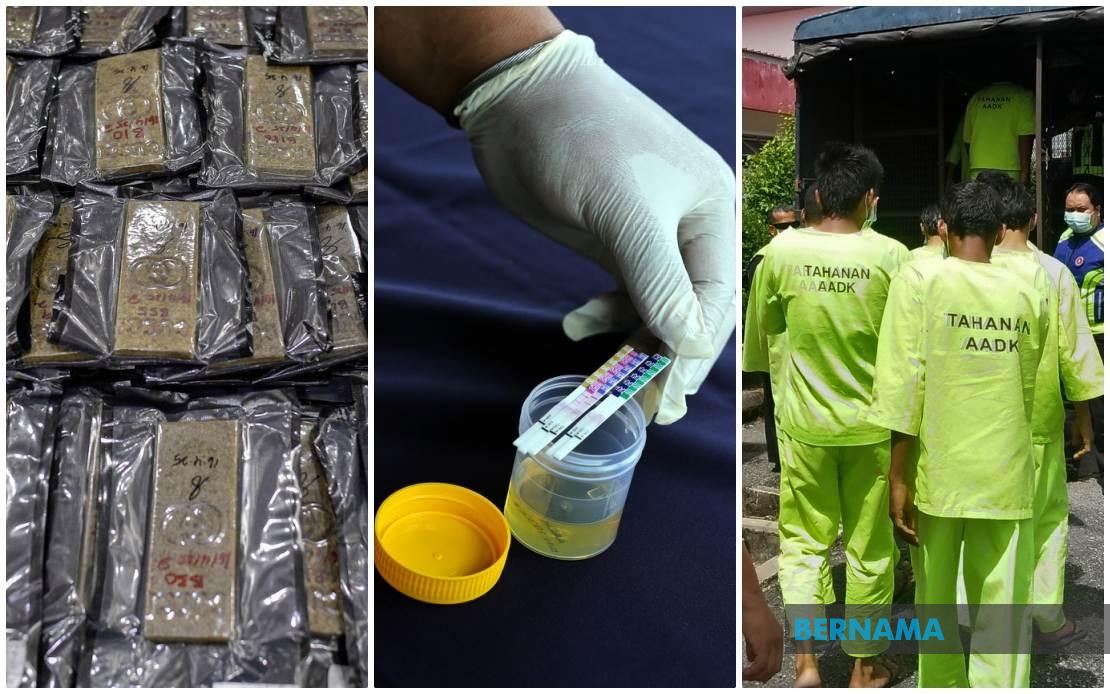
The scale of Malaysia's synthetic drug problem reached alarming proportions last year, with Home Minister Datuk Seri Saifuddin Nasution Ismail revealing that 141,817 cases were documented during 2024. This figure represents a troubling trajectory when placed against 145,526 cases in 2023 and a spike to 192,852 cases by 2024, painting a picture of an evolving crisis that demands urgent national attention. Speaking during parliamentary proceedings in Kuala Lumpur, the Minister underscored how synthetic substances have become the predominant drug of abuse across the country, eclipsing traditional narcotics that once dominated enforcement operations.
Among all drug categories, synthetic drugs constitute approximately 70 percent of recorded abuse cases, with amphetamine-type stimulants, commonly known as ATS, representing the most prevalent threat. This concentration reflects a significant shift in user behaviour and trafficking patterns that Malaysian authorities must address. The emergence of these highly potent substances marks a departure from earlier decades when heroin, cannabis, and plant-based drugs dominated the landscape. The transition indicates that traffickers have adapted to enforcement pressure and market demand by developing and distributing synthetic alternatives that are easier to conceal, transport, and manufacture in clandestine laboratories.
Geographic analysis reveals that the east coast corridor has become a particular hotspot for synthetic drug abuse, distinguishing itself from other regions in disturbing ways. Data compiled from multiple government agencies, including the Ministry of Health, the National Anti-Drugs Agency (AADK), rehabilitation centres, and the Royal Malaysia Police, pinpointed several districts as epicentres of the crisis. Pendang recorded the highest rate of drug abuse incidents, followed closely by Kuala Krai, with Bachok, Besut, and Mersing also emerging as severely affected areas. The concentration of cases in these specific locations suggests that targeted intervention strategies may be more effective than broad national campaigns.
The demographic composition of drug offenders reveals that nearly three-quarters of all cases involve individuals aged between 15 and 39 years, indicating that young Malaysians face heightened vulnerability. With approximately 192,000 cases recorded across the first portion of 2024, this translates to around 560 incidents per 100,000 Malaysians—a rate that highlights how deeply the problem penetrates Malaysian society. The prevalence of drug-related issues among younger populations carries long-term implications for social stability, productivity, and public health infrastructure. Educational institutions and community programmes aimed at this age group must be substantially expanded to provide viable alternatives and support mechanisms.
A particularly alarming development concerns the detection of fentanyl, a synthetic opioid dozens of times more potent than morphine and capable of causing rapid, fatal overdoses. Although fentanyl's presence in Malaysia has not yet reached the epidemic proportions seen in North America, authorities have begun identifying it in the marketplace, notably in adulterated vaping products. Recognising this threat, Malaysian lawmakers amended the Drug Dependants (Treatment and Rehabilitation) Act and the Dangerous Drugs Act 1952 to classify fentanyl as a scheduled substance, granting enforcement agencies legal tools to prosecute its distribution and possession. This proactive regulatory response demonstrates official concern about preventing a potential future crisis, though the substance's unpredictable potency and ease of concealment in small quantities present enforcement challenges.
The prison system itself serves as a stark indicator of how thoroughly drugs have infiltrated Malaysian society. Approximately 70 percent of inmates held connections to drug-related offences, whether through convictions or remand status. In facilities such as Machang, nearly all cases involve drug-related charges, transforming correctional institutions into de facto treatment facilities rather than centres for rehabilitation and reintegration. This concentration underscores the inadequacy of current prevention and early intervention strategies, as the criminal justice system becomes overwhelmed by volume. Moreover, the prison environment may facilitate the continued distribution and abuse of drugs, creating closed-loop cycles that perpetuate addiction and criminality.
To combat this multifaceted crisis, the AADK has implemented various approaches spanning prevention, education, and enforcement. Community-based prevention initiatives aim to build local resistance to drug availability, while programmes in schools and educational institutions target populations before they develop substance dependencies. Family intervention strategies recognise that addiction often stems from or perpetuates dysfunction within household units, while workplace programmes address abuse among employed populations. These preventive measures work in conjunction with enforcement operations conducted by the Royal Malaysia Police and the Customs Department, creating a comprehensive strategy that balances demand reduction with supply disruption.
However, authorities face mounting challenges from technological advancement that has fundamentally altered drug distribution networks. Online platforms enable individuals to purchase controlled substances without traditional gatekeeping mechanisms or quality controls. The anonymity and reach of internet-based trafficking channels complicate enforcement efforts, as agencies struggle to monitor and intercept transactions across multiple jurisdictions. This evolution requires Malaysian authorities to develop cyber-investigation capabilities, establish international cooperation frameworks, and regulate online platforms more rigorously. Without addressing these technological dimensions, conventional enforcement will prove increasingly ineffective.
For Malaysian policymakers and regional partners, these statistics underscore several critical considerations. The concentration of cases in specific east coast districts suggests that resources and programmes might be strategically deployed to those areas for maximum impact. The predominance of young users indicates that prevention must begin in primary schools and intensify through secondary education. The emergence of fentanyl demands enhanced border surveillance and laboratory monitoring to prevent a full-scale crisis. Additionally, Malaysia's experience may offer valuable lessons for neighbouring Southeast Asian nations facing similar synthetic drug pressures, potentially driving regional cooperation on enforcement and prevention strategies that transcend national borders and address trafficking networks operating across multiple countries.