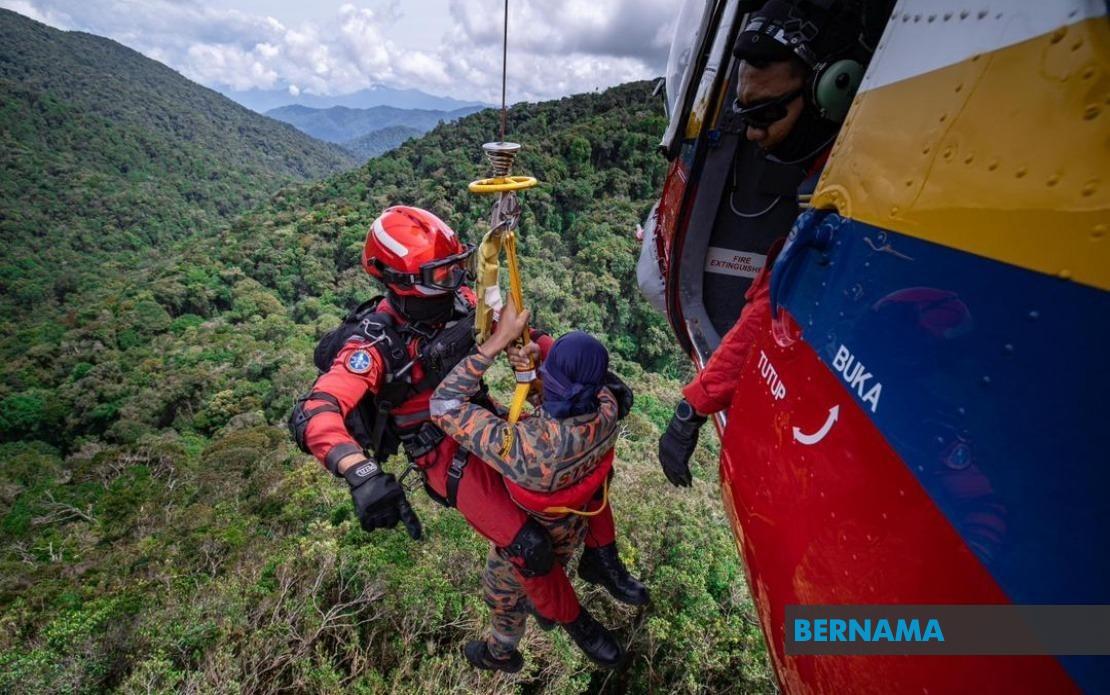
Hiking accidents across Malaysia have claimed 63 lives and caused 87 injuries across 1,059 recorded incidents between 2021 and 2025, prompting the government to accelerate its push for systematic safety improvements in the country's expanding recreational hiking sector. Deputy Minister Syed Ibrahim Syed Noh revealed these sobering figures during parliamentary questioning, emphasising the urgency of establishing robust safety frameworks as recreational hiking continues to surge in popularity among Malaysian adventurers. The statistics underscore a growing concern within government circles about the capacity of existing safety infrastructure to manage the nation's hiking enthusiasts responsibly.
The data compiled by the Fire and Rescue Department of Malaysia provides clear evidence that recreational hiking, while increasingly popular, carries significant risks that demand institutional attention. The scale of incidents—nearly one thousand accidents over four years—signals that casual approaches to trail safety are insufficient. These figures represent not merely statistical abstractions but reflect real consequences for families, rescue personnel, and communities affected by hiking-related tragedies. The deputy minister's parliamentary response indicates that the government recognises hiking safety as a public health priority requiring coordinated intervention across multiple agencies and stakeholder groups.
In response to these challenges, the Peninsular Malaysia Forestry Department, working in partnership with the United Nations Development Programme, has developed the Mountain Risk Assessment and Management Guideline (MoGRAM). This technical framework serves as a standardised approach to identifying hazards, evaluating exposure levels, and implementing proportionate risk controls across the nation's hiking network. Rather than relying on ad-hoc safety measures, MoGRAM provides forestry authorities with evidence-based methodologies for assessing trail conditions, weather patterns, and hiker behaviour to reduce accident likelihood. The guideline represents a shift towards professionalised risk management in a sector previously characterised by variable safety standards across different jurisdictions.
A cornerstone of Malaysia's enhanced hiking safety initiative involves the certification and deployment of Mountain Guides throughout high-risk areas. The forestry department has now mandated the presence of qualified Forestry Mountain Guides (MGP) across 189 designated high-risk hiking destinations nationwide. These certified professionals function as first-responders, safety monitors, and emergency coordinators who maintain direct contact with hikers throughout their journeys. To date, the government has successfully certified 2,322 individuals from local and indigenous communities as mountain guides through its skills development programme. This investment in human capital reflects an understanding that technology alone cannot substitute for on-ground expertise and situational awareness.
The mountain guide initiative simultaneously addresses economic and social dimensions of hiking safety. By recruiting and training guides from local communities, the government creates employment opportunities while strengthening the connection between resident populations and recreational land management. Indigenous communities, whose ancestral knowledge of mountain terrain proves invaluable, gain formal recognition and economic benefit through the certification scheme. This approach acknowledges that sustainable hiking safety depends not merely on regulatory compliance but on building inclusive systems where local stakeholders become active participants in managing their own environments.
Beyond human resources, the government is developing a digital hiking registration system utilising geospatial technology, geographic information systems, and satellite remote sensing in collaboration with the Malaysian Space Agency. This technological infrastructure would enable real-time mapping of hiking trails, centralised tracking of hiker locations, and sophisticated spatial analysis to support search and rescue operations. Currently, hiking registration across Permanent Reserved Forests operates through fragmented systems—some manual, others digital—managed separately by state forestry departments in accordance with Malaysia's federal structure. The proposed national digital system would create a unified database providing authorities with comprehensive visibility into hiker movements and trail usage patterns.
The planned digital registration system addresses a critical gap in Malaysia's current hiking oversight architecture. When emergency situations arise, time represents the most precious resource available to rescue teams. A centralised digital log containing precise information about hiker identities, intended routes, expected return times, and last known locations would dramatically accelerate emergency response protocols. Rather than conducting extensive ground searches based on minimal information, rescue teams could immediately identify missing hikers' planned routes and deploy resources strategically. The system would also generate valuable data about trail usage, hazard concentrations, and emerging risk patterns, enabling continuous refinement of safety protocols based on empirical evidence.
Implementing such a national system requires navigating Malaysia's constitutional division of authority, whereby state governments retain jurisdiction over forest management and environmental matters. Rather than imposing a top-down mandate, the government recognises that sustainable implementation depends on building consensus and demonstrating clear benefits to state authorities. The ministry's current proposal positions the digital registration system as a complementary tool that enhances—rather than displaces—existing state management mechanisms. By offering improved emergency response, systematic hiker tracking, and evidence-based trail assessment capabilities, the federal government makes a persuasive case for uniform adoption while respecting state autonomy.
The government simultaneously emphasises continuous professional development for mountain guides and nature guides operating across Malaysia's trails. These frontline safety professionals participate in regular training covering diverse competencies including hiking safety protocols, risk assessment methodologies, first aid and emergency medicine, wilderness survival techniques, and search and rescue operations. This comprehensive skills-building approach recognises that guide effectiveness depends not on single-dimension expertise but on multifaceted competence spanning medical, navigational, environmental, and interpersonal domains. By prioritising guide welfare and ongoing professional development, the government signals that hiking safety depends fundamentally on the quality and commitment of those directly responsible for hiker wellbeing.
For Malaysian hikers and their families, these systemic improvements promise meaningful reductions in accident risks and improved outcomes when emergencies occur. The combination of certified guides, standardised risk assessment frameworks, and digital emergency response systems addresses both prevention and response aspects of hiking safety. Prospective hikers gain greater assurance that commercial hiking operators and public trail managers have implemented professional safety standards. Simultaneously, the government demonstrates institutional responsiveness to a significant public health challenge, translating parliamentary concern into concrete administrative reform.
Regionally, Malaysia's approach to hiking safety reflects broader Southeast Asian trends as recreational mountain tourism expands across the region. The systematic integration of digital technology, professional certification, community engagement, and multinational collaboration provides a model that neighbouring countries facing similar challenges might adapt to their own contexts. As outdoor recreation becomes an increasingly important component of tourism and wellness economies across Southeast Asia, establishing credible safety frameworks becomes essential for sustainable industry development. Malaysia's investments in hiking safety infrastructure position the country as a responsible steward of recreational resources while maintaining the accessibility and enjoyment that make hiking culturally and economically significant.