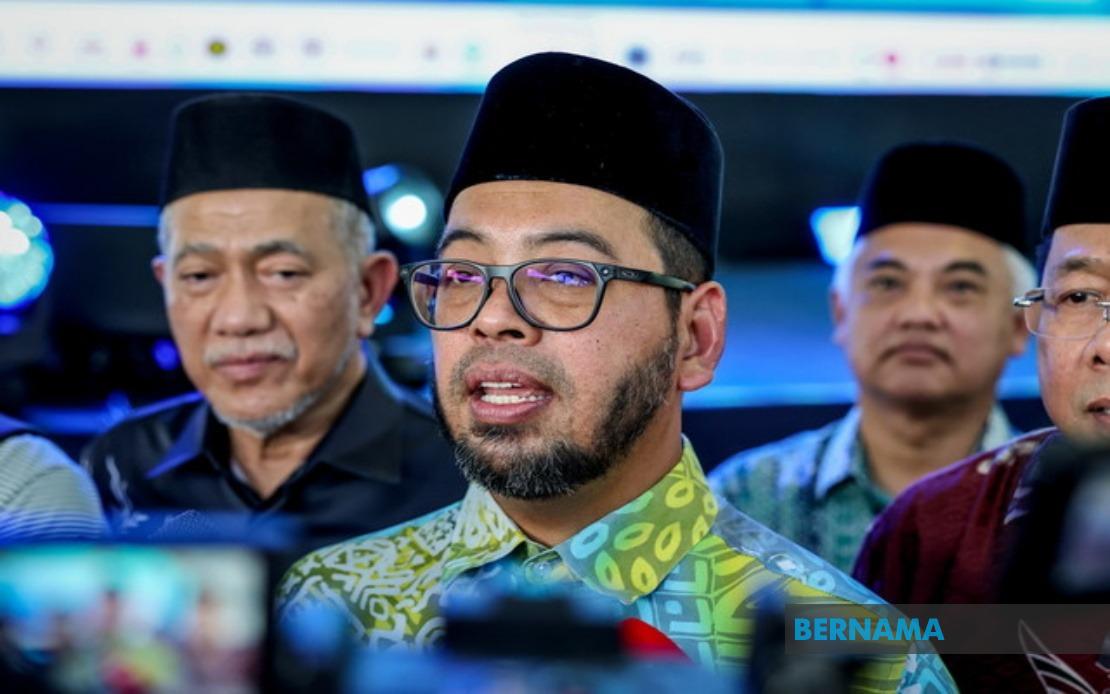
Malaysia has solidified its standing as one of the world's foremost nations in managing Islamic affairs, anchored by a sophisticated network of institutions and carefully designed policies that command international respect. Speaking at the opening of the Northern Zone MADANI Ulama and Umara Multaqa at Masjid Timah in Permatang Pauh, Bukit Mertajam on July 5, Minister in the Prime Minister's Department (Religious Affairs) Dr Zulkifli Hasan underscored how this reputation stems not from perception alone but from measurable outcomes and endorsements by global scholars and observers of religious affairs. The minister emphasized that whenever Malaysian officials engage internationally, the country's approach to Islamic administration consistently draws admiration from counterpart nations seeking to strengthen their own frameworks.
Dr Zulkifli Hasan's remarks directly counter narratives suggesting that Islam faces constraints or marginalization within Malaysia's pluralistic landscape. He articulated a contrasting reality where international bodies and academic institutions recognize Malaysia as an active architect of Islamic advancement rather than a passive or defensive participant. This positioning becomes particularly significant in the current geopolitical climate, where questions about religious freedom and minority rights frequently dominate global discourse. By anchoring Malaysia's credibility in verifiable data and scholarly consensus rather than self-promotion, the minister framed the country's religious management model as worthy of emulation and study by other nations navigating similar demographic and institutional complexities.
Among Malaysia's most celebrated achievements stands its halal certification system, administered by the Department of Islamic Development Malaysia (JAKIM). This framework has transcended domestic relevance to become a global benchmark, establishing Malaysia as the standard-setter for halal authentication practices internationally. The system's rigor and comprehensiveness have enabled Malaysian businesses to dominate halal trade corridors and positioned the country as an authority that other nations and companies trust implicitly. As global demand for authenticated halal products expands, particularly across Asia, the Middle East, and Muslim-majority regions, Malaysia's certification credentials provide an enduring competitive advantage that extends beyond religious considerations into commercial and diplomatic spheres.
Equally impressive is Malaysia's performance in managing the annual hajj pilgrimage through Lembaga Tabung Haji, an institution that has garnered international commendation for its organizational excellence and pilgrim welfare standards. Coordinating the logistical, financial, and spiritual needs of hundreds of thousands of Malaysian pilgrims annually demands exceptional operational capability and cultural sensitivity, competencies that global observers have recognized as exemplary. This recognition enhances Malaysia's soft power in Muslim-majority nations and reinforces its role as a trusted steward of one of Islam's most significant religious obligations, thereby deepening diplomatic and cultural ties across the Islamic world.
The country's Islamic finance sector represents another pillar of Malaysia's global Islamic leadership, a distinction underscored by its consecutive ranking as the world's premier Islamic finance hub for eleven consecutive years. This preeminence reflects decades of regulatory innovation, institutional development, and market maturation that have positioned Kuala Lumpur and Malaysia's banking ecosystem at the forefront of shariah-compliant financial instruments and services. Islamic finance extends beyond religious observance to encompass sophisticated wealth management, corporate financing, and investment products that serve both Muslim and non-Muslim clients seeking ethical financial vehicles. Malaysia's dominance in this sector demonstrates that Islamic principles and modern financial architecture coexist productively, a lesson with implications for emerging Islamic finance markets throughout Southeast Asia and beyond.
On the educational dimension, Malaysia has implemented strategic enhancements to its foundational Islamic curriculum through the KAFA 2.0 initiative, which restructures the Kelas Al-Quran dan Fardu Ain programme to emphasize practical application and deeper appreciation of Islamic teachings rather than rote instruction alone. This pedagogical shift reflects a broader commitment to producing Muslims capable of navigating contemporary challenges with theologically grounded yet pragmatic perspectives. By strengthening curriculum design, Malaysia invests in cultural continuity while equipping younger generations with intellectual tools to engage confidently in plural societies.
Complimenting this initiative is Malaysia's comprehensive tahfiz ecosystem, an integrated system encompassing the National Tahfiz Council, National Tahfiz Policy, National Tahfiz Standard, and the Malaysia Tahfiz Certificate. This architecture creates pathways enabling hafiz graduates—those who have memorized the Quran—to pursue tertiary and vocational education, thereby integrating traditional Islamic scholarship with professional development opportunities. The government's commitment to producing professional huffaz reflects recognition that Islamic learning must connect meaningfully with national development needs, creating graduates who contribute specialized expertise across multiple sectors while maintaining their religious commitment.
The private sector and civil society also reinforce Malaysia's Islamic institutional ecosystem. Yayasan Takwa's recent contribution of RM280,000 distributed among 28 mosques in Penang, allocating RM10,000 to each establishment, exemplifies how organized philanthropy channels resources toward sustaining and improving religious infrastructure. This funding pattern extended to selected religious schools, emphasizing collective investment in Islamic education facilities that serve broader community functions beyond formal pedagogy. Such contributions indicate a robust civil society dimension that sustains Islamic institutions independent of state provisioning alone, a characteristic that strengthens institutional resilience and pluralistic participation in religious affairs management.
Malaysia's multifaceted approach to Islamic administration—spanning certification, finance, pilgrimage coordination, education, and civil participation—constructs a model that international observers and scholars increasingly cite as demonstrating how Muslim-majority nations can maintain robust Islamic institutions while functioning as modern, economically dynamic states. This success deflates assumptions that religious commitment and contemporary governance inevitably conflict, offering reassuring evidence that identity-conscious institutional development produces tangible outcomes benefiting both believers and broader societies. For Southeast Asian nations facing comparable questions about balancing religious identity with inclusive governance, Malaysia's demonstrated capacity provides both a competitive reference point and a potential collaborative partnership opportunity.
The international recognition Malaysia commands in Islamic affairs management contributes substantively to national soft power and diplomatic standing within Muslim-majority regions and organizations. As countries throughout Southeast Asia and beyond examine their own religious governance frameworks, Malaysia's proven competencies across multiple domains—from halal authentication to Islamic finance to educational innovation—position it as a trusted advisor and partner. This influence extends Malaysia's regional relevance beyond conventional political and economic channels, creating opportunities for deeper integration with partners sharing commitments to Islamic institutional excellence and contemporary pluralism. Ultimately, Malaysia's leadership in Islamic affairs management demonstrates that religious identity and global integration can reinforce rather than undermine one another when institutional frameworks operate with sophistication, transparency, and inclusive purpose.

