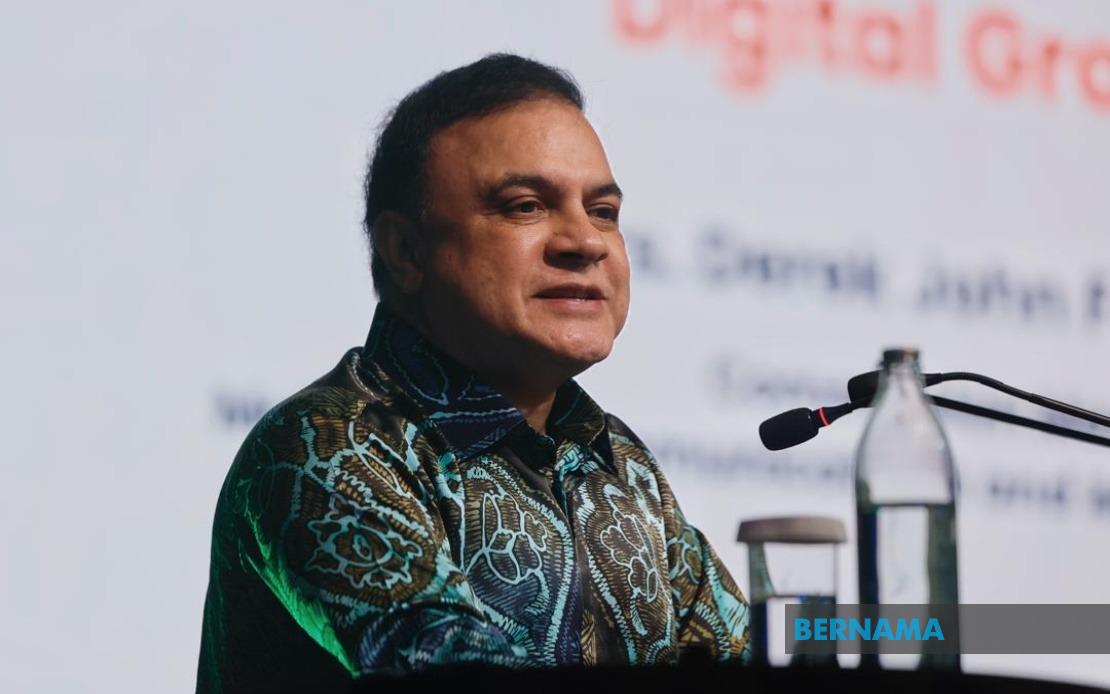
Malaysia's push to create equivalent legal protections in the digital realm mirrors decades-old safeguards in the physical world, according to Derek John Fernandez, a member of the Malaysian Communications and Multimedia Commission (MCMC), who outlined the critical regulatory challenge at the International Regulatory Conference (IRC) 2026 in Kuala Lumpur on July 21. The conference, officially opened by Communications Minister Datuk Seri Fadhmi Fadzil, reveals growing concerns among policymakers that criminals exploit the comparative lawlessness of cyberspace to prey on children and other defenceless populations.
For generations, Malaysian society has enforced strict age restrictions on films, publications, and activities deemed inappropriate for minors, reflecting the principle that developmental maturity matters for legal protection. Fernandez's central argument is that digital spaces have escaped this protective logic, allowing offenders to operate with near-impunity because of regulatory gaps, anonymity affordances, and lax enforcement compared to the physical world. He articulated this inconsistency starkly: the same society that prevents an underage person from watching a restricted film at a cinema permits that same child unfettered access to equivalent or more harmful content online, a paradox that invites exploitation.
This regulatory asymmetry has real consequences. The MCMC processes between two and three reports of child sexual abuse material daily, and its enforcement teams remove approximately 1,700 pieces of harmful online content every single day, underscoring the scale of digital harm now embedded in Malaysian society. These figures illustrate not merely a technical compliance problem but a sustained crisis affecting vulnerable minors, one that would provoke immediate intervention if it occurred in schools or public spaces yet remains partially normalised online.
Malaysia has responded with legislative modernisation, chiefly through the Communications and Multimedia Act 1998, recent amendments to the Penal Code, and the new Online Safety Act 2025 (ONSA), which came into force on January 1 this year. These instruments introduce identity and age verification requirements for digital platforms, attempting to transplant the verification logic of physical spaces into virtual ones. The ONSA represents Malaysia's most ambitious effort to date to establish comprehensive digital safety standards, signalling the government's recognition that piecemeal responses no longer suffice given the sophistication of cyber threats and the ubiquity of connected devices in Malaysian households.
The challenge regulators face extends beyond legislation to the economic models of major technology companies. Fernandez highlighted that personal data has become a highly valued commercial commodity, with platforms generating revenue through extensive user information collection and analysis. Criminals have learned to weaponise this data, using it to orchestrate targeted scams, fraud schemes, and exploitation networks. This creates a fundamental tension between the commercial interests of digital platforms—which depend on data harvesting—and the public interest in privacy and safety, a tension that regulators must navigate without decisive corporate cooperation.
The digital environment differs fundamentally from the physical world in ways that compound regulatory difficulty. Parents can monitor their children's physical movements and social interactions, exerting a degree of parental oversight that remains practically impossible online. Smartphones and computers operate continuously, across all hours, without geographical boundaries, exposing young users to solicitation, grooming, and abuse material constantly. The home, traditionally conceived as a sanctuary, becomes a potential risk zone once connected to the internet, a reality that has profoundly altered childhood experiences in Malaysia and throughout Southeast Asia.
While regulators and technology companies often disagree on governance approaches, Fernandez asserted that child protection should not be contentious. Yet disagreement persists precisely because it touches on fundamental questions of digital freedom, platform liability, and the state's role in mediating technology use. Some advocate lighter regulation to preserve innovation and user autonomy, whilst others prioritise protection over liberty. Malaysia's position, crystallised in the ONSA, leans toward protective intervention, reflecting broader regional patterns in Asia where governments have moved decisively to restrict or monitor online content.
Age-based restrictions on social media access have gained traction internationally, and Malaysia is exploring similar measures. However, Fernandez cautioned against over-reliance on age verification alone, which addresses only one vector of harm. A more comprehensive strategy requires coordination across multiple domains: legislation establishing clear standards, technology enabling effective enforcement and identity verification, law enforcement agencies possessing adequate resources and expertise, and international cooperation given that many offenders and platforms operate across borders. The fragmented global regulatory landscape means that determined criminals can relocate operations to jurisdictions with weaker oversight, a reality that underscores why regional cooperation—particularly within ASEAN—remains critical.
The IRC 2026's theme, 'Shaping the Next Digital Era: Regulation, Resilience and Trust,' encapsulates Malaysia's regulatory philosophy. Rather than accepting digital lawlessness as inevitable or minimising intervention in the name of market freedom, Malaysia is constructing a framework that assumes trustworthy digital spaces require active governance. This shift reflects demographic reality: over 85 per cent of Malaysian children now use the internet regularly, and that figure continues rising. The costs of regulatory inaction—measured in traumatised children, broken families, and eroded social cohesion—exceed the costs of imposing consistent standards.
For Malaysian society and Southeast Asia more broadly, the implications are profound. Malaysia's experience demonstrates that rapid digitalisation need not proceed unchecked; regulatory responses can develop in parallel with technological adoption. The ONSA and related measures position Malaysia as a regional leader in digital safety governance, potentially influencing how neighbouring countries approach similar challenges. However, the success of these laws depends not on the legislation itself but on rigorous implementation, adequate resourcing of enforcement agencies, and genuine cooperation from technology platforms that have historically resisted restrictions on data collection and user monitoring.
The longer-term challenge involves cultural adaptation. Digital literacy programmes, parental education, and institutional responsibility-sharing between government, industry, schools, and families must accompany legal frameworks. Without these complementary efforts, even well-designed regulations will produce compliance theatre rather than genuine safety. Fernandez's emphasis on parity between physical and digital legal standards offers Malaysia a coherent regulatory philosophy: whatever protections society considers essential for children in the tangible world should extend into digital spaces with equivalent force. Whether Malaysia can sustain that commitment as technological sophistication accelerates remains the crucial open question.

