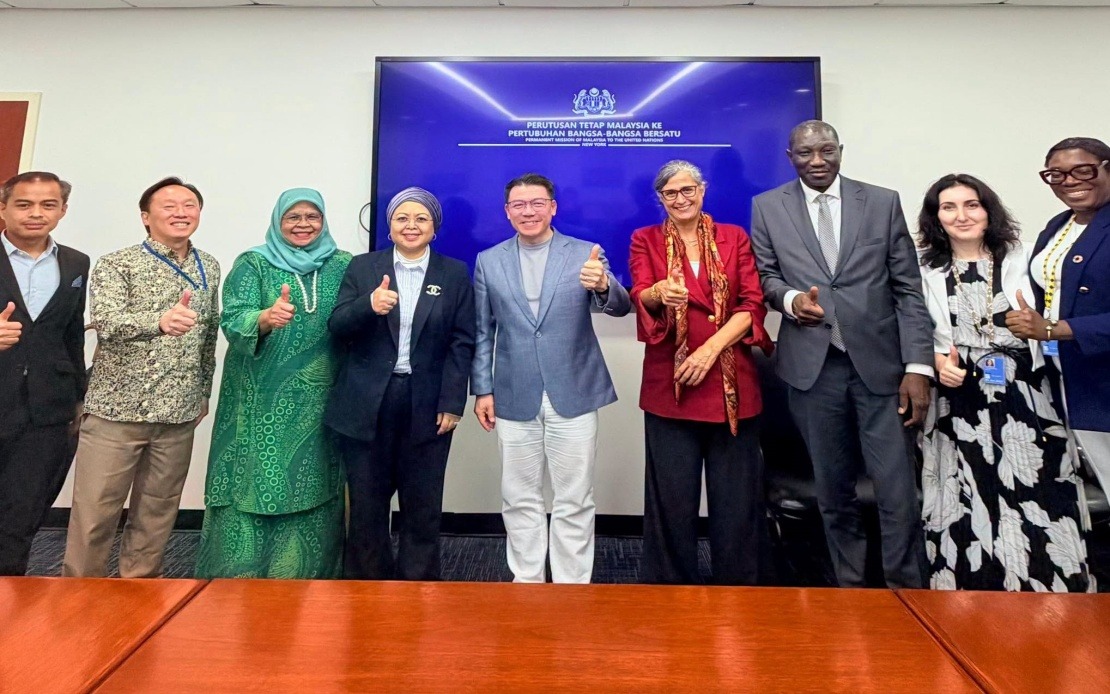
At the United Nations Headquarters in New York this week, Malaysia made an urgent appeal for the international community to move beyond rhetoric and deliver concrete progress on urban development. Housing and Local Government Minister Nga Kor Ming, speaking as President of the UN-Habitat Assembly, warned that the current Midterm Review of the New Urban Agenda presents a critical juncture for nations to demonstrate meaningful action rather than merely cataloguing failures. With only four years remaining until the 2030 deadline, Malaysia contends that assessments of past progress, while necessary, must now give way to intensive implementation efforts that directly improve living conditions for the billions of people inhabiting urban centres across the globe.
Nga's remarks reflected a palpable frustration with the pace of change in urban development policy internationally. He stressed that a midterm review lacking substantive outcomes would be counterproductive, emphasising that member states must treat this moment as a turning point in their approach to city-building and urban governance. The minister articulated that the review framework should serve not as a retrospective exercise but as a platform for nations to reset priorities, mobilise resources and recommit to the foundational principles of inclusive and sustainable urbanisation.
The High-Level Meeting, which convened senior officials, local government representatives and civil society leaders, focused on accelerating implementation of the New Urban Agenda through 2036. The gathering sought to address persistent challenges undermining urban development across regions, particularly in Asia-Pacific where rapid urbanisation has strained infrastructure and social services. Malaysia identified three interconnected crises demanding immediate attention: the deepening global housing shortage, the widening digital divide in cities, and the vulnerability of urban areas to climate impacts. Each of these challenges disproportionately affects lower-income communities and marginalised populations, making equity a central concern in Malaysia's advocacy.
As chair of the UN-Habitat Assembly, Nga positioned Malaysia as a bridge between global commitments and regional implementation realities. He championed the Asia-Pacific Urban Action Platform, a mechanism designed to translate the Sustainable Development Goals into locally relevant urban strategies. This platform facilitates knowledge exchange among governments in the region and strengthens financing mechanisms for green infrastructure projects. By highlighting this initiative, Malaysia demonstrated how transnational collaboration within regional frameworks can accelerate progress on shared urban challenges while respecting the specific contexts and capacities of individual nations.
Malaysia's own urban development trajectory served as a case study for what can be achieved through sustained political commitment. The country has constructed over 500 million square feet of green-certified buildings, a substantial accomplishment reflecting strategic investment in climate-resilient infrastructure. This achievement is not merely environmental; it signals to other developing nations that sustainable urban development need not compromise economic growth or competitiveness. Malaysia plans to expand this portfolio further before 2030, positioning itself as a demonstration site for how middle-income countries can simultaneously pursue development and environmental stewardship.
The minister's remarks also reflected Malaysia's broader development philosophy under the MADANI Economy framework, which integrates sustainability considerations into economic policymaking. This approach suggests that urban development is not peripheral to economic strategy but central to it. By linking sustainable cities to economic productivity, Malaysia reframes the urban agenda from a compliance burden into a competitive advantage. For regional neighbours and developing nations watching Malaysia's trajectory, this messaging is significant: sustainable urbanisation can enhance rather than hinder economic prospects.
Nga underscored that genuine urban transformation emerges from collaboration among multiple stakeholders rather than top-down mandates. Governments, development partners, private sector investors, local authorities and grassroots communities all have roles to play in reshaping cities. This multilevel governance approach acknowledges the complexity of urban systems and the reality that no single actor possesses sufficient power or resources to drive comprehensive change alone. Malaysia's advocacy for inclusive partnership models reflects lessons learned from its own federal structure and experience managing urban development across diverse local contexts.
The emphasis on leaving no community behind reveals awareness of urbanisation's uneven impacts. Rapid city growth has generated prosperity for some residents while leaving others in informal settlements, slums and peripheral areas lacking basic services. Malaysia called on nations to ensure that sustainability initiatives and green infrastructure investments reach disadvantaged populations, not just affluent neighbourhoods. This concern resonates throughout Asia-Pacific, where urbanisation has proceeded at unprecedented speed, often outpacing the expansion of public services and affordable housing.
Malaysia's participation in this high-level forum illustrates Southeast Asia's growing influence in global urban policy conversations. Rather than simply receiving prescriptions from developed nations, regional powers like Malaysia are shaping the agenda and offering solutions grounded in developing-world realities. This shift reflects the reality that more than half of humanity now lives in urban areas, with the proportion rising fastest in the Global South. Consequently, solutions designed exclusively by wealthy nations prove inadequate for contexts where urbanisation occurs amid resource constraints and competing development priorities.
The minister's call for renewed determination signals that Malaysia expects the UN process to generate binding commitments and accountability mechanisms, not aspirational statements that fade after the meeting concludes. This reflects broader frustration globally with summits that produce ambitious declarations but insufficient follow-through. For Malaysia to position itself as a credible advocate, its own urban initiatives must demonstrate measurable progress, making the country's expansion of green buildings and digital infrastructure investments particularly significant as evidence of serious implementation capacity.
Looking forward, Malaysia's advocacy at the UN suggests the country will press for international frameworks that support developing nations' urban ambitions without imposing uniform standards disconnected from local realities. The focus on the Asia-Pacific region as a distinct context with particular needs and capabilities may generate alternative models to those championed by developed-country actors. For Southeast Asian governments grappling with rapid urbanisation amid climate uncertainty and development pressures, Malaysia's voice at the highest international forums offers both representation and the potential to shape solutions better suited to regional conditions.
The four-year countdown to 2030 that Nga emphasised will likely define his tenure as chair of the UN-Habitat Assembly. Success will be measured not by eloquent statements but by whether nations translate urban development commitments into budgets, policies and infrastructure that tangibly improve urban residents' lives. Malaysia's challenge now involves maintaining momentum from this high-level gathering and ensuring that the regional platform for urban action generates concrete outcomes that justify the investment of political capital and resources.

