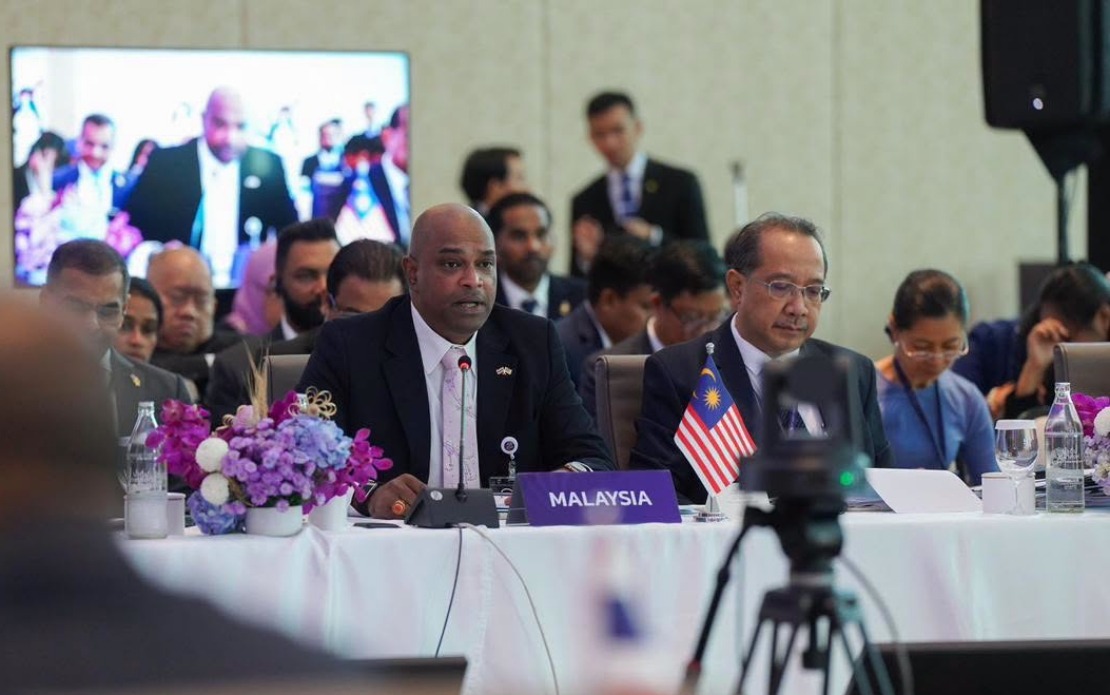
Malaysia has intensified its push for ASEAN member states to establish stronger mechanisms for recognising and validating workforce qualifications, positioning skills harmonisation as critical to the bloc's economic future. Datuk Seri R. Ramanan, the Human Resources Minister, outlined the proposal during the 14th ASEAN Plus Three Labour Ministers' Meeting in Bangkok, Thailand, stressing that the region's talent pool must be both domestically trusted and internationally credible to thrive in an increasingly competitive global marketplace.
The Malaysian initiative focuses on three interconnected pillars designed to modernise how ASEAN approaches skills development and certification. First among these is establishing joint certification frameworks and harmonising technical and vocational education and training (TVET) qualifications across member nations—a challenge that has long plagued regional labour mobility. The second involves accelerating technology transfer initiatives and investing substantially in educator upskilling to ensure trainers themselves remain at the forefront of industry evolution. The third pillar targets emerging sectors, with Malaysia advocating for world-class training programmes in cutting-edge fields including artificial intelligence, next-generation vehicle technology, and advanced robotics.
This comprehensive approach reflects an underlying anxiety within ASEAN capitals about the region's ability to retain competitive advantage as global supply chains reconfigure and automation reshapes labour markets. Malaysia's position is that without coordinated action on skills standardisation, individual ASEAN nations risk seeing their workers disadvantaged in cross-border employment opportunities. More broadly, the initiative acknowledges that the quality and recognition of vocational credentials directly influences foreign investment decisions, as multinational corporations increasingly prioritise locations with reliable access to certified, internationally comparable talent.
Ramanan articulated a vision that extends beyond mere bureaucratic compliance with certification protocols. He framed Malaysia's advocacy as fundamentally about ensuring that workers trained within ASEAN possess qualifications that carry genuine weight in international labour markets, opening pathways for regional talent to secure positions anywhere in the world. This reframing positions skills recognition not simply as a regional integration mechanism but as an empowerment issue for millions of workers across Southeast Asia whose career prospects are constrained by the current fragmentation of educational standards.
The inclusion of China, Japan, and South Korea in the Bangkok meeting underscores Malaysia's strategic reasoning: that ASEAN's skills challenges cannot be addressed in isolation. These three northeast Asian economies possess substantial technological expertise, established vocational training infrastructure, and proven experience in managing workforce transitions during rapid industrialisation. Malaysian authorities appear convinced that bilateral and multilateral knowledge-sharing with these partners will accelerate ASEAN's capacity-building efforts, particularly in high-value sectors where technical expertise remains concentrated in more developed regional economies.
Malaysia's framing of this initiative as a collaborative exercise rather than a unilateral push reflects pragmatic understanding of ASEAN's consensus-based decision-making culture. By positioning the proposal as benefiting all member states equally and inviting external expertise, Kuala Lumpur seeks to build momentum behind an agenda that could face resistance from nations concerned about brain drain or anxious about ceding autonomy over educational standards. The emphasis on technology transfer and teacher development also addresses a practical constraint: many ASEAN members lack the domestic resources to independently develop advanced training programmes in emerging fields.
For Malaysia specifically, the proposed framework carries particular significance. As Southeast Asia's most industrialised economy and a hub for manufacturing, semiconductors, and increasingly, digital services, Malaysia has long struggled with skills mismatches in critical sectors. A harmonised ASEAN framework would theoretically facilitate smoother cross-border movement of certified workers while also establishing benchmarks that domestic institutions could target. This could ease labour shortages in high-skilled positions while simultaneously improving the competitive positioning of Malaysian-trained workers in regional and global markets.
The emphasis on artificial intelligence, next-generation vehicles, and robotics reflects genuine anxiety about technological disruption across ASEAN. These sectors represent not only employment opportunities but also potential flashpoints for labour displacement if workforce development does not keep pace with automation adoption. By proposing that ASEAN develop world-class training programmes in these fields collectively, Malaysia is essentially arguing that the region's only viable response to technological change is to upskill proactively rather than manage decline reactively.
Implementing such a framework presents formidable practical challenges. ASEAN member states maintain varying levels of educational infrastructure, funding capacity, and institutional capability. The existing diversity in TVET systems—reflecting different colonial legacies, economic development trajectories, and policy priorities—creates genuine technical obstacles to harmonisation. Yet Malaysia's approach implicitly acknowledges these difficulties by advocating for partnerships with more advanced economies and focusing on joint certification rather than identical systems. This pragmatism may prove essential for gaining traction among ASEAN members with limited capacity to unilaterally reform their vocational education ecosystems.
Beyond the immediate labour market implications, Malaysia's initiative reflects broader anxiety about ASEAN's position in an increasingly multipolar and technologically stratified global economy. The region faces pressure from both more developed economies to its north and rising competition from India and Africa for manufacturing and outsourcing work. Strengthening skills recognition and workforce capabilities represents a long-term strategic investment in ensuring ASEAN remains an attractive destination for quality employment and investment rather than sliding into competition based solely on wage costs.
The timing of Ramanan's advocacy also carries significance amid global economic uncertainties. As various ASEAN economies navigate post-pandemic recovery, inflation pressures, and evolving geopolitical tensions, workforce development has emerged as a relatively uncontroversial area for multilateral cooperation. By advancing this agenda now, Malaysia positions itself as a thought leader on regional integration issues while building consensus around measures that could yield measurable benefits over the medium to long term.

