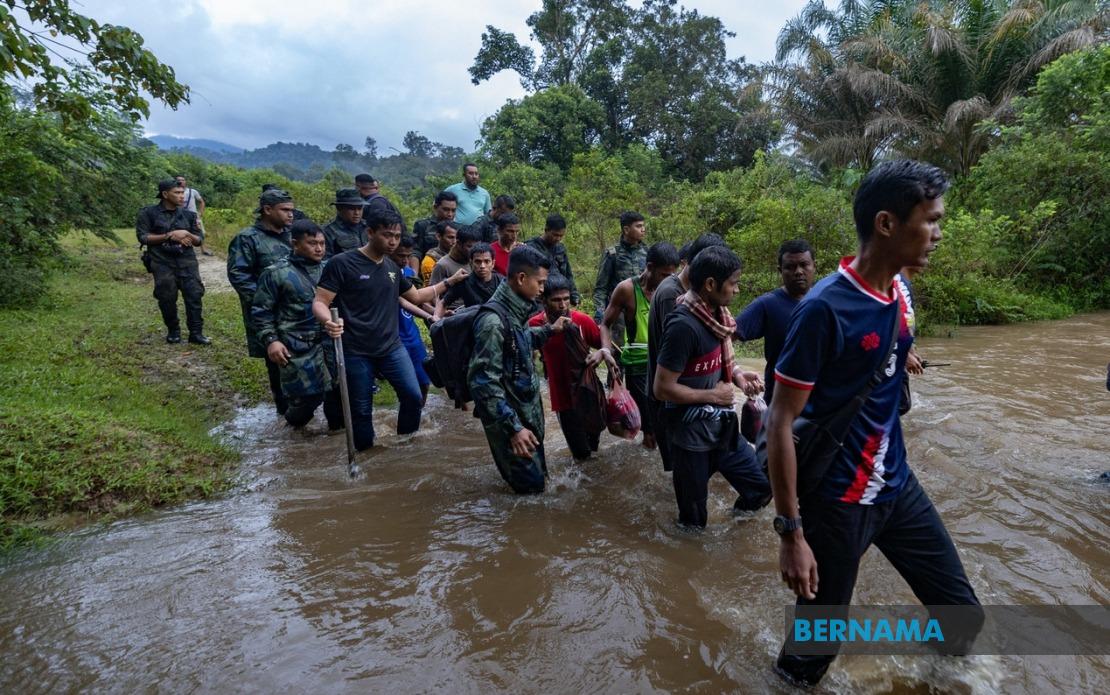
Malaysia is moving to deepen its partnership with ASEAN member states and the United Nations High Commissioner for Refugees in confronting one of Southeast Asia's most intractable humanitarian challenges: the displacement of over a million Rohingya people. Deputy Foreign Minister Datuk Lukanisman Awang Sauni outlined the country's intentions during parliamentary proceedings in Kuala Lumpur, signalling that Putrajaya views strengthened coordination as essential to managing both the immediate protection needs of vulnerable populations and the longer-term geopolitical implications of the crisis.
The Rohingya emergency represents a test of Malaysia's regional standing and diplomatic influence. As a nation hosting tens of thousands of Rohingya refugees—many living in informal settlements without formal legal status—Malaysia occupies a unique position between humanitarian obligation and the practical constraints of absorbing displaced populations. The country has become a crucial transit and destination point for maritime migration flows originating from Myanmar, Bangladesh and beyond, creating security and social pressures that extend far beyond the refugee camps themselves.
Lukanisman framed Malaysia's strategy within a broader understanding of the crisis's transnational character. The displacement of Rohingya communities has catalysed irregular migration networks, enabled human trafficking syndicates, and created security vulnerabilities that affect the entire region. These cascading effects mean the crisis cannot be viewed in isolation as a Myanmar-Bangladesh problem; it demands coordinated regional responses that recognise how displacement creates opportunities for criminal networks and threatens border stability across Southeast Asia.
Central to Malaysia's approach is leveraging ASEAN as a diplomatic platform for advocating peaceful resolution in Myanmar. Yet Lukanisman's parliamentary statement acknowledged the fundamental tension constraining collective action: ASEAN's foundational principle of non-interference in member states' internal affairs, combined with its requirement for consensus-based decision-making, severely limits the bloc's ability to exert meaningful pressure on the Myanmar government. This structural limitation means ASEAN has largely confined itself to relatively soft diplomatic engagement rather than stronger measures that might address root causes of the displacement.
The UNHCR, meanwhile, operates within its own institutional boundaries. While the organisation has been vital in providing protection, medical care, education, and material assistance to Rohingya refugees across the region, its mandate deliberately excludes political advocacy or intervention in the sovereign governance of member states. The UNHCR focuses on alleviating symptoms—delivering humanitarian assistance and documenting human rights abuses—rather than treating the underlying political crisis that triggered the exodus from Rakhine State. This division of labour, while necessary given international law frameworks, leaves a critical gap in addressing the political causes of displacement.
Despite these constraints, Malaysia is exploring several forward-looking measures. The country intends to champion responsibility-sharing mechanisms among ASEAN partners, recognising that the burden of hosting refugees has fallen disproportionately on Malaysia, Bangladesh, and Indonesia. Such mechanisms would distribute costs more equitably across the region and strengthen the collective capacity to provide services and protection. This approach acknowledges that sustainable solutions require ASEAN to function as a burden-sharing community rather than allowing individual countries to manage crises alone.
Equally significant is Malaysia's emphasis on promoting political pathways to voluntary, safe, and dignified repatriation. This represents a crucial shift from purely humanitarian responses to solutions that address refugees' desire to return home. Repatriation, however, depends entirely on transformations in Myanmar's political environment and governance of Rakhine State—conditions currently absent. Malaysia's push for political dialogue thus recognises that humanitarian assistance, while essential, cannot substitute for the political reconciliation needed to make return feasible.
For Malaysian policymakers, the Rohingya crisis exemplifies the interconnection between regional stability and humanitarian responsibility. The country's positioning as a committed player in both ASEAN frameworks and international humanitarian systems reflects a deliberate choice to embed itself within multilateral institutions rather than adopt isolationist responses. This approach carries domestic political costs, as public sentiment regarding refugee populations varies, yet Lukanisman articulated it as integral to Malaysia's international identity.
The practical implications of Malaysia's strategy deserve scrutiny. Strengthening responsibility-sharing will require persuading wealthier ASEAN members to contribute more substantially to refugee services and resettlement. Promoting political solutions in Myanmar demands sustained diplomatic engagement with a military regime that has shown limited receptiveness to international pressure. And balancing Malaysia's humanitarian commitments with legitimate concerns about irregular migration and national security requires sophisticated policy calibration.
The regional context matters significantly. Thailand, Indonesia, and Bangladesh face similar pressures from Rohingya populations, creating both shared interests in coordinated responses and potential competition for international support. Malaysia's willingness to champion regional strategies positions it as a potential diplomatic broker, though success depends on building consensus among countries with varying capacities and political incentives.
LookingAhead, Malaysia's commitment to deepened cooperation signals recognition that short-term humanitarian responses, while necessary, cannot resolve the Rohingya crisis permanently. The country is investing diplomatic capital in processes that, if successful, could establish precedents for regional management of displacement crises more broadly. Whether ASEAN's institutional constraints and Myanmar's political trajectory permit meaningful progress remains an open question, but Malaysia's stated willingness to explore new frameworks reflects serious engagement with one of Southeast Asia's most pressing challenges.

