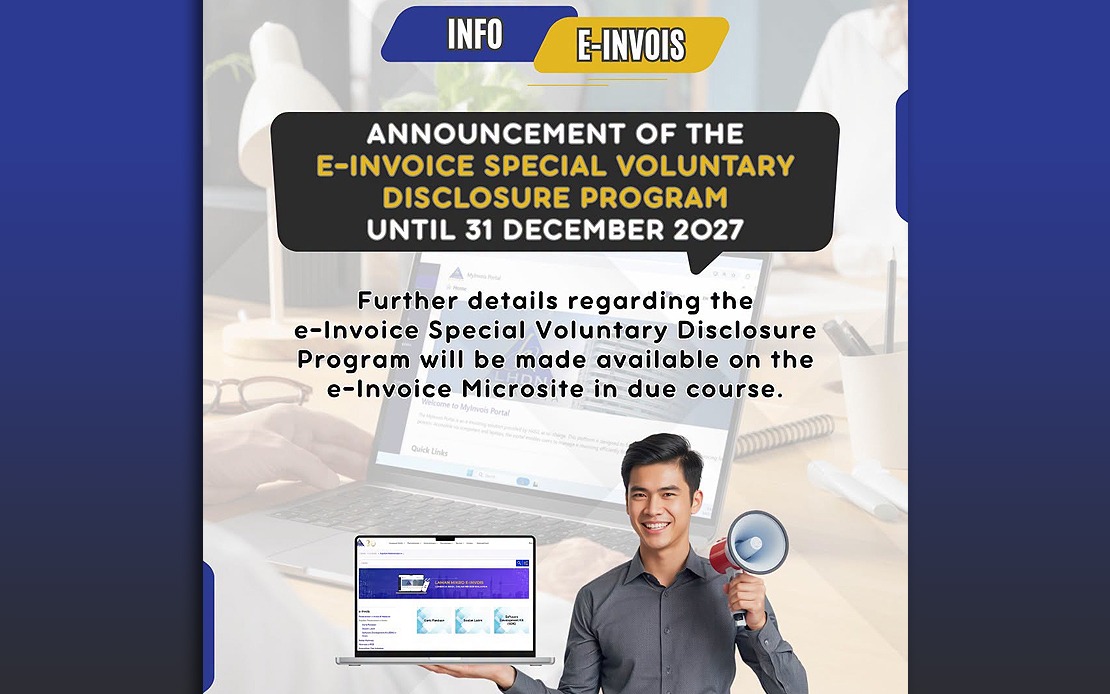
Prime Minister Datuk Seri Anwar Ibrahim announced on July 7 a new e-Invoice Special Voluntary Disclosure Programme that extends through December 31, 2027, designed to ease the compliance burden on Malaysia's business community while accelerating the country's digital transition. The initiative represents a significant policy shift that acknowledges implementation challenges faced by enterprises adapting to mandatory electronic invoicing requirements, with the Inland Revenue Board confirming the programme targets three distinct groups of taxpayers who have struggled with the transition.
The programme accommodates businesses that have entirely failed to submit e-Invoices for qualifying transactions, those who submitted documentation containing errors or deficiencies that failed to meet established standards, and enterprises that missed submission deadlines across any reporting period since the mandatory implementation commenced. This multi-layered approach reflects the complexity of digital transformation across Malaysia's diverse business landscape, where technical capacity and compliance expertise vary considerably between large corporations and smaller operators.
A critical feature of the amnesty is the penalty moratorium. During the programme period, the Inland Revenue Board has committed to waive all financial penalties, late fees, and administrative sanctions associated with voluntary corrections, revisions, and updates submitted by participating taxpayers. This clemency represents a departure from standard enforcement practices and signals government recognition that punitive approaches may prove counterproductive in achieving widespread digital adoption, particularly among enterprises with limited technical resources or accounting infrastructure.
The Inland Revenue Board has issued specific guidance requiring that all disclosures made through this programme remain accurate and fully compliant with established General and Specific e-Invoice Guidelines. Despite the penalty relief, the board maintains that voluntary submissions must still meet substantive requirements rather than offering blanket exemptions from accuracy standards. This balanced approach preserves the integrity of Malaysia's digital invoice ecosystem while removing financial disincentives that might otherwise prevent non-compliant businesses from coming forward.
Government officials framed the amnesty as part of a broader digitalisation agenda aimed at modernising Malaysia's tax administration and business operations. The Inland Revenue Board characterised the initiative as creating a low-risk opportunity for enterprises to voluntarily rectify their records, update documentation, and align their invoicing practices with contemporary standards without fear of retrospective penalties. For business owners uncertain about their compliance status, the programme essentially offers a reset mechanism that eliminates accumulated liability exposure.
Complementing the amnesty, the government has accelerated tax incentive provisions to reward enterprises demonstrating full compliance with e-Invoice implementation requirements. These enhanced incentives permit taxpayers to claim capital allowances for information and communication technology equipment purchases and associated software development costs within a single taxation year, rather than spreading deductions across multiple years. This accelerated depreciation benefit meaningfully reduces the net cost of digital infrastructure investments, particularly important for micro, small, and medium enterprises navigating tight capital constraints.
The policy acknowledges particular vulnerabilities facing Malaysia's MSME sector, which collectively represents the backbone of economic activity across manufacturing, services, and retail segments but often lacks dedicated compliance departments. For these enterprises, the combination of penalty forgiveness and accelerated capital deductions substantially improves the financial calculus of compliance, reducing what many business owners perceive as punitive costs associated with regulatory conformity. The timing of the announcement reflects government concern that digital divides might otherwise exclude smaller operators from Malaysia's economic modernisation.
The Inland Revenue Board has established multiple channels through which taxpayers can seek assistance navigating the voluntary disclosure process. Enterprises may visit IRB offices throughout the country, contact a dedicated e-Invoice helpdesk at 03-8682 8000, utilise the MyInvois Live Chat service, or submit enquiries via email. This multi-channel support infrastructure acknowledges that compliance barriers often stem from confusion about requirements rather than deliberate evasion, and readily accessible guidance can significantly improve voluntary participation rates.
For Malaysian business owners and finance professionals, the announcement resolves months of uncertainty about potential exposure to penalties for e-Invoice non-compliance. The five-year amnesty window provides substantial opportunity to conduct internal audits, identify discrepancies, and submit corrections without cascade effects through financial statements or regulatory relationships. Enterprises that have experienced technical difficulties, staffing changes, or system integration problems now face a clearly defined pathway to remediation.
Regionally, Malaysia's approach contrasts with enforcement-first strategies adopted elsewhere in Southeast Asia, positioning the country as relatively pragmatic in balancing regulatory objectives against implementation realities. The combination of penalty relief with strengthened incentives for compliance suggests a sophisticated policy design that acknowledges both carrots and sticks matter in digital transformation campaigns, particularly when targeting diverse business populations spanning vastly different technological capabilities.
The programme's extension through end-2027 provides nearly four additional years for enterprises to align their operations with digital standards, suggesting government confidence that this timeframe permits substantial progress without requiring perpetual extensions. However, businesses should note the programme remains time-limited, making near-term engagement advisable rather than deferring action toward the deadline. The amnesty essentially offers a bounded window of vulnerability reduction that stakeholders should exploit proactively.

