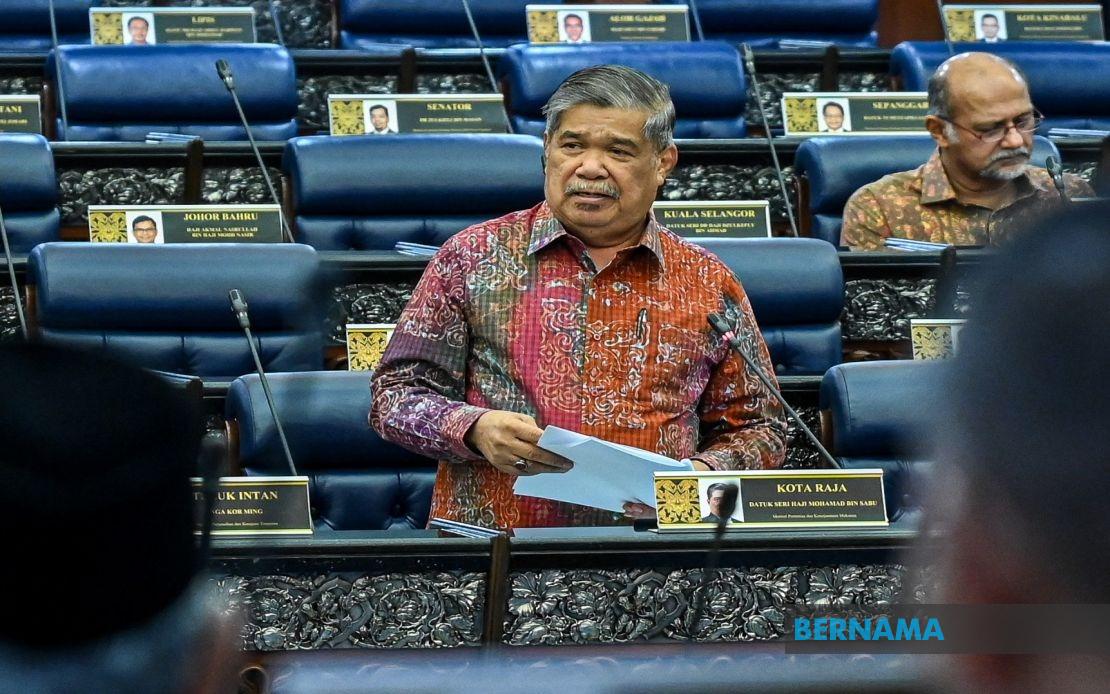
Malaysia's government has taken a pragmatic step towards formalising the informal fishing sector by opening a regularisation programme that permits unlicensed fishermen to apply for proper fishing licences. Agriculture and Food Security Minister Datuk Seri Mohamad Sabu revealed the initiative in parliament, emphasising that the scheme operates on a periodic basis to accommodate applications when vacancies arise from previously cancelled licences. This measured approach reflects a broader shift in how authorities balance enforcement with inclusivity when dealing with traditional maritime communities that have historically operated outside formal regulatory frameworks.
The regularisation drive represents a significant policy adjustment for Malaysia's fisheries sector, which has long struggled with compliance issues among coastal operators. By creating a structured pathway for unlicensed fishermen to legitimise their operations, the government seeks to transform a persistent enforcement problem into an opportunity for deeper integration into the formal economy. Coastal fishermen, particularly those operating smaller traditional vessels classified as Zone A boats, can now submit applications through their local District Fisheries Office, subject to eligibility criteria established by the Fisheries Department. This decentralisation of the application process aims to make participation more accessible to rural and remote fishing communities.
The underlying rationale for this programme extends beyond mere administrative housekeeping. Officials recognise that bringing unlicensed fishermen into the formal system delivers tangible benefits across multiple dimensions. Legal operation status unlocks access to government assistance programmes, including subsidies and welfare support that have previously been unavailable to those operating outside official channels. Furthermore, regularisation enhances compliance with fisheries regulations designed to ensure sustainable resource management, a critical concern in Southeast Asian waters facing mounting pressure from overfishing and environmental degradation. By incentivising formalisation rather than relying solely on punitive measures, the approach acknowledges that many traditional fishermen lack licences not through deliberate flouting of rules but often due to bureaucratic barriers or insufficient awareness of application procedures.
Minister Mohamad's responses to parliamentary questions reveal the government's acknowledgement of practical difficulties faced by coastal communities. The previous year saw 915 fishing licences approved nationwide, while 800 were granted in the most recent year—figures suggesting steady but modest expansion of the licensed fishing population. These numbers hint at the scale of the regularisation challenge: thousands of active fishermen likely remain unlicensed despite official regulations requiring licences for any commercial maritime fishing activity. The fluctuation in approvals also indicates variable demand or changing eligibility assessments year to year, raising questions about the consistency and transparency of the licensing process.
The criteria for obtaining a special boat licence reflect a considered balance between inclusivity and genuine eligibility verification. Applicants must demonstrate ten years of residential continuity within their fishing village, confirmed by village leadership—a requirement that roots licensing to community integration and local knowledge. Prospective licence holders must also prove they spend at least 120 days annually at sea, a threshold calibrated to distinguish genuine working fishermen from casual or hobbyist operators. State-level fisheries office endorsement adds another layer of local scrutiny. Beyond these operational benchmarks, applicants must be at least 18 years old, in good health, and actively employed as fishermen. For pensioners seeking supplementary income from fishing, income restrictions apply—pension payments must not exceed RM2,200 monthly, ensuring the scheme prioritises those for whom fishing remains a primary livelihood rather than wealthy retirees seeking supplementary income.
The government's position on transparency merits particular attention given its vulnerability to political criticism. When pressed on criteria clarity, Minister Mohamad indicated that the Fisheries Department would periodically review and refine eligibility standards to ensure they remain appropriately calibrated. He also invited public accountability, explicitly requesting that citizens lodge written complaints if they suspected non-fishermen had improperly obtained licences. This invitation suggests awareness that patronage or bureaucratic error might sometimes circumvent the stated criteria, a candid acknowledgment of governance challenges common across Southeast Asian maritime agencies managing large dispersed fishing populations.
For Malaysian fishermen, especially traditional operators in northern states like Kedah, Perlis, and Kelantan where artisanal fishing remains economically vital, this regularisation pathway offers genuine opportunity. Formalisation grants access to government assistance programmes, including fuel subsidies and fishing gear grants that are restricted to licence holders. It also provides legal standing in commercial negotiations and insurance arrangements, reducing vulnerability to unscrupulous traders and middlemen who exploit unlicensed fishermen's legal precarity. From a governance perspective, regularisation generates reliable data on fishing effort and catch volumes, enabling more sophisticated fisheries management and marine resource protection.
The programme also addresses a persistent tension in Malaysia's maritime policy: the gap between formal regulatory frameworks designed for industrial fishing and the reality of thousands of small-scale traditional operators whose practices predate modern licensing systems. Rather than attempting to eradicate this informal sector through enforcement alone—an approach that has proven ineffective and socially destabilising across Southeast Asia—the regularisation scheme acknowledges that incorporation into formal structures, when coupled with realistic criteria and genuine support, achieves better compliance and sustainability outcomes. This reflects international best practice increasingly adopted by fisheries agencies in the region, which recognise that marginalising traditional fishermen typically drives them into further informality rather than encouraging voluntary compliance.
The timing of this regularisation initiative also reflects growing attention to fishing community welfare amid broader economic transitions. As Malaysia's economy diversifies away from primary sectors and younger coastal residents increasingly abandon fishing for urban employment, the government has incentive to stabilise remaining fishing populations and ensure orderly sector transitions. By enabling current practitioners to formalise without punitive barriers, the policy helps preserve fishing as a sustainable livelihood option rather than allowing regulatory failures to accelerate demographic collapse in dependent coastal communities.
Looking forward, the success of this regularisation programme will likely depend on implementation quality at the District Fisheries Office level, where bureaucratic inconsistency or resource constraints could undermine stated intentions. Ensuring that village heads provide genuine confirmation of residency, that eligibility verification occurs reliably, and that application processes remain transparent across different districts will require sustained administrative capacity investment. Training district-level officers to apply criteria consistently and promptly process applications will be essential to prevent the programme becoming a vehicle for selective enforcement or local political favour-trading.
Regional implications deserve consideration as well. Malaysia's approach may influence how other Southeast Asian nations—particularly Thailand, Vietnam, and Indonesia—manage their own substantial informal fishing sectors. Given that overfishing and resource depletion are regional transboundary issues, any mechanism that improves Malaysian fisheries compliance indirectly benefits neighbouring countries whose waters are shared fishing grounds. Conversely, if regularisation remains incomplete or unevenly implemented, some unlicensed operators may simply continue as before, perpetuating compliance gaps that undermine regional fisheries management efforts coordinated through bodies like the Southeast Asian Fisheries Development Center.

