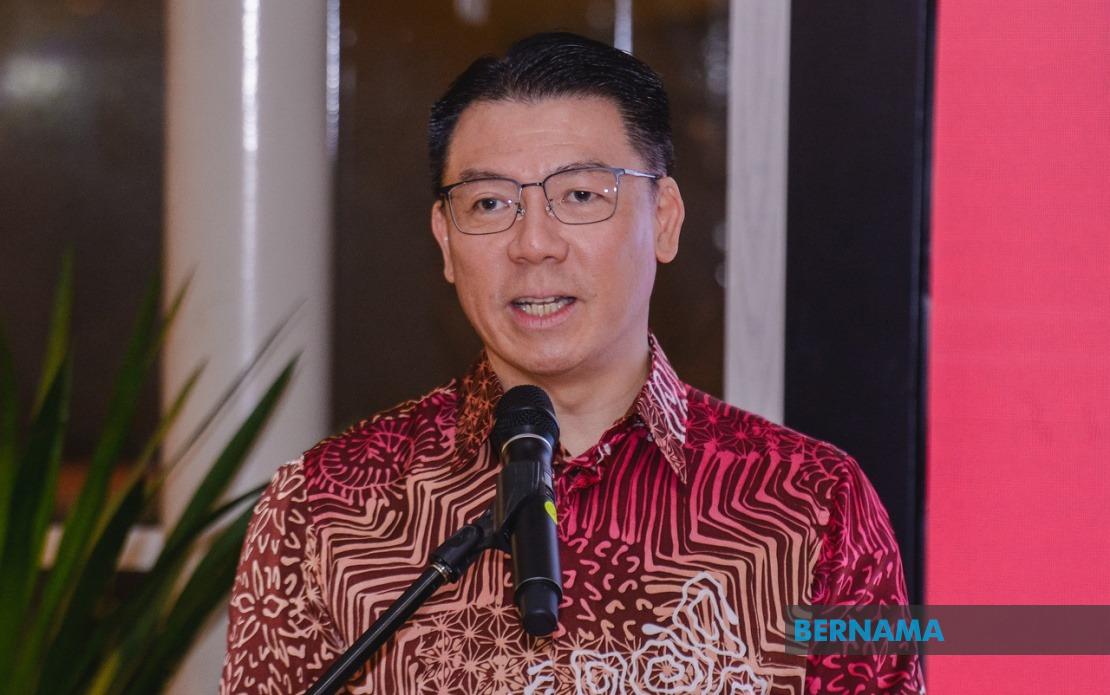
Malaysia's government is rolling out a significant homebuying incentive ahead of the ASEAN Real Estate Conference (AREC) 2026, offering purchasers a 10 per cent discount on residential properties during the four-day gathering. Housing and Local Government Minister Nga Kor Ming unveiled the initiative during a developers' appreciation ceremony, positioning the offer as a relief measure designed to narrow the gap between aspiring homeowners and the financial demands of property acquisition, particularly the 10 per cent downpayment typically required under Sale and Purchase Agreements.
The AREC 2026 conference will take place from July 29 to August 1 at the Malaysia International Trade and Exhibition Centre (MITEC) in Kuala Lumpur, serving as a flagship event for the region's real estate sector. Prime Minister Datuk Seri Anwar Ibrahim is slated to formally open the proceedings, lending high-level political support to the gathering. The four-day programme will encompass industry forums, business-to-business matching sessions, and an extensive exhibition showcasing development projects, with organisers projecting the event will catalyse approximately RM1.5 billion in property transactions.
The discount programme represents a collaborative effort between the Ministry of Housing and Local Government (KPKT) and the Real Estate and Housing Developers' Association Malaysia (REHDA), reflecting the government's broader push to make home ownership accessible to middle and lower-income Malaysians. By reducing the immediate financial burden of entry into the property market, the initiative addresses one of the primary obstacles preventing many working households from achieving homeownership aspirations. This targeted approach aligns with the government's stated objective of ensuring housing remains not merely aspirational but genuinely attainable for ordinary Malaysians.
Complementing the purchase discount, the ministry has introduced the Rahmah Cement initiative, a supply programme delivering 1.6 million metric tonnes of cement to developers constructing affordable housing projects. The scheme directly tackles supply-side pressures driving construction costs upward, enabling developers to maintain stable pricing on budget-friendly residential units. By subsidising input costs for affordable-housing projects specifically, the government creates space in developers' margins to absorb inflation without inflating house prices, a critical intervention in an environment where construction material costs have become volatile.
Nga emphasised that maintaining housing affordability remains central to the government's vision, encapsulated in the slogan "Rumahku, Syurgaku" (My Home, My Heaven). The minister framed home ownership not as a luxury commodity but as a fundamental right for all Malaysians, regardless of income level. This philosophical positioning distinguishes the current administration's housing policy from earlier approaches that sometimes prioritised developer profits over buyer accessibility, signalling a renewed focus on social equity within the property sector.
Malaysian developers demonstrated considerable international competitiveness at the FIABCI World Prix d'Excellence Awards 2026, capturing 14 accolades including eight gold medals and six silver medals across diverse categories. The gold medal winners spanned residential, commercial, and mixed-use developments, with notable projects including Park Regent @ Desa ParkCity in the high-rise residential category, The Mansions @ ParkCity Hanoi in the low-rise residential classification, and Merdeka 118 recognised for excellence in office design and sustainable practices. These successes underscore the technical sophistication and design quality achievable by Malaysia's development industry when competing on a global stage.
The cumulative recognition carries deeper significance than awards alone. Malaysia's collective haul of 135 gold medals since the prix d'excellence programme's inception in 1992 positions the nation's property sector as a consistent performer in international benchmarking assessments. This track record validates Malaysian developers' capacity to execute world-class projects and provides reassurance to international investors and consumers regarding the quality standards embedded in the country's real estate offerings. For a nation seeking to elevate its profile as a regional economic hub, demonstrating excellence in real estate development supports broader positioning efforts.
The international expansion of Malaysian property companies reinforces the sector's maturation and globalised outlook. Major developers including ParkCity Group operating across Vietnam, SP Setia establishing projects in Australia, OSK Property in Melbourne, and EcoWorld in London exemplify how local expertise translates into competitive advantage abroad. These ventures generate foreign exchange earnings, build reputational capital for Malaysia, and demonstrate that domestic capabilities can compete successfully against established international competitors. The government views this outward expansion as validation of its support policies and evidence that strategic investment in industry development yields tangible returns.
The timing of AREC 2026 coincides with other significant policy announcements, including Prime Minister Anwar's scheduled launch of the National Housing Policy on July 30, the final day of the conference. The synchronisation allows the government to articulate a comprehensive housing vision encompassing both supply-side interventions and demand-side support, presenting a unified strategic approach to industry participants and potential investors. The National Housing Policy launch will likely detail longer-term frameworks for affordability, sustainability standards, and sectoral development priorities, building upon the immediate measures being deployed at AREC.
For Malaysian homebuyers, the 10 per cent purchase discount represents a tangible near-term benefit, effectively reducing the deposit requirement to zero per cent for qualifying transactions during the conference period. This mechanism accelerates decision-making among purchase-ready buyers considering postponement due to insufficient downpayment savings. For developers, the conference offers access to concentrated buyer interest and the possibility of transaction volume spikes that justify participation in the event. The dual incentive structure—government purchase subsidies and cement-supply cost controls—creates market conditions favouring both demand expansion and supply sustainability.
The initiatives also signal a recalibration in how Malaysia approaches housing as a policy domain, moving beyond rhetoric toward concrete financial mechanisms. Rather than relying solely on regulatory measures or long-term planning, the government is deploying immediate fiscal incentives and supply-chain interventions to reshape housing market dynamics. This pragmatic approach acknowledges that persistent affordability challenges require direct action rather than passive reliance on market forces to self-correct. Whether the measures achieve durable impacts on affordability trends or represent primarily promotional packaging will become evident as post-AREC transaction data emerges.
Regionally, Malaysia's emphasis on housing affordability through developer-government collaboration provides a potential model for other ASEAN economies grappling with similar pressures. Nations throughout Southeast Asia face comparable challenges regarding wage stagnation, rising construction costs, and inadequate affordable housing supply. Malaysia's experimentation with targeted discounts, input-cost subsidies, and international marketing of developer capabilities may offer insights applicable across the region, positioning the country as a thought leader in sectoral development approaches. The AREC 2026 platform thus extends beyond single-nation concerns toward broader regional policy dialogue.

