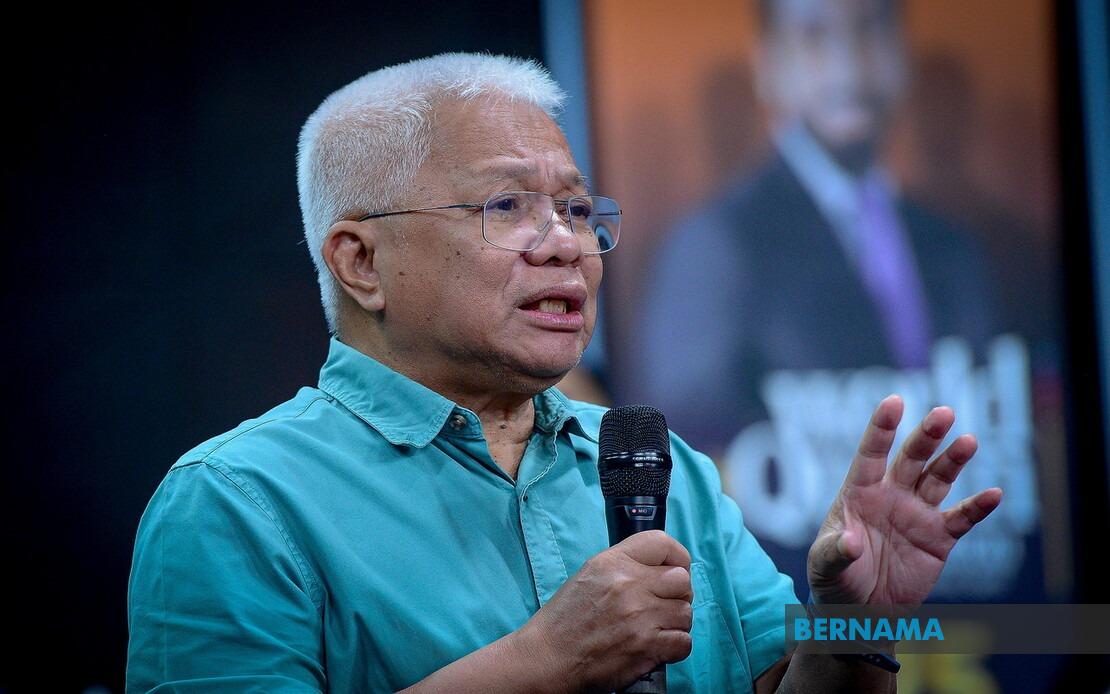
The clock is ticking for Malaysians to chart a collective course toward the nation's 100th independence anniversary in 2057, according to Datuk Hussamuddin Yaacub, founder of Yayasan Warisan Ummah Ikhlas and Yayasan Sinar Untuk Malaysia. Speaking during Malaysia's 69th National Day celebration, he stressed that the three-decade window ahead encompasses merely a single generation, making the choices made now fundamentally consequential for the grandchildren who will inherit the country at that milestone moment.
Hussamuddin's intervention carries particular weight given the current state of national discourse. He expressed alarm at how Malaysia continues to squander precious time and political capital on sectarian disputes rooted in race, religion, and partisan affiliation. Rather than engaging in these polarising debates, he contended, society must redirect energy toward systemic renewal and institutional strengthening—endeavours that transcend ideological boundaries and require cooperation across all segments of the population.
The foundation leader articulated a stark message: today's divisions cannot simply be passed down as inheritance to the next generation. Instead, he called for an uncompromising stance against corruption and breaches of public trust, rejecting any notion that such transgressions should be negotiated, normalised, or pardoned. This framing represents a departure from consensual or accommodationist approaches sometimes evident in Malaysian political culture, positioning integrity as a non-negotiable prerequisite for nation-building.
Central to Hussamuddin's argument is the proposition that institutional restoration must begin immediately, without delay or equivocation. Where systems are broken or dysfunctional, he maintained, repair must commence at once. Injustice and wrongdoing cannot be ignored or met with silence; tacit acceptance of such failures amounts to shirking responsibility, he suggested, and the accumulated weight of unresolved problems will ultimately burden future generations.
Yet Hussamuddin's vision for #Malaysia100 extends beyond reactive institutional fixes. He emphasised that the responsibility for shaping the nation's trajectory should not originate in government ministries or administrative centers. Instead, the groundwork must be laid within households, where parents and guardians instill moral values in children, teach them to navigate societal differences with grace, and cultivate the discernment to select leaders of genuine integrity. This bottom-up approach reflects recognition that durable national transformation depends fundamentally on shifts in collective consciousness and intergenerational value transmission.
The metaphor of a baton being handed from one generation to the next underpins his conception of national stewardship. This symbolic passing is not merely about physical infrastructure or economic metrics, he argued. Rather, it centers on values—specifically integrity and compassion—that must be preserved and reinforced alongside material development. For Malaysian readers contemplating the nation's future, the implication is stark: without this ethical and moral foundation, external accomplishment rings hollow.
Hussamuddin cautioned against the temptation to conflate progress with modernity while overlooking internal decay. A nation might erect imposing structures and deploy cutting-edge technology, he observed, yet simultaneously experience moral and institutional erosion—analogous to a building that appears magnificent externally while termites gnaw away at its interior. This warning resonates particularly in Southeast Asia, where several nations have struggled to balance rapid economic advancement with governance challenges.
For Malaysia specifically, the #Malaysia100 framing offers a potential unifying concept during an era marked by contentious elections, constitutional disputes, and communal tensions. By anchoring national purpose to a specific, distant milestone, Hussamuddin sought to shift focus from zero-sum partisan competition toward shared long-term objectives. The 2057 target—equidistant enough to seem abstract yet concrete enough to inspire actionable planning—could theoretically redirect political energy toward systemic improvements that transcend short-term electoral cycles.
Hussamuddin's call extends to all levels of society, from individuals and families through organisations to state and federal authorities. Each tier bears responsibility for determining the trajectory of its sphere of influence over the coming 30 years. This distributed accountability model suggests that meaningful change need not await top-down directives; rather, each Malaysian can contribute meaningfully to shaping the legacy that will be bequeathed to 2057.
The question of how such a shared vision might be operationalised remains open. Malaysia's political landscape remains fractured along ethnic, religious, and ideological lines, and converting broad exhortations into concrete policy consensus presents formidable challenges. Nevertheless, Hussamuddin's articulation of a values-based national project provides a potential counterweight to divisive rhetorical trends that have dominated recent discourse. Whether this #Malaysia100 initiative gains sufficient traction to influence the national conversation remains to be seen, but its emphasis on intergenerational responsibility and institutional integrity addresses genuine anxieties about the country's trajectory.
Ultimately, Hussamuddin's message carries implications that extend beyond Malaysia's borders. As Southeast Asia grapples with democratic backsliding, corruption, and identity-based conflicts in various forms, the proposition that long-term national vision and ethical renewal must be pursued concurrently offers a model worth considering. The challenge lies not in articulating such ideals but in translating them into sustained institutional and cultural change—a task demanding more than symbolic gestures or rhetorical commitment.

