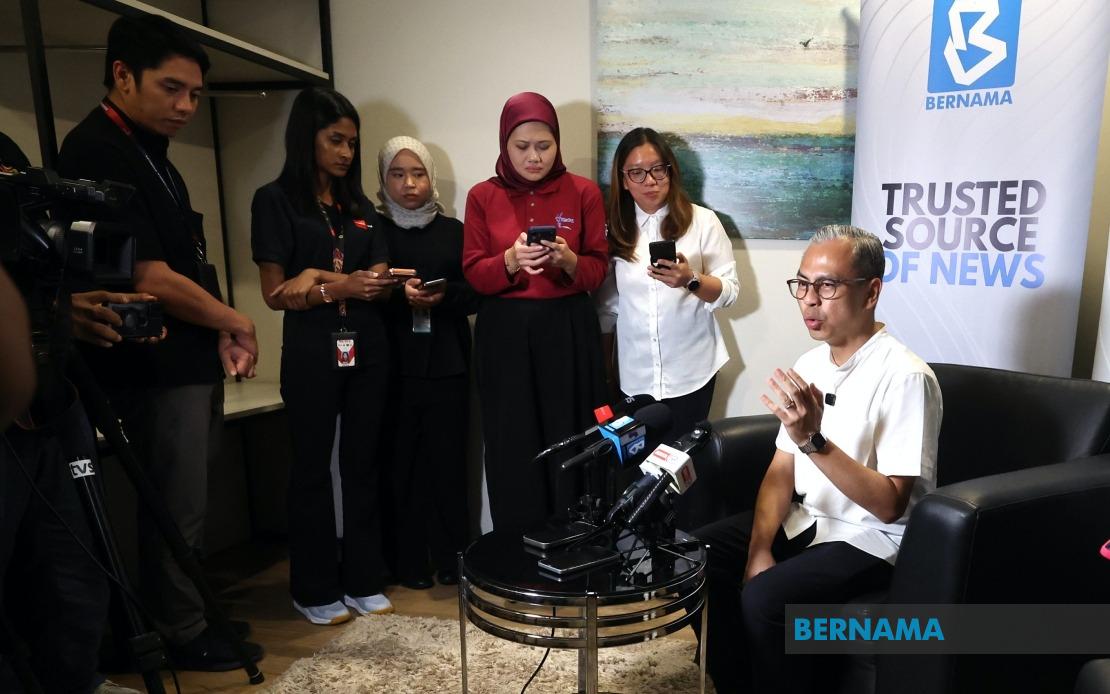
Communications Minister Datuk Fahmi Fadzil has called for substantial investment in the Malaysian Media Council (MMC) as a cornerstone of industry self-regulation, acknowledging that the newly established body requires government support during its formative period to achieve its mission of fostering an ethical and responsible media environment. Speaking during a visit to the Malaysian National News Agency's operations centre in Johor Bahru on July 7, Fahmi outlined an ambitious vision for the council that extends considerably beyond its current membership base, recognising that media governance in Malaysia must evolve to encompass the digital landscape.
The government's commitment to supporting the MMC reflects a broader philosophical shift toward industry-led accountability rather than top-down regulation. Fahmi emphasised that as more media organisations join the council, the sector gains capacity to address complaints and ethical violations through its own mechanisms, potentially reducing tension between journalists and regulatory authorities. This approach aligns with international standards where mature media markets rely substantially on professional bodies to police their own conduct and resolve disputes without direct government intervention at every stage.
A significant policy development emerged from Prime Minister Datuk Seri Anwar Ibrahim's recent announcement that complaints against journalists from recognised media organisations will now be channelled through the MMC rather than triggering automatic government action. This procedural reform aims to create institutional distance between state power and journalistic scrutiny, establishing what Anwar characterised as a fairer, more transparent process that protects journalists from arbitrary prosecution or investigation. The change signals recognition that professional autonomy strengthens rather than weakens media accountability, as independent adjudication typically commands greater legitimacy than government-directed discipline.
However, Fahmi identified a critical vulnerability in the current framework: the explosive growth of social media platforms as sources of news and information has created an accountability vacuum. While traditional media organisations typically employ editors, fact-checkers, and ethical guidelines that govern content publication, social media companies operate under frameworks designed for global audiences and corporate interests rather than Malaysian legal, cultural, and social contexts. This mismatch has generated specific harms, from the unauthorised circulation of victims' faces in crime cases to misinformation spreading without editorial review or contextual accuracy checks.
The minister cited a particularly troubling incident in Banting where a teenage stabber's victim was identified on social media alongside investigative details, illustrating how digital platforms can amplify harm to vulnerable individuals without the editorial restraint expected of professional news organisations. Such episodes reveal that the absence of Malaysian-contextualised content policies creates unnecessary suffering for victims and their families while potentially compromising police investigations. These are not hypothetical concerns but recurring practical problems that demand institutional solutions.
Fahmi's proposal to invite major social media platforms into the MMC framework represents an unconventional but potentially effective mechanism for extending industry norms into the digital ecosystem. Rather than relying purely on legislative mandates that risk stifling digital speech, bringing platforms into a collaborative self-regulatory structure could incentivise the adoption of culturally sensitive guidelines while maintaining the platforms' operational flexibility. The success of this approach depends on whether global technology companies see competitive advantage in demonstrating commitment to Malaysian community standards.
The expansion of the MMC membership holds implications for Malaysia's standing in international media freedom assessments. The country has faced criticism in indices such as the Media Freedom Index for insufficient institutional protections around journalistic independence. A robust, inclusive self-regulatory body that encompasses both traditional and digital media could demonstrate to international observers that Malaysia possesses mature institutional mechanisms for balancing press freedom with community protection. Fahmi explicitly acknowledged this connection, suggesting that improved self-regulation might enhance Malaysia's global reputation.
For regional media practitioners across Southeast Asia, Malaysia's experiment with comprehensive self-regulation offers a potential model, particularly as other nations grapple with social media's role in their own media ecosystems. The approach acknowledges that uniform global platforms require localisation of content standards without necessarily accepting external regulatory frameworks that might compromise national sovereignty or cultural values. This balance between protecting press freedom and respecting local contexts represents a challenge that Myanmar, Thailand, Indonesia, and the Philippines all confront.
The practical mechanics of implementing such a system remain unclear. Social media platforms typically resist jurisdiction-specific content moderation, citing operational complexity and free speech concerns. Convincing companies like Meta, TikTok, and X to participate in Malaysian self-regulatory structures will require demonstrating tangible benefits such as reduced government pressure or regulatory clarity. The government's willingness to provide support and encouragement to the MMC suggests commitment to creating the institutional conditions necessary for this participation, though formal incentive mechanisms have not yet been detailed.
Fahmi's framing emphasises that this initiative aims to address content governance challenges that no single institution can resolve alone. Neither traditional media regulation nor social media platform policies alone provide adequate protection for Malaysian audiences and communities. The MMC becomes, in this conception, a coordination mechanism that brings stakeholders into dialogue about shared problems and collective solutions. Whether platforms ultimately embrace this collaborative approach will determine whether Malaysia's self-regulatory ambitions achieve their full potential or remain constrained to the traditional news industry.
The timeline for expanding MMC membership and formalising social media platform participation remains unspecified, suggesting this is an evolving initiative rather than an imminent restructuring. Government support during the council's early years provides breathing room for it to establish credibility and demonstrate effectiveness with current members before expansion efforts gain momentum. Success will likely depend on building trust among journalists and media organisations that the council prioritises their professional interests and operates independently from political interference.

