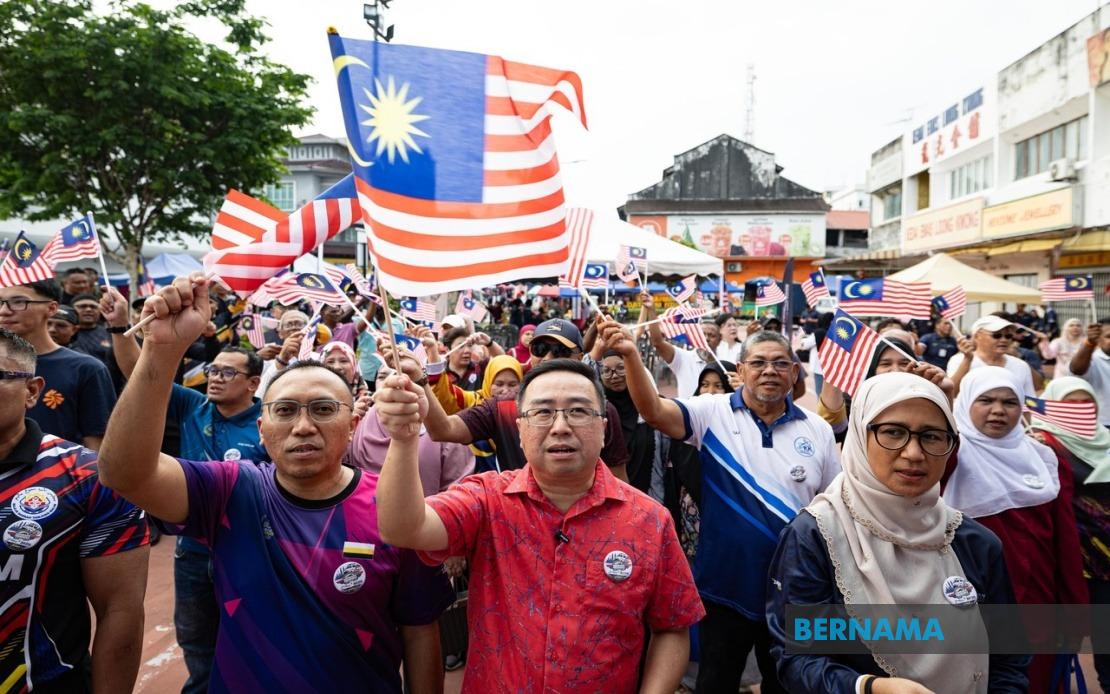
Malaysia's path forward requires moving beyond the familiar framework of identity-based politics toward a more sophisticated understanding of nationhood rooted in genuine citizenship and shared investment in the country's future, according to Science, Technology and Innovation Minister Datuk Chang Lih Kang. Speaking ahead of Malaysia Day celebrations, the Tanjong Malim Member of Parliament articulated a vision in which national cohesion stems not from enforced compliance or fear, but from creating conditions where every Malaysian—irrespective of ethnicity, religious faith, socioeconomic background or political allegiance—feels authentic ownership of the nation's trajectory and destiny.
The minister's intervention into a critical national conversation comes as public discourse has grown increasingly polarized, with political contestation persistently filtered through the lens of race and religion. This framing, Chang suggested, represents a stunted civic maturity that perpetuates fragmentation rather than forging unity. He emphasized that authentic national strength cannot be manufactured through coercive silence or manipulation of fear, but rather emerges organically when citizens across all communities perceive equitable treatment and genuine inclusion in national life. This distinction between imposed order and organic unity carries profound implications for how Malaysia structures its institutions and enforces its laws.
Central to Chang's thesis is the argument that robust, professional and impartial institutions form the bedrock upon which inclusive nationalism must be constructed. He called for a governance architecture in which legal frameworks are applied uniformly without discrimination based on racial identity, religious conviction, political preference or social standing. Public services, similarly, must be delivered through mechanisms that treat all citizens with equivalent dignity and fairness. This institutional framework, he argued, represents the strongest possible bulwark against the corrosive effects of divisive politics and the weaponization of state machinery for narrow partisan advantage.
The minister's commentary on national symbols and patriotism offers particular insight into his conception of mature governance. While affirming that the Jalur Gemilang merits respectful treatment as an embodiment of Malaysia's historical journey and collective aspirations, he cautioned against enforcement regimes so draconian that inadvertent errors become occasions for public condemnation, detention or punitive measures wildly disproportionate to the transgression. Such excessive enforcement, Chang suggested, paradoxically undermines patriotic sentiment by cultivating anxiety about participating in civic expression. Citizens who fear severe consequences for innocent mistakes naturally withdraw from public displays of national symbols, eroding the very patriotism such enforcement purports to defend.
A genuinely confident and mature nation, in Chang's conception, calibrates its responses according to the principle of proportionality. When honest mistakes occur, the appropriate initial response involves education and guidance rather than criminal sanction. This approach does not, however, extend to deliberate desecration or provocative actions designed to incite division. The critical differentiator lies in intent, contextual circumstances and whether the transgression warrants the proposed penalty. Government agencies, Chang contended, ought to function primarily as educators and guides rather than enforcers wielding punishment as their principal tool. Society itself bears a complementary obligation to respond to genuine mistakes with empathy and grace rather than manufactured outrage, thereby modeling the mature citizenship the nation requires.
Chang's vision explicitly rejects the manipulative deployment of race and religion as mobilization strategies in electoral competition. He warned that irresponsible invocation of these deeply personal dimensions of identity for political advantage inevitably fragments society into competing constituencies, each viewing others through a lens of perceived zero-sum competition. Such framing generates corrosive perceptions that particular communities receive disproportionate benefits or privilege, festering resentments that corrode national cohesion. This observation carries particular resonance for Malaysian voters who have witnessed numerous iterations of such divisive campaigns and their destabilizing consequences.
The minister buttressed his argument by invoking the recent remarks of Sultan Perak Sultan Nazrin Shah at the 8th World Conference on Islamic Thought and Civilisation, who similarly emphasized that unity grounded in shared belonging proves far more durable than unity imposed through state coercion or conformity enforced through threat. This royal intervention into the national conversation lends substantial weight to Chang's framework, suggesting emerging consensus among influential voices that Malaysia's stability requires a recalibration of political practice and national discourse.
Chang's conception of Malaysia's future hinges on transforming the nation's foundational narrative. Rather than viewing cultural, religious, linguistic and traditional diversity as potential fault lines requiring careful management, he proposed reframing these elements as sources of collective strength. When citizens recognize that their particular identities enrich rather than threaten national life, they develop genuine psychological investment in the nation's success. This perspective carries significant implications for educational curricula, media representations and public policy frameworks—all of which currently perpetuate more divisive conceptions of national identity.
As Malaysia marked another Merdeka anniversary, Chang posed a penetrating question that transcends mere rhetorical flourish: rather than measuring national health through the decibel level of patriotic declarations, Malaysians should interrogate the quality of the nation being constructed for succeeding generations. This formulation inverts conventional nationalist rhetoric, shifting focus from performative expressions of loyalty toward substantive institutional arrangements and lived experiences. A Malaysia worthy of genuine patriotism is one where institutions function fairly, leadership operates with restraint and wisdom, and every citizen perceives authentic opportunity and dignity.
The minister concluded by urging Malaysians to resist the perpetual temptation to fracture the nation for narrow political advantage and to reject the instinct toward excessive or heavy-handed deployment of state authority. Leadership, he emphasized, carries an implicit trust—that those wielding power will exercise it judiciously in service of collective flourishing rather than factional interest. Chang's intervention represents a significant public statement from within the government calling for fundamental recalibration of how Malaysia conducts its politics and governance. Whether such appeals can alter entrenched incentive structures favoring divisive appeals remains an open question, but they signal that alternative visions of Malaysian nationhood continue to find articulate defenders within the political establishment.

