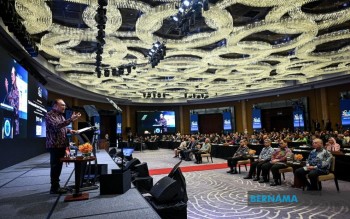
Prime Minister Datuk Seri Anwar Ibrahim has articulated a strategic imperative for Malaysia to develop independent cloud infrastructure as the nation grapples with the complexities of digital sovereignty in an increasingly interconnected Asia-Pacific region. Speaking during the 39th Asia-Pacific Roundtable in Kuala Lumpur, Anwar outlined a nuanced approach that seeks to safeguard Malaysia's critical security and personal information while remaining receptive to foreign digital investment and technological collaboration. The call for a sovereign cloud system reflects growing concerns among policymakers about the vulnerability of sensitive government and citizen data to foreign legal regimes and intelligence mechanisms.
The Prime Minister's remarks were prompted by direct questioning about how Malaysia and other Southeast Asian nations could maintain meaningful autonomy within the increasingly complex global digital ecosystem. His response demonstrated awareness of a fundamental tension that developing nations face: the need to participate in the borderless digital economy while protecting strategic interests and citizen privacy. The sovereign cloud concept represents an attempt to square this circle by creating a protected data architecture that would preserve Malaysia's ability to attract international technology investment while establishing clear jurisdictional boundaries around sensitive information.
A central concern driving this policy direction is the extraterritorial reach of the US Cloud Act, which permits American companies and, by extension, the US government to access data stored on servers operated by US-based firms regardless of where those companies maintain physical infrastructure or where their clients are located. Anwar specifically referenced the implications of such legislation, noting that President Trump's administration had asserted the right of US-registered companies to access data held in countries where they operate. Rather than viewing this as a negotiable issue, the Prime Minister acknowledged the reality of American legal authority while emphasizing that Malaysia must take independent action to protect its own interests.
The proposed sovereign cloud would function as a protected repository for information deemed critical to national security and essential to personal privacy, shielded by firewalls and governed exclusively by Malaysian legal jurisdiction. This infrastructure would theoretically prevent foreign governments from compelling disclosure of stored data through legal mechanisms that operate within their own territories. However, Anwar demonstrated pragmatic understanding by recognizing that absolute protection is neither achievable nor realistic in the modern world. The framework he proposed acknowledges inherent limitations imposed by Malaysia's commitment to democratic principles, free expression, and openness to international exchange.
This balanced approach reflects Anwar's broader diplomatic philosophy, which positions Malaysia as a nation that must navigate between competing pressures and interests. He emphasized that while openness and unrestricted information flow represent core democratic values that Malaysia wishes to uphold, these same open systems create vulnerabilities to misuse and abuse. Digital platforms and social media channels have become vectors for political manipulation, economic fraud, sexual exploitation, and targeting of vulnerable populations, particularly young people with limited digital literacy. The government's responsibility, in this framing, is to develop legitimate protective measures that address genuine harms without sacrificing the fundamental openness that democratic societies require.
An important dimension of Anwar's analysis concerns Malaysia's positioning within regional and global hierarchies of power and influence. He deliberately rejected the characterization of Malaysia as a "great power" or even as a middle power seeking individual status, instead articulating a vision of Malaysia as a relatively small nation whose influence derives substantially from its membership in ASEAN and its capacity to serve as an attractive partner for multiple major powers. This framing has direct implications for how Malaysia approaches digital governance. Rather than attempting to compete individually with the technological capabilities and market power of the United States, China, or Germany, Malaysia can leverage its position within ASEAN to develop collective regional approaches to digital infrastructure and data governance that would be far more resilient and attractive to investors.
The mention of Malaysia's continued attractiveness to investment from the United States, China, and Germany underscores a critical reality: the sovereign cloud initiative is not an attempt to exclude foreign investors or to wall off Malaysia from international technology flows. Instead, it represents an effort to differentiate between different categories of data and different types of relationships with foreign technology firms and governments. Malaysia can simultaneously welcome American, Chinese, and German companies to operate within its borders while insisting that certain classes of information remain under exclusively national control. This distinction is crucial because absolute isolation would render Malaysia uncompetitive and would sacrifice the technological advancement and economic benefits that flow from global digital participation.
ANWAR's emphasis on ASEAN centrality reflects recognition that digital governance challenges are fundamentally regional in character. Individual Southeast Asian nations possess insufficient leverage to negotiate favorable terms with global technology platforms or to establish binding agreements about data access with major powers. However, ASEAN as a collective entity represents a market of over 600 million people and possesses greater negotiating power. Regional cooperation on sovereign cloud infrastructure, data protection standards, and digital governance frameworks would enhance Malaysia's ability to protect its interests while maintaining openness. Such cooperation would also strengthen ASEAN's position as a valued partner to all major powers rather than as a collection of individually vulnerable nations.
The sovereign cloud proposal also addresses practical concerns about infrastructure resilience and economic competitiveness. If Malaysia and ASEAN nations continue to rely exclusively on cloud infrastructure controlled by foreign companies and located outside the region, they remain dependent on decisions made by foreign corporate boards and foreign governments. A regionally integrated sovereign cloud system would create employment, technological expertise, and economic opportunities within Malaysia and Southeast Asia. It would reduce latency and improve service quality for critical applications. It would also create a foundation for developing indigenous technology capabilities that could eventually reduce regional dependence on foreign technology providers.
From an investor relations perspective, Anwar's framework is likely to appeal to both international technology companies and Malaysian businesses. International investors can operate with confidence that their intellectual property and business information will be protected from foreign government surveillance. Malaysian firms gain assurance that their proprietary data and customer information remain under national jurisdiction. This mutual protection creates a more attractive environment for business activity than scenarios where all data is equally vulnerable to foreign access. The approach also demonstrates sophisticated governance that appeals to socially conscious investors increasingly concerned about digital rights and data protection.
The implications of this policy direction extend beyond Malaysia into the broader Southeast Asian context and the wider Indo-Pacific region. If Malaysia successfully implements a sovereign cloud system that demonstrates genuine protective capacity while maintaining openness to investment and digital exchange, other ASEAN nations are likely to adopt similar approaches. This would represent a significant shift in how the region approaches digital governance and could establish new global norms for how smaller nations interact with technology superpowers. It would also reinforce ASEAN's strategic autonomy at a time when major powers are attempting to draw regional nations into exclusive digital and technological spheres of influence.
Ultimately, Anwar's sovereign cloud vision represents an attempt to preserve Malaysia's capacity for meaningful choice in a world where digital infrastructure and data flows are becoming as strategically important as physical borders and military capabilities once were. It acknowledges that absolute sovereignty in the digital realm is impossible, but insists that selective, strategic control over critical categories of information remains essential to national interest. The approach is pragmatic rather than ideological, nationalist without being isolationist, and protective without being defensive. Whether Malaysia can successfully implement such a system will depend on substantial technical investment, regional coordination, and sustained political commitment to balancing competing values of openness and protection.

