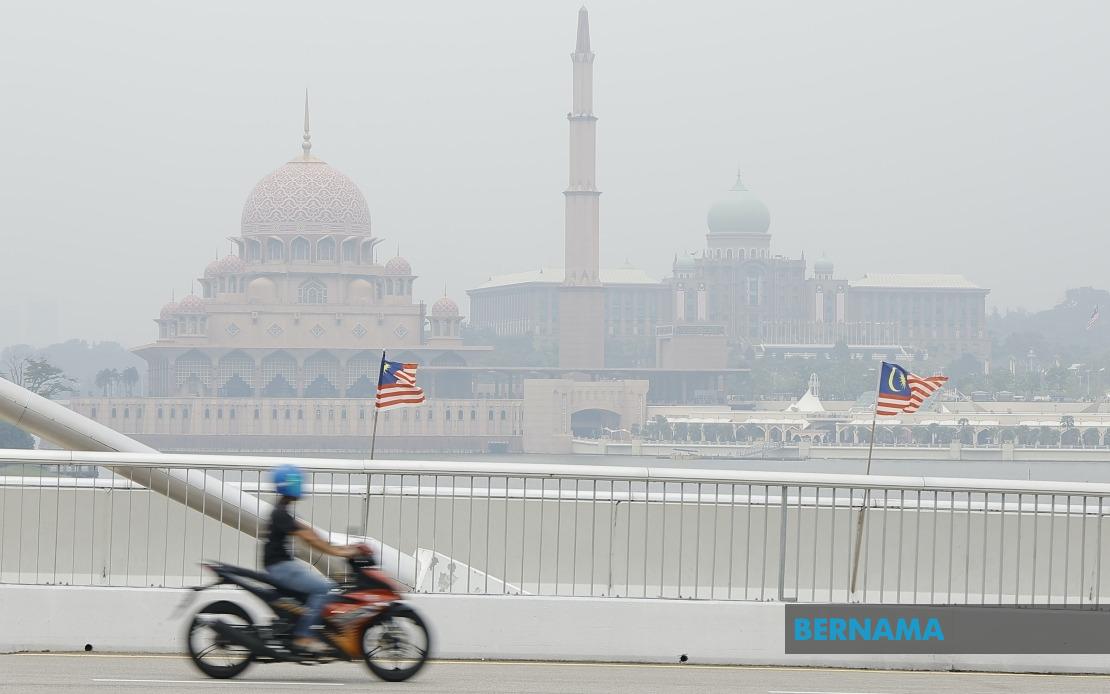
Malaysia must transition from reacting to haze crises toward preventing them through an integrated early warning system that combines existing datasets to forecast air pollution before it threatens public health, according to an air quality researcher at Universiti Sultan Zainal Abidin. Associate Professor Dr Azman Azid, director of the institution's Besut Campus and an expert in environmental issues, argues that the nation possesses sufficient data to construct such a system but currently lacks the coordinated infrastructure to deploy it effectively. His call comes as Malaysia faces recurring transboundary haze events that strain healthcare resources and burden vulnerable populations with respiratory illnesses.
The human cost of Malaysia's current reactive approach has become starkly apparent through recent health monitoring. Between epidemiological weeks 32 and 33, the Ministry of Health documented a 259 per cent surge in asthma cases, climbing from 61 to 219 instances. This dramatic spike signals that as ambient air quality deteriorates across the country, the accompanying public health crisis intensifies faster than existing monitoring systems can accommodate. Azman emphasizes that while authorities closely track Air Pollutant Index readings and smoke movements, the priority remains misaligned—agencies focus on measurements rather than human impact. The disconnect between air quality metrics and health outcomes suggests that Malaysia's current framework, however well-intentioned, fundamentally misses the opportunity to protect citizens before illness materializes.
Building a functional haze forecasting system requires integrating multiple existing data streams currently held across different government agencies. Azman proposes combining hotspot datasets that pinpoint active fires with satellite imagery capable of detecting smoke plumes, meteorological information revealing wind direction and velocity, atmospheric trajectory models projecting air mass movement, Air Pollutant Index readings, epidemiological patterns of respiratory disease, and measurements of fine particulate matter at 2.5 micrometres in diameter, commonly known as PM2.5. When synthesized through modern data analytics, these inputs could forecast elevated PM2.5 concentrations within specific regions 48 to 72 hours in advance. Such predictive capacity would allow hospitals and clinics to stockpile respiratory medications, boost staffing levels, and implement preventive protocols before patients arrive overwhelmed by acute symptoms. Schools could reschedule outdoor activities, protecting vulnerable children from direct exposure during anticipated pollution episodes.
Malaysia has already invested substantially in weather forecasting infrastructure, establishing the technical competency necessary for atmospheric prediction. The logical extension involves developing parallel systems for haze forecasting that communicate in accessible language to ordinary citizens. Current API-based warnings arrive too late in the pollution cycle to offer meaningful protection; they essentially announce an already-occurring problem rather than enabling avoidance. An early warning framework, by contrast, would function analogously to typhoon prediction—providing advance notice that permits behavioral modification and institutional preparation. Azman stresses that this enhancement need not replace the API system but rather complement it, creating a layered defense combining historical air quality conditions with forward-looking risk assessment.
The enforcement dimension remains equally critical. Malaysia currently possesses legal frameworks governing open burning, bush fires, and peatland management, yet inconsistent application undermines their protective intent. Azman calls for authorities to strengthen and more rigorously enforce these regulations across all regions. Peatland areas deserve particular attention, as drainage and degradation of peat ecosystems dramatically increase fire risk and smoke generation. Without accompanying enforcement improvements, even a sophisticated forecasting system merely provides earlier warning of an inevitable crisis rather than reducing its occurrence fundamentally. Technology and data integration must proceed alongside the political will to prosecute violations and prevent fires before they ignite.
Regional cooperation through the ASEAN Agreement on Transboundary Haze Pollution represents another underdeveloped frontier. While member states share data and coordinate responses, deeper collaboration remains elusive. Azman argues that ASEAN mechanisms should advance beyond information exchange toward active prevention through coordinated fire source mapping, smoke trajectory forecasting, technology sharing, direct firefighting assistance, and harmonized response protocols. The physical reality that air masses traverse national boundaries regardless of political borders underscores this imperative. Smoke originating in neighboring countries reaches Malaysian airspace within hours; waiting for detection after cross-border transit wastes the window for source-level intervention. Strengthening ASEAN coordination before pollution develops into a regional emergency represents a far more efficient allocation of resources than responding after citizens throughout Southeast Asia fall ill.
The challenge encompasses multiple intersecting domains beyond technology alone. Azman identifies fire prevention, peatland management, atmospheric modelling, regional diplomacy, and sustainable land-use practices as equally indispensable components. No single intervention—whether improved forecasting, stricter enforcement, or bilateral agreements—suffices independently. Instead, Malaysia requires a comprehensive strategy addressing the root causes of haze generation while simultaneously improving detection and response capacity. This holistic perspective acknowledges that transboundary haze emerges from agricultural expansion, palm oil cultivation, and inadequate environmental governance across Southeast Asia. Addressing symptoms through better warnings provides necessary short-term protection but leaves underlying drivers unexamined.
The practical implementation timeline matters considerably. Azman acknowledges that preventing every smoke plume from reaching Malaysia may prove impossible in the near term, given regional land-use patterns and climatic factors. However, reducing fire frequency, forecasting smoke movement with greater accuracy, and prioritizing public health protection represent achievable intermediate objectives. Malaysian authorities can accelerate progress by auditing existing datasets, identifying integration barriers, and establishing the institutional mechanisms to synthesize information across traditionally siloed agencies. Health authorities require explicit representation in planning processes to ensure that forecasts translate into concrete protective measures rather than remaining abstract meteorological exercises. Schools need guidance on interpreting warnings and adjusting schedules accordingly. Communities in vulnerable areas deserve communication strategies that demystify technical jargon and enable informed personal decisions.
For Southeast Asian readers, this expert perspective carries particular resonance because Malaysia's experience reflects broader regional patterns. Indonesia's peatland fires generate transboundary smoke affecting Singapore, Brunei, and Malaysian Borneo annually. Thailand and Myanmar experience seasonal haze from agricultural burning. The Philippines confronts local and imported air pollution during dry seasons. Collectively, Southeast Asia loses billions of dollars annually to healthcare costs, productivity losses, and environmental degradation traceable to air pollution. Malaysia's consideration of early warning systems signals that the region may gradually shift toward proactive prevention frameworks. If successful, Malaysian innovations could inspire adoption across ASEAN, creating coordinated transnational networks capable of protecting hundreds of millions of people. Conversely, failure to advance beyond current reactive approaches guarantees that respiratory illnesses will continue rising and air quality will remain perpetually crisis-driven.

