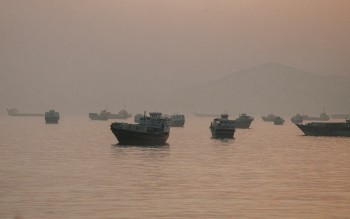
Malaysia faces mounting economic vulnerability from the escalating geopolitical tensions in West Asia, with Economy Minister Akmal Nasrullah Mohd Nasir urging the nation's businesses and consumers to ready themselves for far-reaching consequences. The warning comes after Iran declared a renewed closure of the Strait of Hormuz, one of the world's most critical shipping corridors, in response to United States military strikes launched on July 8. While some commercial vessels continue to navigate the waterway, the minister emphasised that such continued activity should not breed complacency among policymakers or the broader economy.
The Strait of Hormuz's strategic importance cannot be overstated for a trading nation like Malaysia. The narrow passage between Iran and Oman serves as the gateway through which roughly one-fifth of global oil supplies flow annually, making it essential to energy markets worldwide and particularly crucial for Southeast Asian economies dependent on stable energy imports. Any sustained disruption to shipping through this route creates immediate ripple effects across commodity markets, freight costs, and the global pricing architecture that underpins Malaysian commerce. The minister's caution reflects growing concerns that the current crisis, unlike previous flare-ups, shows signs of prolonging rather than resolving quickly, leaving economies exposed to extended uncertainty.
Akmal Nasrullah identified multiple transmission channels through which West Asian instability reaches Malaysia's doorstep. Oil price volatility represents the most visible concern, as crude costs directly feed into fuel prices that affect transportation, manufacturing, and consumer spending across the economy. However, the impact extends far beyond petrol pumps. Shipping costs themselves will climb as vessel operators face longer transit routes to avoid the Strait, adding percentage points to import and export prices. This combination of higher energy costs and elevated logistics expenses compresses profit margins for manufacturers and retailers already navigating post-pandemic supply challenges, ultimately translating to costlier goods for ordinary Malaysians.
The global supply of raw materials used in Malaysian industries faces similar pressures. Many Malaysian manufacturers rely on imported inputs sourced from Europe, the Middle East, and other regions accessible via the Hormuz route. Delays in receiving these materials, coupled with surge pricing from shippers navigating around the crisis, increase production costs. For sectors like electrical and electronics manufacturing, which depend on precise just-in-time inventory systems, even modest delays can force costly production halts. Food security emerges as another critical vulnerability, as Malaysia imports substantial quantities of agricultural products and grains through routes affected by the Hormuz closure, raising the prospect of inflationary pressures on essential groceries.
The minister's analysis of interconnected supply chains deserves particular attention, as it reveals how seemingly distant disruptions cascade through the economy in unexpected ways. The example he cited—plastic manufacturers facing pressure that subsequently affects food packaging, electrical components, automotive parts, and medical devices—illustrates the complex web binding modern economies together. A shortage of plastic resin, triggered by reduced shipments through Hormuz, doesn't simply raise plastic prices; it threatens to disrupt food manufacturers unable to package products, electronics companies unable to source components, and hospitals unable to obtain medical supplies. This systemic vulnerability exposes Malaysia's reliance on stable global commerce and reveals how geopolitical shocks become economic ones within weeks.
Businesses across Malaysia's manufacturing heartland face difficult strategic decisions in light of these warnings. Companies must weigh the costs of building inventory buffers against the risks of holding excess stock in an inflationary environment. Some may accelerate sourcing from alternative suppliers outside traditional routes, incurring higher unit costs to reduce exposure to Hormuz-related disruptions. Others may explore reshoring production or diversifying supply sources geographically, decisions requiring capital investment that many firms can ill afford during uncertain times. The government's emphasis on preparedness reflects the reality that Malaysian competitiveness depends partly on supply chain resilience, an attribute many firms developed only partially during post-pandemic recovery.
Regional implications extend beyond Malaysia's borders, affecting the entire Southeast Asian economic ecosystem. Thailand, Vietnam, Indonesia, and the Philippines face similar vulnerabilities, as all depend on global supply chains traversing the Strait of Hormuz. Any extended closure threatens to increase production costs across the region, potentially reducing Southeast Asia's attractiveness as a manufacturing destination compared to alternatives like India or Mexico. The potential for coordinated regional responses—through ASEAN mechanisms or bilateral arrangements—could help mitigate some costs, yet such coordination typically emerges slowly when multiple nations face competing priorities.
The minister's call for reduced dependence on external factors, while laudable, reflects the challenging reality facing developing economies in a globalised world. Malaysia cannot simply substitute domestic production for all imported inputs without massive investment and potentially accepting higher costs and lower efficiency. Instead, the practical path forward involves a mixed strategy: diversifying supplier bases across regions less vulnerable to Middle Eastern tensions, investing in supply chain visibility and risk management systems, building strategic reserves of critical materials, and exploring supply chain partnerships within ASEAN that reduce dependence on any single route. Such measures require coordination between government and industry, exactly the kind of preparedness Akmal Nasrullah is urging.
Consumers must also brace for impacts, as businesses inevitably pass along rising costs through higher prices for goods and services. While central banks work to prevent wage-price spirals that could embed inflationary expectations, households should expect gradual increases in fuel prices, food costs, and manufactured goods over coming months if the Hormuz situation persists. Lower-income households face disproportionate pressure, as they spend larger shares of income on essentials like food and fuel, making this not merely an economic issue but a social one requiring government attention through targeted support measures.
The broader lesson from the minister's warning is that Malaysia, despite its geographic distance from the Middle East, remains deeply enmeshed in global systems of production and trade that transmit distant conflicts into domestic economic consequences. This reality underscores the importance of maintaining political relationships that might influence regional stability, supporting diplomatic initiatives that reduce tensions, and building institutional capacity to manage crises when they occur. For policymakers, businesses, and households alike, Akmal Nasrullah's message amounts to this: complacency is a luxury Malaysia cannot afford in an interconnected world where events thousands of kilometres away shape the prices Malaysians pay and the jobs they hold.

