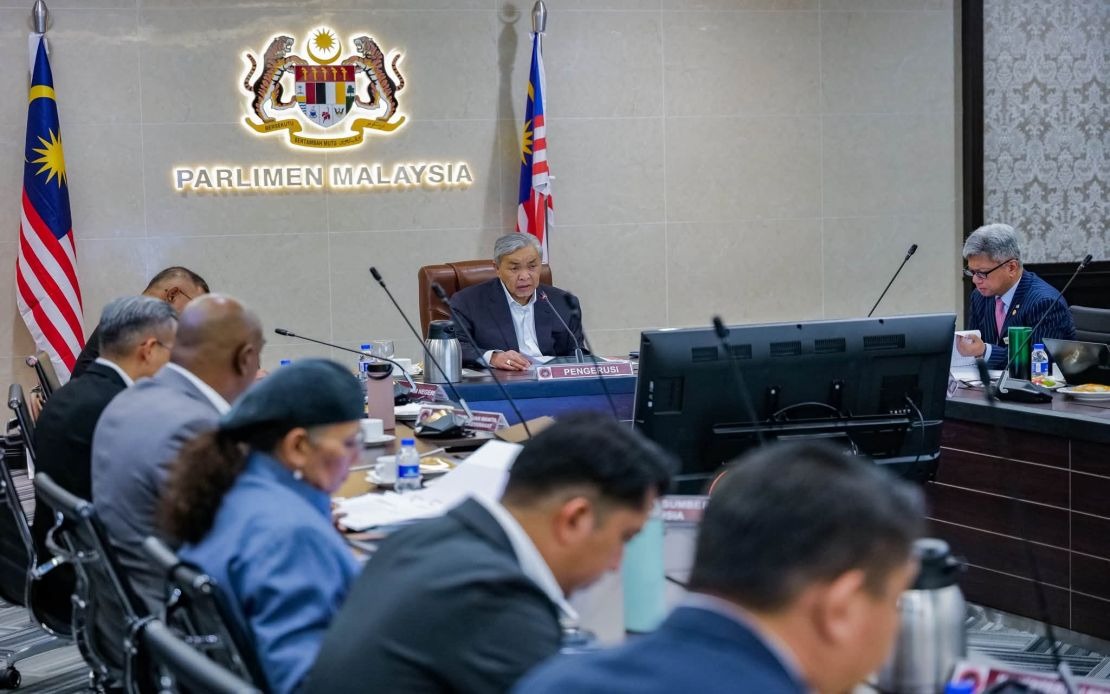
Malaysia's approach to refugee management must evolve to address both humanitarian imperatives and national security concerns, according to Deputy Prime Minister Datuk Seri Dr Ahmad Zahid Hamidi. Speaking after chairing a high-level government committee on the matter, the Rural and Regional Development Minister underscored the complexity of managing refugee populations in an era of unprecedented global displacement, where more than 122 million individuals have been forcibly displaced by conflict and instability worldwide.
The Deputy Prime Minister's intervention reflects growing recognition within Malaysian policymaking circles that refugee management extends far beyond administrative processing. Rather, it encompasses critical elements of border security, public safety, and the preservation of Malaysia's sovereignty. This positioning places Malaysia within a broader international conversation about how nations can fulfill their humanitarian obligations while simultaneously protecting citizens and maintaining territorial integrity.
Ahmad Zahid chaired the 6th Meeting of the High-Level Committee on the Management of Refugees and Asylum Seekers, where officials conducted a comprehensive review of existing policies and implementation mechanisms. The committee examined whether Malaysia's current refugee framework operates systematically and remains aligned with national interests, indicating that policymakers are actively assessing the adequacy of existing structures to handle contemporary challenges.
A significant focus of the committee's deliberations centered on the Refugee Registration Document, or DPP, which represents a crucial tool in Malaysia's refugee identification and management system. By reviewing the implementation of this document, authorities aim to ensure that refugee status determination processes remain rigorous, transparent, and effective in distinguishing between genuine asylum seekers and those who may pose security risks.
Parallel to registration mechanisms, the committee also examined guidelines governing refugee access to essential services, particularly education and healthcare. Streamlining these guidelines addresses a persistent tension in refugee management: providing adequate humanitarian support while ensuring that such provision does not overwhelm local health and education systems or create unintended incentives for irregular migration. Better coordination between agencies responsible for these services could improve both the effectiveness of humanitarian delivery and the ease with which authorities maintain oversight.
The emphasis on legal compliance in service delivery reflects international best practices and Malaysia's commitment to international humanitarian standards. However, it also acknowledges that humanitarian provision must operate within constitutional and statutory frameworks that prioritize Malaysian citizens' access to public services. This balancing act becomes increasingly complex as refugee populations grow and resources become stretched.
Malaysia's geographic position and economic development make it an attractive destination for asylum seekers fleeing conflict in Myanmar, Afghanistan, Pakistan, and other regions experiencing prolonged instability. The country hosts one of Asia's largest refugee populations relative to its size, placing particular pressure on the government to develop sustainable, equitable, and secure management frameworks. The committee's work directly addresses this pressure by evaluating whether current mechanisms can handle present and projected future flows.
The Deputy Prime Minister's framing of refugee management as inseparable from national security reflects post-2015 international discourse on migration, wherein several developed nations have adopted more restrictive stances. Malaysia, as a developing country with stronger humanitarian traditions and ASEAN's emphasis on regional cooperation, must chart a more nuanced course. Ahmad Zahid's statements suggest the government is attempting to construct a middle path: maintaining humanitarian commitments while implementing stricter security protocols and operational efficiency.
For Malaysian citizens and residents, the implications are substantial. Strengthened refugee management may result in more streamlined processing, reducing the period during which asylum seekers operate in legal limbo. Simultaneously, enhanced security vetting procedures aim to minimize risks to public safety. For refugees themselves, clearer guidelines and better-coordinated service access could improve their ability to access education and healthcare, though potential restrictions may also apply.
The regional context cannot be overlooked. ASEAN member states face similar refugee pressures, yet lack a unified regional framework comparable to Europe's arrangements. Malaysia's approach, developed through the High-Level Committee's work, may influence how other Southeast Asian nations address refugee management challenges. The emphasis on balancing humanitarian and security considerations resonates across the region, where governments grapple with similar tensions.
Moving forward, the success of Malaysia's refined refugee management framework will depend on effective implementation by multiple agencies, adequate resource allocation, and sustained political commitment. The committee's ongoing work suggests that policymakers recognize refugee management as an evolving challenge requiring regular assessment and adjustment. Whether the balance between humanitarian responsibility and national security can be achieved in practice, however, remains to be seen as global displacement continues to accelerate and regional pressures mount.

