Responding to a financial crisis that nearly bankrupted one of Southeast Asia's largest Islamic pilgrimage funds, the Malaysian government has announced sweeping governance reforms designed to prevent a recurrence of the mismanagement that brought Tabung Haji to the brink of collapse. The commitment to strengthen Lembaga Tabung Haji (TH) through tighter financial controls and updated regulatory frameworks formed the centrepiece of an extended parliamentary debate that consumed more than ten hours, reflecting the gravity with which lawmakers view the institution's near-catastrophic losses.
The government's restructuring plan flows directly from the 211-page Royal Commission of Inquiry report released in late July, which documented systemic weaknesses across TH's management and operations spanning 2014 to 2020. At the heart of the crisis lie investments that deteriorated catastrophically, with cumulative losses approaching RM13 billion—a staggering figure that underscores the magnitude of misallocation and poor stewardship that occurred over six years. The financial bleeding was so severe that officials calculated the government would have faced liabilities exceeding RM74.5 billion had depositor panic withdrawals spiralled into full-scale bank runs when confidence collapsed.
The task force assembled to translate the RCI's findings into actionable policy represents a high-powered coalition of financial heavyweight institutions. Led by TH chairman Tan Sri Abdul Rashid Hussain, the group brings together Bank Negara Governor Datuk Seri Abdul Rasheed Ghaffour and Securities Commission chairman Datuk Mohammad Faiz Azmi, thereby ensuring that Malaysia's premier banking regulator and securities watchdog will have direct input into reformulating TH's operational framework. This composition signals governmental intent to embed TH within the broader financial regulatory architecture rather than allowing it to operate as an autonomous entity disconnected from established supervisory systems.
The regulatory restructuring contemplates a fundamental division of labour within TH's operations. Under the proposed framework, the Securities Commission will assume responsibility for overseeing all investment management and fund allocation decisions, placing TH's portfolio decisions within the same prudential supervision regime that governs stock brokers and asset managers across Malaysia. Simultaneously, matters relating to the actual logistics and administration of hajj pilgrimage operations—the visa processing, transportation coordination, and accommodation arrangements that form TH's core religious mission—will remain under the purview of the Minister in the Prime Minister's Department (Religious Affairs). This bifurcated structure aims to insulate the pilgrimage function from financial mismanagement while allowing investment decisions to benefit from specialized securities market expertise.
A particularly striking reform targets political interference in TH's governance. Amendments to the Tabung Haji Act 1955 will introduce legal prohibitions against active politicians serving on the institution's board of directors, directly addressing what investigators identified as a recurring vulnerability enabling partisan influence and substandard oversight. Combined with requirements that profit distributions (hibah) be calculated exclusively on the basis of independently audited accounts rather than estimates or projections, these changes aim to insulate TH's decision-making from political pressure and ensure transparency in how depositor earnings are calculated and distributed to millions of Malaysian hajj pilgrims.
The RCI inquiry uncovered alarming details about the scale and nature of TH's troubled investment portfolio. Among fourteen investments identified as problematic, seven had suffered complete loss of capital—a hundred-percent write-down that reveals not merely poor timing or market misfortune but fundamental failures in due diligence and portfolio risk management. Particularly damaging was the discovery that TH's investments in Putrajaya Perdana Bhd had indirectly entangled the pilgrimage fund with 1Malaysia Development Bhd (1MDB), the now-defunct sovereign wealth fund whose spectacular collapse implicated senior government figures in one of the world's largest financial scandals. That TH became exposed to 1MDB through an indirect corporate structure points to inadequate investment governance and insufficient scrutiny of counterparty relationships.
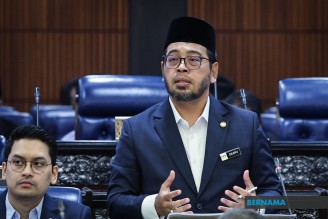
Finance Minister II Datuk Seri Amir Hamzah Azizan emphasized during parliament that the government was neither concealing uncomfortable truths nor shielding figures responsible for the debacle from accountability. The decision to publicly detail losses and regulatory failures, even at the political cost of admitting governance lapses, reflects recognition that restoring depositor confidence requires unflinching transparency. Azizan committed to comprehensive investigations and prosecution where warranted, signalling that accountability will transcend political allegiance or institutional affiliation—no party found culpable would receive preferential treatment.
The RCI report offered twenty-five recommendations for institutional improvement, of which approximately seventy-five percent had reportedly been implemented by late July, indicating that TH management and the government have already begun acting on inquiry findings before formal parliamentary approval of broader legislative changes. Yet implementation timelines remain contingent on Cabinet approval of the task force's specific recommendations, suggesting that the most significant reforms—particularly the Securities Commission's expanded supervisory role and amendments to the Tabung Haji Act 1955—still require formal governmental sanction before becoming operative.
Parliamentary debate revealed broader anxieties about non-bank financial institution regulation in Malaysia more generally. Backbencher Aminolhuda Hassan from Petaling Jaya (PH-Sri Gading) proposed establishing a unified regulatory authority overseeing major non-bank financial institutions including the Employees Provident Fund, Permodalan Nasional Bhd, and the Retirement Fund Incorporated. Aminolhuda's observation that Malaysia currently lacks a single authority responsible for systemic risk assessment and prudential supervision across the non-bank sector points to structural regulatory gaps that likely enabled TH's isolation from peer institution scrutiny and best-practice benchmarking. Should such consolidation occur, it would represent a fundamental recalibration of Malaysia's financial supervision architecture.
Another critical vulnerability requiring attention concerns TH's revenue concentration. Nearly twenty-six percent of annual institutional income derived from sukuk issued under the UJSB program, creating dangerous revenue dependency on a single product line and exposing TH to interest rate and credit market shocks. Backbencher Young Syefura Othman (Bentong, PH) correctly identified that reducing this revenue concentration should form a priority in TH's longer-term diversification strategy, preventing the institution from remaining vulnerable to specialized market disruptions affecting Islamic bonds.
The government's framework for addressing TH's crisis carries implications extending beyond the institution itself. As Malaysia attempts to position itself as a global Islamic finance hub competing with centres in the Middle East and Indonesia, the credibility of major Islamic financial institutions proves essential. Depositors must have confidence that their savings entrusted to TH will be safeguarded through proper governance, independent auditing, and competent professional oversight rather than subjected to political manipulation or reckless speculation. The reforms announced represent a recognition that TH's recovery and Malaysia's broader ambitions for Islamic finance leadership depend on bringing institutional practice into alignment with international standards of financial regulation and corporate governance.
The comprehensive nature of parliamentary scrutiny, with thirty-nine members given dedicated time to debate TH's restructuring, underscores the political salience of the issue. Millions of Malaysians, particularly those planning the hajj pilgrimage, have direct financial stakes in TH's recovery and operational integrity. The government's willingness to spend parliamentary time on detailed legislative and regulatory reform, combined with its stated commitment to accountability regardless of political consequences, suggests recognition that public trust in Islamic institutions underpins both the institution's viability and broader confidence in Malaysia's governance systems. The measures now moving toward Cabinet approval represent not merely technical financial adjustments but a fundamental reassessment of how Malaysia oversees large financial institutions entrusted with national religious and financial obligations.

