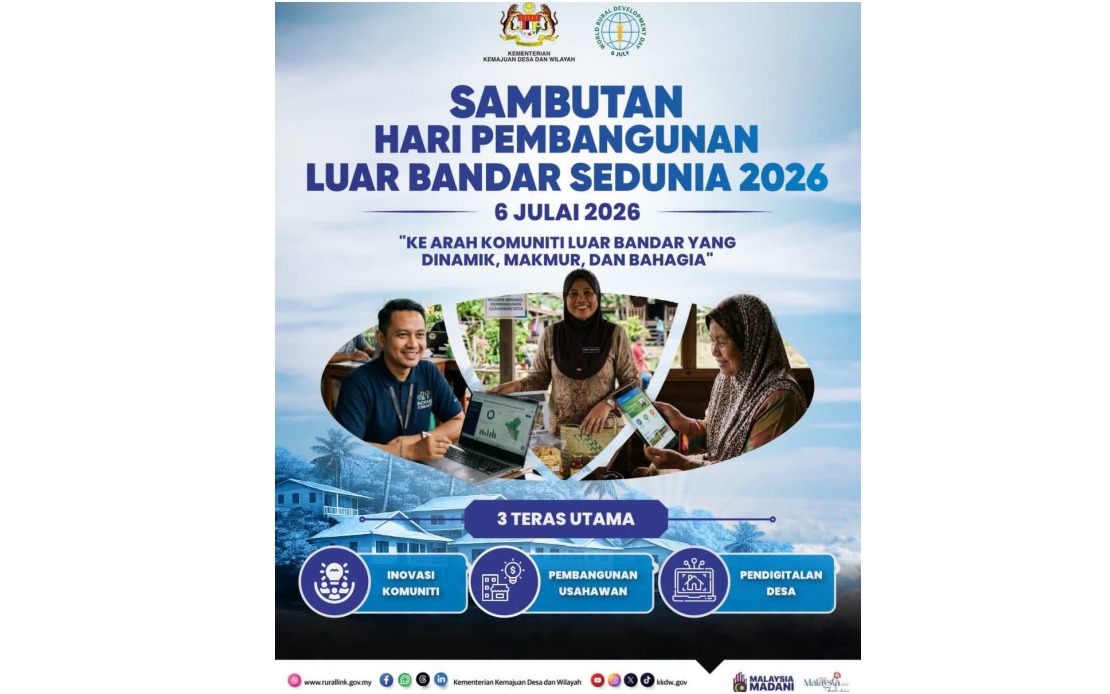
Malaysia joins the international community in marking World Rural Development Day tomorrow with its inaugural national celebration at Tun Abdul Razak Stadium in Jengka near Maran, Pahang. Deputy Prime Minister and Minister of Rural and Regional Development Datuk Seri Dr Ahmad Zahid Hamidi will officiate the ceremony, which carries the theme "Toward Vibrant, Prosperous and Happy Rural Communities" and represents a significant milestone in the country's commitment to rural advancement.
The commemoration comes following the United Nations General Assembly's declaration of World Rural Development Day in September 2024, with July 6 designated as the annual observance date worldwide. This global initiative coincides with the establishment of the Centre on Integrated Development for Asia and the Pacific (CIRDAP), underscoring the international recognition of rural development's importance to achieving broader sustainable development objectives. The inaugural global celebration occurred on July 6, 2025, and Malaysia has now positioned itself among member nations formally observing this occasion, beginning with this year's festivities.
At its core, the celebration acknowledges the pivotal role that rural communities play in driving national progress and realising the Sustainable Development Goals. The Ministry of Rural and Regional Development (KKDW) has structured the event around three strategic pillars designed to address contemporary rural challenges and opportunities. Community innovation serves as the foundation, recognising that rural areas harbour significant potential for homegrown solutions tailored to local contexts. Rural digitization represents the second thrust, addressing the persistent digital divide that has historically limited rural populations' access to technology and online economic opportunities. The third pillar, rural entrepreneur development, seeks to cultivate business leadership and create pathways for wealth generation within rural economies.
These three strategic thrusts translate into concrete initiatives aimed at reshaping rural economic prospects and social conditions. By expanding economic opportunities, the government seeks to reduce rural-urban economic disparities that have long characterised Malaysia's development landscape. Strengthening access to digital technology addresses infrastructure gaps that have constrained rural participation in the digital economy, from e-commerce to remote work and digital services. Empowering communities to become more progressive and competitive equips rural populations with the knowledge, skills, and resources necessary to compete effectively in an increasingly globalised and technology-driven economy.
The celebration will feature several significant components that illustrate the government's multifaceted approach to rural development. The Rural Aspiration Award MADANI recognises outstanding contributions to rural advancement, while the Felda Plan Excellence Award acknowledges achievements within the Federal Land Development Authority framework. The launch of My Rural Insight Journal signals investment in knowledge-sharing and documentation of rural development experiences, and the announcement of Felcra Bhd Interim Distributable Profit Distribution 1/2026 underscores the government's commitment to ensuring rural communities benefit from state-linked enterprises' performance.
For Malaysian policymakers and rural communities, this inaugural celebration carries broader significance within the regional and global context. Southeast Asia faces mounting pressure to accelerate rural development as urbanisation accelerates and rural populations increasingly seek economic alternatives to agriculture. Malaysia's formal recognition of World Rural Development Day positions the country as actively engaged in addressing rural challenges, particularly relevant given that substantial segments of the Malaysian population, especially in Sabah, Sarawak, and peninsular states, depend on rural-based livelihoods. The emphasis on digitization aligns with Malaysia's broader digital transformation agenda outlined in the Madani Framework, ensuring rural communities are not left behind in technological advancement.
The public has been invited to attend and participate in the festivities, which will feature exhibition booths from KKDW and participating agencies. This inclusive approach reflects recognition that rural development success depends on broad stakeholder engagement, from government bodies to civil society and private sector partners. By opening the celebration to public participation, the government signals that rural development constitutes a shared responsibility rather than purely a bureaucratic initiative.
This timing represents a critical juncture for rural Malaysia. Global economic pressures, climate change impacts, and demographic shifts have intensified scrutiny of rural development policies across Southeast Asia. Countries that effectively harness rural innovation, embrace digital transformation in agricultural and non-agricultural sectors, and develop entrepreneurial capacity in provincial areas will possess competitive advantages. Malaysia's inaugural World Rural Development Day celebration suggests governmental awareness of these dynamics and commitment to proactive rather than reactive rural policy.
The celebration in Jengka carries additional symbolic weight, as Pahang has historically served as a focal point for rural development initiatives, from FELDA schemes to regional development projects. Conducting the inaugural ceremony in this location underscores continuity with established rural development frameworks while signalling openness to evolving approaches. As rural communities navigate technological disruption, climate variability, and economic restructuring, commemorative events such as this serve both practical and inspirational functions, acknowledging rural contributions whilst mobilising renewed commitment to rural advancement across government and society.

