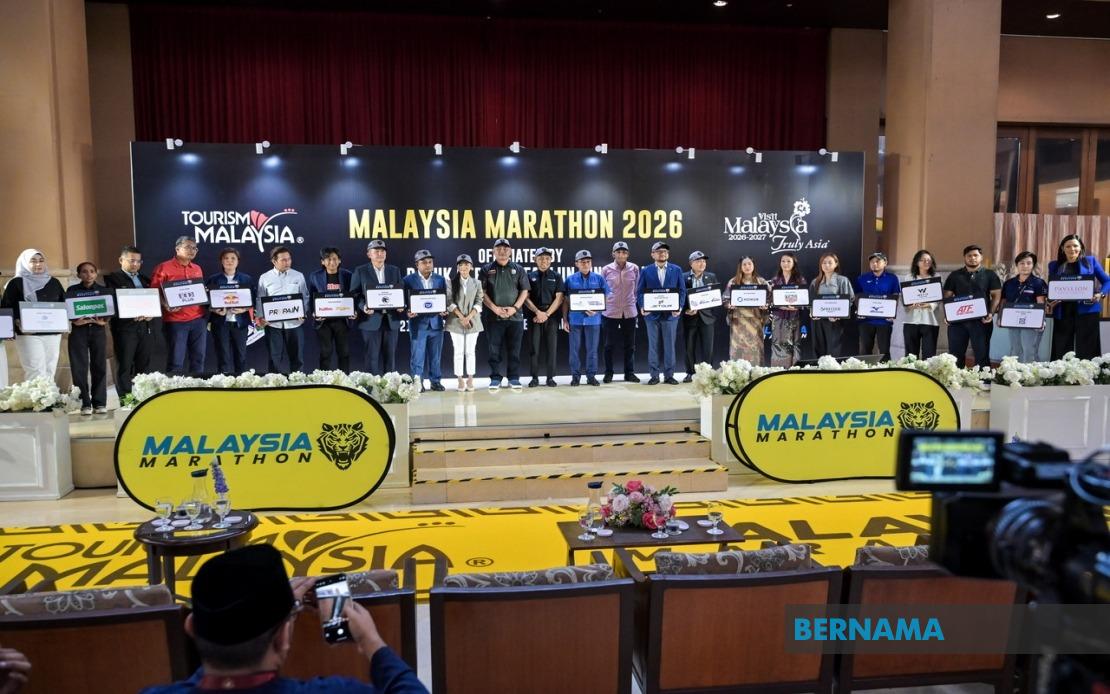
The Malaysia Marathon 2026, making its debut on August 30, is positioning itself as a showcase event for distance running excellence in the region by dangling substantial financial incentives for those who topple existing national benchmarks. Organisers are offering RM50,000 to any Malaysian runner who manages to surpass the standing national records across both the half-marathon and full marathon distances—a move designed to galvanise the country's elite athletic talent and draw international competitors to challenge themselves on Malaysian soil.
Eddy Casmady, the marathon's president, outlined the strategic thinking behind the prize structure during the official launch ceremony in Kuala Lumpur. The reward represents more than a token gesture; it signals serious investment in elevating Malaysian distance running to regional prominence. By restricting the prize to Malaysian nationals attempting the records, organisers are making a deliberate choice to strengthen domestic competitive performance rather than simply attracting the world's best runners regardless of origin. This approach reflects broader aspirations within Malaysian athletics to develop homegrown champions capable of standing shoulder-to-shoulder with established performers from other countries.
The inaugural event has already achieved a significant credibility milestone by securing World Athletics certification for its race route. This accreditation, obtained following rigorous measurement and verification processes, ensures that any records set during the marathon will carry official recognition and weight within the global running community. For Malaysian athletes, this validation transforms the event from a domestic competition into a platform where their achievements gain international legitimacy—a distinction that matters profoundly when building careers in professional distance running.
The course itself presents formidable physical demands that will test participants across multiple categories. Running from Pavilion Kuala Lumpur through to the KLCC area, the route incorporates approximately 900 metres of climbing across a particularly challenging section, creating a significant elevation profile that distinguishes this event from flatter urban marathons. Both local and international runners will encounter these demanding topographical features, though elite athletes accustomed to hilly courses may find the elevation gain manageable compared to truly mountainous marathon routes found elsewhere in Asia and beyond.
The scale of Malaysia Marathon 2026 reveals ambitions to establish it as a major regional running event. The organisers expect to welcome 25,000 participants distributed across four distance categories, with the full 42-kilometre marathon attracting 2,000 runners, the half-marathon drawing 8,000 participants, the 10-kilometre race accommodating 5,000 entrants, and a 5-kilometre leisure run welcoming a further 10,000 recreational runners. This tiered structure democratises participation, allowing serious competitive athletes to compete alongside recreational enthusiasts seeking a more modest physical challenge.
International participation will significantly enhance the event's profile and competitive calibre. More than 2,300 overseas runners have already committed to taking part, representing a meaningful international contingent that brings diverse running traditions and techniques to Malaysian streets. The inclusion of elite athletes from Japan and Nigeria particularly matters, as both nations have strong distance-running cultures and track records of producing accomplished marathon competitors. Their presence should elevate the overall standard of competition and provide benchmarking opportunities for Malaysian runners.
An unconventional element will emerge when the HONOR humanoid robot participates in the 10-kilometre event, injecting novelty and technological intrigue into what might otherwise be a straightforward sports competition. While the robot's actual competitive impact will be limited—it is unlikely to contend for prizes or records—its inclusion represents a modern twist that generates media attention and highlights Malaysia's engagement with cutting-edge technology. Such symbolic gestures increasingly feature in major sporting events seeking to project forward-thinking credentials.
The timing and positioning of Malaysia Marathon 2026 reflect strategic considerations about Malaysia's standing within the global running calendar. By hosting a World Athletics-certified event with substantial prize money and international participation, Malaysia signals its commitment to serious athletic competition and its capacity to organise events meeting international standards. For Malaysian distance runners, the availability of a domestic platform carrying global recognition removes one traditional barrier to competitive development—the necessity to travel abroad to compete in officially sanctioned races that count toward international rankings and records.
The RM50,000 incentive structure warrants closer examination regarding its competitive realism and psychological impact. National records in marathon running, particularly in established athletic nations, are often hard-won benchmarks set by performers at or near elite international standards. The prize amount, while substantial in Malaysian terms, may or may not prove sufficient to attract the absolute cream of international talent, yet it signals sufficiently serious intent to encourage Malaysia's best distance runners to prepare meticulously for this event. Whether the current national records fall will depend on genuine sporting progress rather than artificial encouragement alone.
Beyond the immediate athletics dimension, the Malaysia Marathon 2026 embeds itself within broader discussions about sports infrastructure and national capability in Southeast Asia. Hosting World Athletics-certified events requires organisational sophistication, route planning expertise, and coordination with international governing bodies. Success in executing this inaugural marathon could establish Malaysia as a reliable host for future international sporting events, potentially attracting additional major competitions to Malaysian cities and strengthening the nation's profile within global sports communities.

