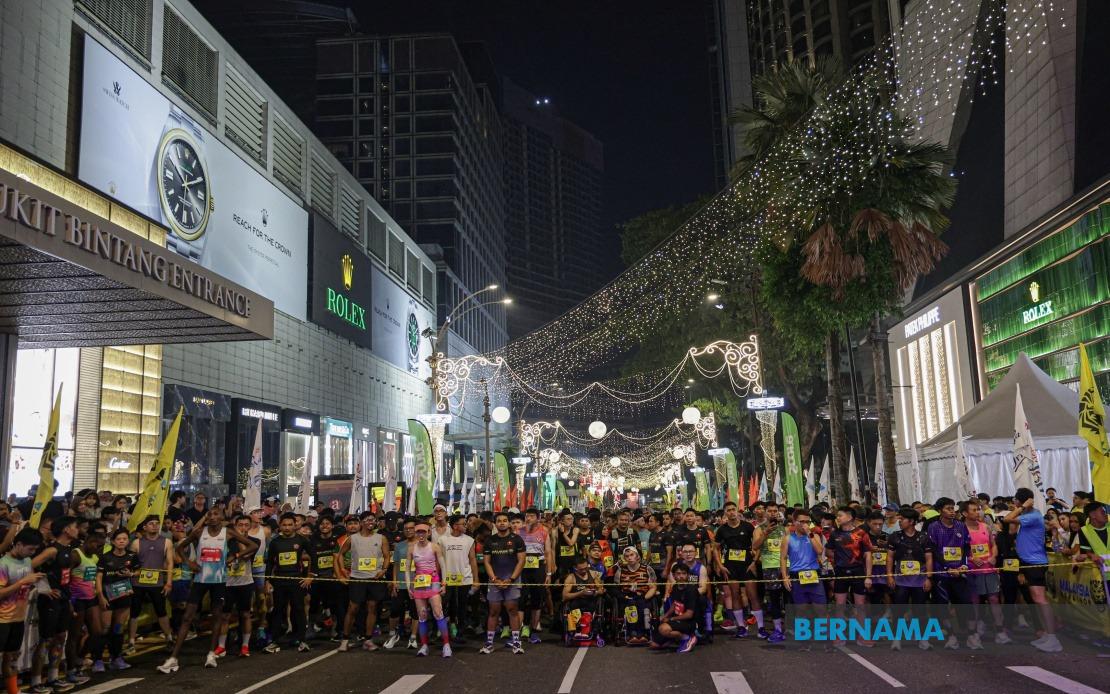
The Malaysia Marathon 2026 commenced in the early hours of August 30, transforming Kuala Lumpur's cityscape into a sprawling athletic arena as 25,000 local and international participants took to the streets for the country's 69th National Day celebration. Flagged off by Minister of Tourism, Arts and Culture Datuk Seri Tiong King Sing from the Pavilion Kuala Lumpur precinct, the full 42-kilometer marathon commenced at 12:30 am, drawing 2,000 elite and recreational runners who would test their endurance against one of Asia's most challenging urban courses.
The staggered start times reflected the organisers' careful orchestration to manage the massive participant volume while maintaining the event's competitive integrity. The half-marathon distance at 21 kilometres attracted 8,000 runners who began their journey at 2:00 am, whilst the 10-kilometre category brought 5,000 additional participants starting at 3:30 am. The family-focused 5-kilometre Fun Run, designed for less experienced runners and enthusiasts seeking to participate in the national celebration, commenced at 7:30 am with 10,000 entrants, providing a more accessible entry point for communities across Malaysia.
What distinguishes this year's marathon from previous editions is the deliberate choice to relocate the finishing line from its traditional home at Dataran Merdeka to the Kuala Lumpur City Centre precinct. This strategic shift not only showcases one of Malaysia's most iconic commercial and architectural landmarks to international competitors but also integrates the event more seamlessly into the city's broader infrastructure and public spaces. The change reflects growing considerations about urban event management and the opportunity to revitalise multiple zones of the capital city simultaneously.
Among the marathon's most distinctive features is the participation of an HONOR-made humanoid robot competing alongside athletes from Japan, Nigeria, and numerous other countries. This technological innovation symbolises Malaysia's positioning as a forward-thinking nation embracing artificial intelligence and robotics on the global stage. The robot's presence transforms the event beyond a conventional athletic competition into a demonstration of technological capability and cultural modernism, offering media spectacle and novelty appeal that extends the marathon's reach across international audiences and tech-savvy demographics.
The full marathon course presents formidable physical demands, particularly the 900-metre elevation gain traversed along the Ampang-Kuala Lumpur Elevated Highway. This significant climb tests not merely cardiovascular capacity but also mental resilience, separating serious competitors from casual participants. The topographical challenge, combined with Kuala Lumpur's tropical climate and early morning start, creates conditions that demand rigorous preparation from participants accustomed to flatter, cooler marathon environments. For Malaysian runners, the course provides an opportunity to compete against international standards whilst navigating terrain familiar to the local context.
The logistical complexity of hosting such a massive athletic event required extensive coordination with Kuala Lumpur Police, who implemented phased road closures and traffic diversions commencing on the evening of August 29 and extending through the afternoon of August 30. Major routes affected include Jalan Bukit Bintang, Jalan Ampang, Jalan Sultan Ismail, and Jalan Raja Chulan, alongside key highway sections including AKLEH and SUKE. This temporary suspension of normal traffic patterns exemplifies the significant urban disruption that hosting world-class sporting events entails, requiring substantial public cooperation and advance notice to commuters and businesses throughout the federal territory.
The Malaysia Marathon 2026 has achieved recognition from World Athletics, the international governing body for track and field competition, lending credibility and prestige to the event. This validation places the Malaysian marathon within a global competitive framework, ensuring that elite times and performances register in international rankings and databases. The World Athletics endorsement attracts higher calibre professional athletes seeking to accumulate qualifying marks and establish records that carry weight in their sport, whilst simultaneously positioning Malaysia as a serious destination for international athletic tourism and investment.
The timing of the marathon within the National Day festivities carries symbolic weight beyond pure sporting achievement. By channelling national patriotic sentiment through athletic endeavour and physical challenge, the event transforms abstract notions of patriotism into lived experience and communal participation. The presence of international runners celebrating Malaysia's national occasion broadens the event's significance beyond domestic audiences, projecting a vision of inclusive Malaysian identity to a global community of athletes and their international networks.
For Southeast Asia more broadly, Malaysia Marathon 2026 represents the region's growing capacity to organise mega-events that compete with established marathons in Europe, North America, and Australia. As other Southeast Asian nations similarly invest in athletic infrastructure and event hosting, these competitions will shape tourism patterns, urban development priorities, and the region's cultural positioning on the global stage. The innovation of incorporating technological elements like the humanoid robot reflects broader regional trends toward positioning Southeast Asian events as modern, forward-thinking, and technologically sophisticated rather than purely traditional or heritage-focused.
The participation of 25,000 runners distributed across multiple categories demonstrates the democratisation of marathon athletics in Malaysia. Rather than restricting the event to elite competitors, the inclusion of substantial fun run and recreational distances creates opportunities for broader demographic engagement, building fitness cultures and community participation in mass athletic events. This inclusive approach may generate lasting effects on public health awareness and recreational running participation throughout Malaysia, extending the marathon's impact well beyond the single event day.

