The Malaysian government has committed to preserving its comprehensive subsidy framework and direct cash assistance programmes even as it shoulders an estimated RM40 billion burden in petroleum product subsidies this year, according to Deputy Finance Minister Liew Chin Tong. This assurance came during parliamentary proceedings in Kuala Lumpur on July 15, addressing mounting concerns that the escalating global fuel costs would force the administration to scale back its safety net for lower-income households and vulnerable groups.
The deputy minister's statement represents a deliberate policy choice to prioritise social stability and household purchasing power over fiscal consolidation in the short term. Rather than reducing existing assistance mechanisms, the government has instead doubled down on protecting consumers from international oil price fluctuations that have intensified due to ongoing geopolitical instability in West Asia. This stance reflects a political calculation that maintaining the social contract through continued subsidies and direct transfers is more strategically important than demonstrating fiscal discipline during a period of external economic pressures.
Liew outlined the government's current portfolio of people-centred initiatives, specifically highlighting the Sumbangan Tunai Rahmah (STR) and Sumbangan Asas Rahmah (SARA) cash assistance programmes as cornerstones of the safety net that will remain intact. These schemes represent direct transfers to qualifying recipients and have become central to the government's poverty alleviation and cost-of-living support architecture. The continued commitment to these programmes, despite the substantial petroleum subsidy bill, underscores the administration's priority on maintaining household incomes and consumption capacity among economically disadvantaged segments of the population.
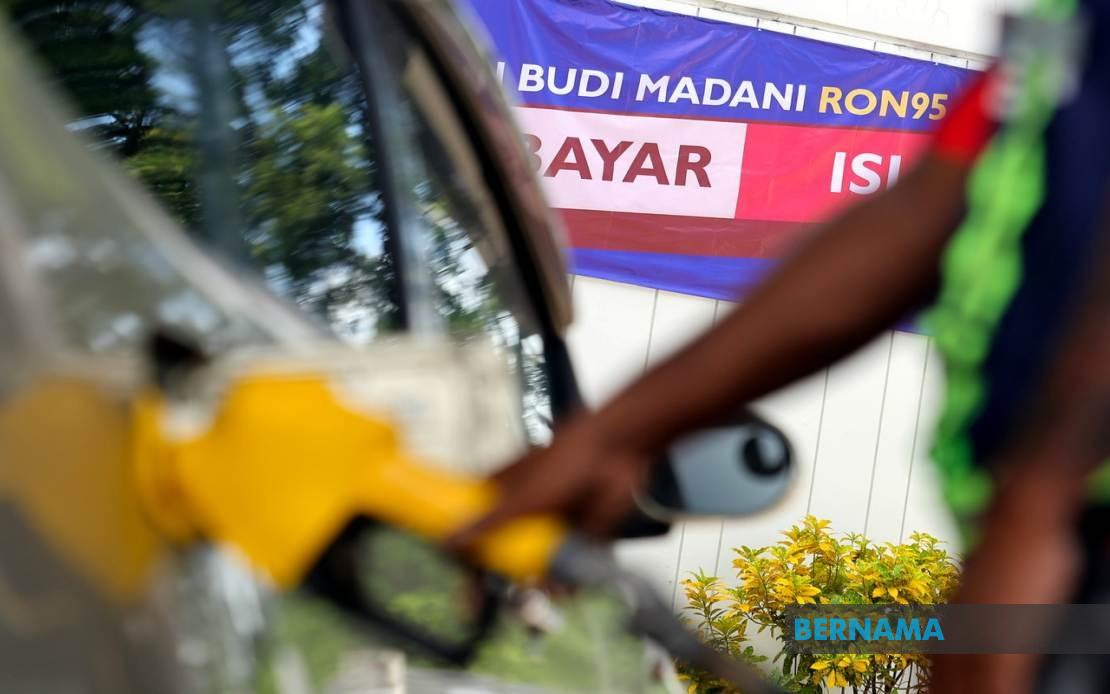
The centrepiece of Malaysia's price protection strategy is the BUDI MADANI RON95 scheme, which was introduced in September of the previous year and has served as a critical buffer against global crude oil volatility. This targeted subsidy programme caps the retail price of RON95 petrol at RM1.99 per litre for Malaysian consumers, providing a fixed-price guarantee regardless of international market conditions. The programme proved particularly valuable during March and April of this year, when uncontrolled world prices would have pushed RON95 to approximately RM5 per litre—more than double what Malaysians actually paid at the pump.
The effectiveness of the BUDI95 mechanism lies in its dual design: it establishes both a price ceiling for consumers and ensures guaranteed fuel supply through coordinated quota allocations. This two-pronged approach insulates ordinary Malaysians from the commodity price shocks that have roiled global energy markets and destabilised purchasing power in many developing economies. Liew emphasised that this structural protection has allowed Malaysians to maintain normal economic activity and mobility during periods when West Asian tensions threatened to create broader economic disruptions across the region.
For Malaysian readers grappling with inflationary pressures, the BUDI95 programme represents a tangible example of targeted intervention that prioritises fuel affordability without attempting to suppress prices across the entire economy. This represents a nuanced approach compared to blanket fuel price controls, which many emerging markets have abandoned due to their fiscal unsustainability and tendency to create supply distortions. By capping only the standard RON95 grade and maintaining supply through managed quotas, Malaysia has avoided the parallel market distortions and hoarding that often accompany across-the-board price controls.
The government's willingness to absorb RM40 billion in petroleum subsidies reflects a strategic assessment that the geopolitical drivers of high global oil prices are not temporary or cyclical in nature. Tensions in West Asia have introduced structural uncertainty into energy markets, making price volatility a medium-term reality rather than a short-term disruption. Rather than wait for normalisation that may not materialise within the current fiscal year or beyond, the administration has opted to anchor domestic prices and budgets to a known, controlled level, sacrificing fiscal consolidation goals in exchange for economic predictability.
This decision carries important implications for Malaysia's fiscal position and future policy flexibility. The RM40 billion annual commitment represents a substantial opportunity cost that reduces headroom for other government investments or deficit reduction. However, it also reflects a conscious trade-off: the government appears to have judged that the social and political costs of reduced subsidies—including lower purchasing power, potential inflationary pressures in non-energy sectors, and consumer hardship—would outweigh the benefits of improved fiscal metrics. This calculus is particularly salient in the context of ongoing cost-of-living pressures that have squeezed middle and lower-income households across Southeast Asia.
The parliamentary exchange that yielded Liew's statement was prompted by a supplementary question from a ruling coalition member representing Hulu Langat, suggesting that concerns about subsidy sustainability are not confined to the opposition. The fact that government-aligned lawmakers are raising these questions indicates that the fiscal burden is widely recognised within political circles as a medium-term challenge requiring strategic management. Liew's reaffirmation that no reductions are planned can therefore be read as a reassurance to backbenchers and constituencies dependent on subsidy-linked welfare spending, as much as it constitutes a public commitment to ordinary Malaysians.
The broader context for Malaysia's subsidy stance involves regional comparisons and lessons from neighbouring economies. Throughout Southeast Asia, governments have attempted various combinations of price controls, targeted assistance, and efficiency improvements to manage energy costs during periods of global price spikes. Malaysia's approach—combining a capped price for the essential fuel grade with parallel cash transfer programmes—sits somewhere between the extremes of unrestricted market pricing and comprehensive price controls. This hybrid model allows the government to maintain affordability while preserving supply security and avoiding the fiscal spirals that have ensnared other nations when energy subsidies mushroomed beyond sustainable levels.
For Malaysian policymakers and observers monitoring fiscal sustainability, the critical question is whether the current RM40 billion annual subsidy level can be maintained indefinitely, or whether a transition strategy must be developed to gradually phase in cost-recovery mechanisms once West Asian instability subsides. Liew's current statement provides no timeline for such a transition, suggesting that the government intends to maintain the status quo for as long as international conditions remain unsettled. This approach prioritises immediate social stability and consumer welfare over fiscal metrics, a choice that is justifiable if geopolitical risks remain elevated but which may require recalibration if global energy markets stabilise.

