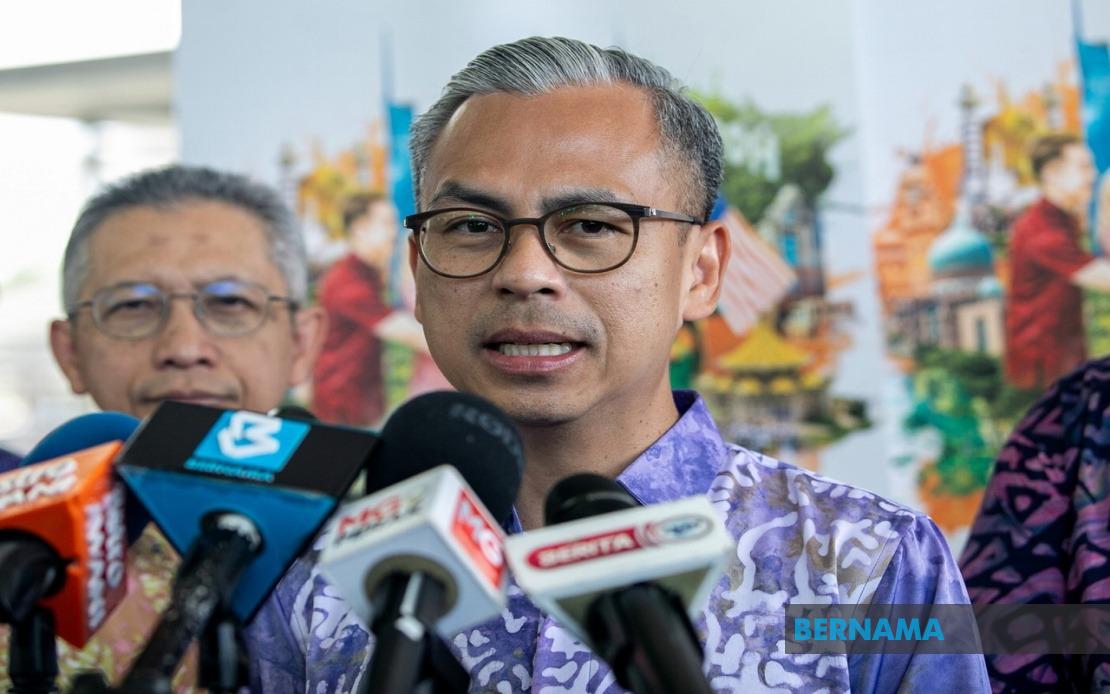
The MADANI Government has chosen 'Malaysia MADANI: Kesejahteraan Dinikmati' as the central theme for the 2026 National Day and Malaysia Day (HKHM2026) celebrations, positioning shared and inclusive prosperity as the defining vision for the nation's progress. Communications Minister Datuk Seri Fahmi Fadzil made the announcement during the launch of the 2026 National Month and Fly the Jalur Gemilang campaign at the Sultan Azlan Shah Ministry of Health Training Institute in Tanjung Rambutan, Ipoh, on July 19, with Prime Minister Datuk Seri Anwar Ibrahim officiating the ceremony alongside National Unity Minister Datuk Aaron Ago Dagang and Perak Menteri Besar Datuk Seri Saarani Mohamad.
The selection of this particular theme signals a deliberate departure from purely economic metrics toward a more holistic interpretation of national development. According to Fahmi, the government's conception of shared prosperity transcends narrow measures of gross domestic product growth or fiscal expansion, instead embracing a broader mandate encompassing tangible improvements in living standards, genuine access to opportunities across demographic divides, and the equitable circulation of development benefits throughout society. This framing represents an attempt to address longstanding concerns about uneven wealth distribution and regional disparities that have characterised Malaysia's economic trajectory over preceding decades.
Central to the MADANI administration's messaging is an explicit commitment that Malaysia's development agenda shall not selectively benefit particular segments while marginalising others. The principle of inclusive progress—articulated through the pledge that no citizen shall be left behind regardless of ethnicity, religious affiliation, geographic location, or socioeconomic origin—reflects recognition that sustainable national advancement requires broad-based participation and equitable resource allocation. For Malaysian policymakers, this represents an acknowledgment that development initiatives restricted to particular communities or regions risk exacerbating social fractures rather than strengthening national cohesion.
The timing of this thematic announcement carries particular significance for Malaysia's multicultural framework. Fahmi emphasised that the nation's ethnic, religious and cultural diversity constitutes not merely a historical artifact to be passively acknowledged, but rather an active foundation upon which contemporary social stability, mutual respect and harmonious coexistence rest. This perspective shifts the conversation from diversity as a potential liability requiring management toward diversity as a generative asset foundational to national strength. For regional observers, Malaysia's continued articulation of multicultural harmony as a core governing principle remains noteworthy given polarisation pressures evident in comparable Southeast Asian societies.
The government has positioned preservation of unity and inter-community harmony as a shared civic responsibility transcending formal governmental structures. The language employed—invoking collective stewardship of Malaysia's pluralistic legacy—attempts to mobilise popular engagement with national cohesion as an organic social practice rather than merely a top-down administrative requirement. This approach implicitly recognises that durable harmony emerges through sustained voluntary commitment rather than institutional imposition alone.
Operationally, the 2026 celebrations will feature multiple coordinated programmes designed to nurture patriotic sentiment and strengthen unity across Malaysian society. The 'One House, One Jalur Gemilang' campaign aims to translate national symbolism into household-level participation, while the Kembara Merdeka Jalur Gemilang convoy programme will extend celebratory activities across geographic boundaries. These initiatives suggest an intention to distribute patriotic engagement beyond urban centres or institutional venues toward community-based expression, potentially enhancing resonance among diverse populations.
For Malaysian readers and regional observers, the HKHM2026 thematic direction warrants consideration within Malaysia's broader governance trajectory. The MADANI Government's emphasis on prosperity sharing addresses concerns that economic growth concentrated among particular sectors or geographic regions risks diminishing popular confidence in national institutions. By explicitly framing development as a collective endeavour with benefits deliberately distributed widely, policymakers signal responsiveness to accumulated grievances regarding unequal opportunity access and regional economic disparity.
The Merdeka 360 portal and social media platforms operated by the Information Department will serve as primary information channels for citizens seeking celebration details and participation opportunities. This multi-channel approach reflects contemporary expectations regarding government communication accessibility, though effectiveness ultimately depends on sustained engagement quality and information utility beyond ceremonial announcements.
Regionally, Malaysia's articulation of inclusive prosperity as a central governing principle carries implications for Southeast Asian development discourse more broadly. As the region confronts persistent challenges regarding equitable growth distribution, environmental sustainability and inclusive institutional participation, Malaysia's explicit commitment to shared prosperity models may influence neighbouring countries' governance narratives and policy orientations toward more inclusive frameworks.
The convergence of Prime Minister Anwar Ibrahim's presence at the launch ceremony with the thematic emphasis on inclusive prosperity suggests senior leadership alignment regarding development philosophy. This coherence across different governance levels—from Communications Ministry messaging through Prime Ministerial participation—potentially strengthens political commitment to translating aspirational rhetoric into concrete policy implementation.
Moving forward, the substantive challenge facing Malaysian policymakers involves translating the HKHM2026 thematic framework into measurable policy outcomes. Celebrating shared prosperity rhetorically during national observances carries limited impact without corresponding fiscal allocation, institutional reform and implementation mechanisms ensuring equitable benefit distribution across demographic and geographic divides. The real test of MADANI Government commitment will emerge through fiscal policies, development allocation patterns and sectoral investments materialising during the intervening period before 2026 celebrations commence.

