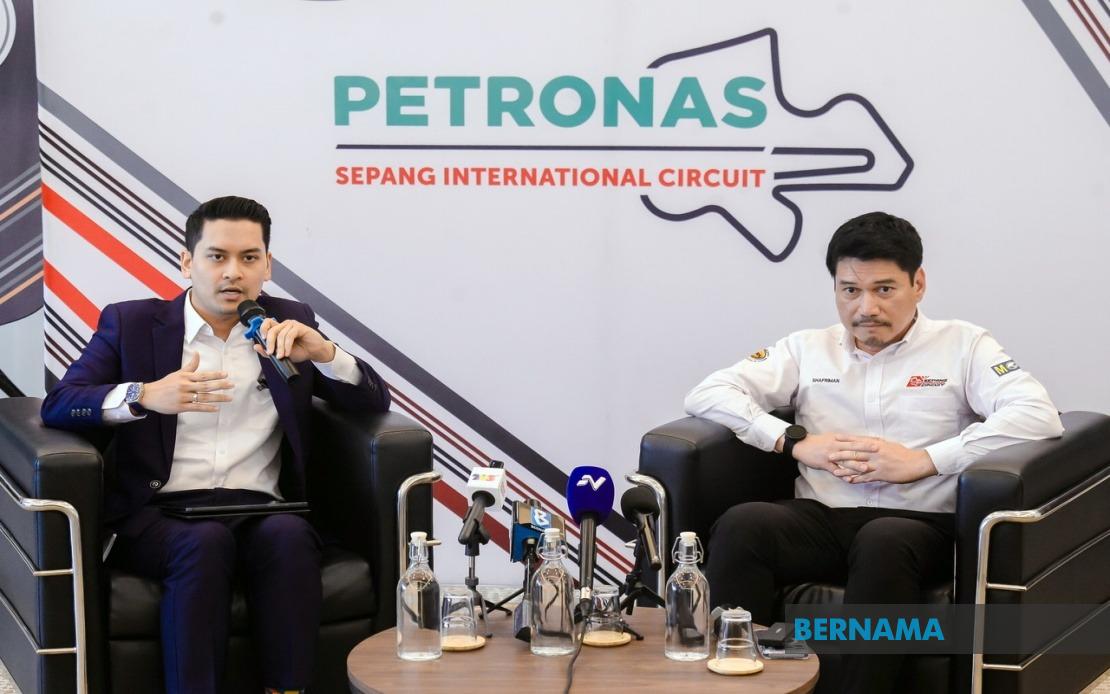
Malaysia's commitment to remaining a world-class motorsport destination has been formalized with the Cabinet-approved extension of its MotoGP hosting contract through 2031. Youth and Sports Minister Dr Mohammed Taufiq Johari announced the renewal at the Sepang International Circuit on July 1, emphasizing that the deal represents far more than a simple continuation of a prestigious international sporting event—it constitutes a deliberate strategic positioning of Malaysia as a competitive global motorsport powerhouse.
The new agreement commences in 2025 and effectively replaces the existing contract that was originally scheduled to conclude at the end of this year. This transition demonstrates the government's confidence in the long-term viability and economic sustainability of the championship at Malaysian soil. Rather than treating the MotoGP as merely another sporting spectacle, Malaysian policymakers have increasingly recognized it as a cornerstone investment in the country's broader economic and industrial ecosystem.
The financial case for the extension is compelling. Analysis of the 2024 edition revealed an impressive economic footprint, with the race generating approximately RM694 million in overall economic impact across the nation. Beyond direct revenues, the event created more than 4,400 employment opportunities spanning sectors from hospitality and transportation to retail and professional services. Perhaps most tellingly, the return on investment ratio reached 6.3 times the government's input, indicating that every ringgit invested in hosting the event yielded substantially more in economic activity across the Malaysian economy.
These figures assume particular significance for Southeast Asia's broader economic narrative. As regional governments increasingly compete to attract high-value sporting events and tourism infrastructure investments, Malaysia's ability to quantify and articulate the tangible benefits of major motorsport championships strengthens its positioning against rivals such as Thailand and Indonesia. The multiplier effect extends well beyond race weekend into the hospitalization, transportation and accommodation sectors that benefit from influxes of international visitors, teams and media personnel.
Dr Mohammed Taufiq articulated a secondary strategic motivation underlying the contract extension: the development of domestic motorsport talent and technical expertise. Malaysia has successfully leveraged its hosting status to cultivate homegrown racing talent capable of competing at the international level. Riders including Hakim Danish and Qabil Irfan have emerged as representatives of Malaysian motorsport excellence on the world stage, providing inspiration to younger enthusiasts and demonstrating that competitive racing success is achievable for Malaysian athletes. This talent pipeline represents intangible but significant national pride and soft power.
The Malaysian Motorsport Development programme, commonly known as MDEV, provides the structural framework for identifying and nurturing racing talent from grassroots participation through to international competition. The programme's existence reflects a maturation of Malaysian motorsport beyond mere spectating audiences toward active development of human capital. By institutionalizing talent pathways, the government recognizes that sustainable competitive advantage in motorsport extends across technical expertise, mechanical knowledge and driver development—domains in which Malaysia can cultivate genuine competitive distinction.
Malaysia's relationship with the MotoGP extends back more than three decades. The nation first hosted the championship in 1991, establishing itself early as a viable venue for top-tier motorcycle racing in Asia. The sport's subsequent relocation to Sepang International Circuit in 1999 marked a significant infrastructural upgrade, transforming the venue into a modern, purpose-built facility capable of accommodating the increasingly demanding technical requirements of contemporary MotoGP. Over the subsequent quarter-century, Sepang has become synonymous with Malaysian motorsport excellence.
This continuity matters for understanding the current extension decision. Unlike venues that might require substantial infrastructure investment to reach MotoGP standards, Sepang arrives at this contract renewal already possessing proven facilities, established logistical expertise and institutional knowledge accumulated through years of successful event delivery. The circuit's management has refined race operations, spectator services and international coordination capabilities to professional standards, reducing the execution risk that typically accompanies sporting events in developing markets. This operational maturity strengthens Malaysia's competitive positioning relative to other potential MotoGP venues globally.
The tourism and hospitality implications for Malaysia warrant deeper examination. MotoGP weekends attract diverse visitor categories—international media, team personnel, corporate sponsors, hospitality guests and racing enthusiasts from across Asia and beyond. These visitors require accommodation, dining, ground transportation and tourist activities, generating cascading spending throughout Malaysian hotel chains, restaurant sectors and transportation providers. For hospitality businesses in the Selangor region particularly, the MotoGP represents a guaranteed high-season event that can be marketed years in advance, enabling longer-term business planning and investment decisions.
The SME sector gains particular advantage from major motorsport events. Suppliers of catering services, event logistics, merchandise, hospitality support and ancillary services leverage the MotoGP to access markets they might struggle to reach through ordinary commercial channels. For smaller Malaysian enterprises, proximity to a world-class sporting event provides networking opportunities and visibility that accelerate growth trajectories. The government's specific acknowledgment of SME sector benefits in ministerial remarks reflects recognition that inclusive economic growth, rather than concentration of benefits among large corporations, should characterize Malaysia's approach to major events.
Looking forward, the 2025-2031 period positions Malaysia as a reliable long-term MotoGP host precisely when global motorsport franchises are reassessing their geographical footprints. The extended commitment provides confidence to international sponsors, teams and broadcast partners that Malaysia represents a stable, professionally managed racing destination. This stability, combined with the demonstrated economic returns and talent development achievements, creates a virtuous cycle reinforcing Malaysia's motorsport reputation throughout Southeast Asia and globally.
The contract extension also carries subtle implications for Malaysia's broader positioning within Southeast Asian competition for high-value events. As Thailand and Indonesia pursue their own motorsport ambitions and tourism development strategies, Malaysia's successful retention of the MotoGP demonstrates competitive advantage in event management, infrastructure quality and economic delivery. The extension therefore transcends motorsport, representing a marker of Malaysian governmental effectiveness and regional competitiveness that attracts attention from investors, tourists and international event organizers across multiple sectors.

