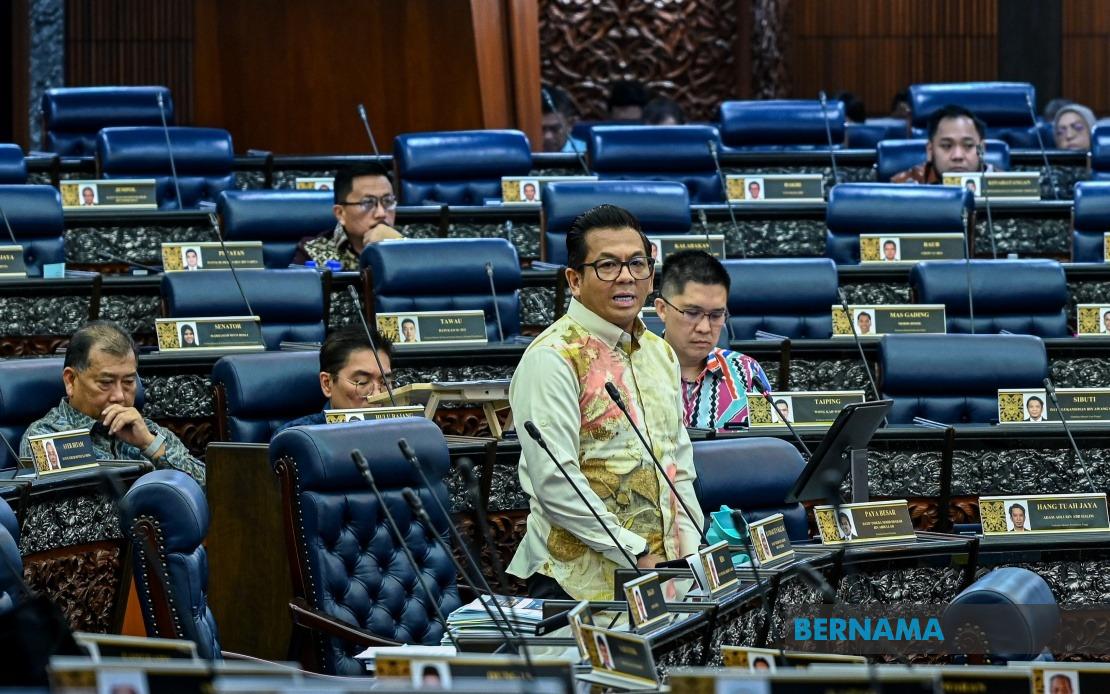
The Malaysian government is leveraging detailed cost-of-living data to craft targeted interventions that acknowledge the substantial spending disparities between urban centres and rural communities across the country. Deputy Economy Minister Datuk Mohd Shahar Abdullah outlined the strategy during parliamentary questioning, revealing how the Basic Living Expenditure framework, or PAKW, developed by the Department of Statistics Malaysia, serves as the foundation for policy decisions aimed at alleviating household financial pressures.
The PAKW framework represents a shift towards evidence-based policymaking that recognises Malaysia's economic geography is far from uniform. Rather than applying blanket solutions, the government acknowledges that urban dwellers face markedly different spending requirements than their rural counterparts, shaped by factors including availability of services, transportation costs, and local market conditions. This granular approach reflects growing recognition that cost-of-living crises cannot be resolved through one-size-fits-all measures.
To democratise access to this data, the government developed the myPAKW calculator, an online tool that allows ordinary Malaysians to input their spending patterns and understand how their household expenditure compares against baseline figures. Datuk Mohd Shahar emphasised that this transparency enables citizens to track their own financial situations while simultaneously providing policymakers with real-time insights into how Malaysians across different regions manage their money. The initiative represents an effort to move beyond abstract statistical models toward understanding the actual lived experience of cost-of-living pressures.
The disparities are stark and illuminate why regional approaches matter. Kuala Lumpur households face a PAKW value of RM5,639, substantially higher than the RM4,254 recorded in Kelantan or RM4,511 in Sabah. These figures suggest that residents in Malaysia's capital city need nearly one-third more income to maintain comparable living standards to those in several East Malaysian and northeastern states. Such variations reflect differences in housing costs, transportation, food prices, and the availability of cheaper alternatives in rural areas—factors that escape standard national inflation metrics.
Recognising these regional variations, the government has embedded differentiated policy responses within its Five-Year Malaysia Plans, which undergo biennial reviews. Rather than treating poverty and household welfare as national aggregates, planners now incorporate geographic specificity into their intervention design. This means programmes targeting income enhancement in Kuala Lumpur may differ substantially from those deployed in Kelantan or Sabah, calibrated to local economic circumstances and household needs.
The government's approach to addressing cost-of-living pressures centres on income elevation through workforce development initiatives. By investing in training programmes designed to raise both entry-level wages and earning potential across sectors, policymakers aim to expand Malaysians' purchasing power rather than relying solely on subsidy mechanisms or price controls. This strategy reflects economic thinking that views rising incomes as more sustainable than artificial price suppression in addressing long-term household welfare.
The progress in this arena becomes apparent when examining the national poverty line, a key indicator of government effectiveness in improving household circumstances. The Poverty Line Income has risen dramatically from RM980 in 2016 to RM2,705 in 2024, a near-trebling over eight years. This substantial upward revision, guided by the Five-Year Plan cycle, suggests the government has periodically reassessed what constitutes a minimum acceptable income level, adjusting standards as economic conditions evolve. For Malaysian readers, this means the official definition of poverty has become increasingly stringent, acknowledging that what sufficed for basic survival in 2016 no longer meets contemporary needs.
The PAKW framework's emphasis on household spending patterns rather than income alone offers important analytical perspective. Consumer behaviour is shaped by three factors—affordability constraints, genuine needs, and discretionary wants—which interact differently depending on location and household composition. A rural family might allocate a larger budget share to transportation to access markets and services, while urban households may prioritise housing and utilities. Understanding these patterns allows government to design interventions that respect how people actually spend money rather than imposing theoretical ideals.
For Southeast Asian observers, Malaysia's approach demonstrates how data infrastructure can inform social policy in developing economies. The PAKW system shows that meaningful cost-of-living analysis requires disaggregating national figures and recognising subnational variation. Countries across the region facing similar urban-rural divides might draw lessons from Malaysia's investment in statistical capacity and commitment to transparent, publicly accessible data. The myPAKW calculator exemplifies how government can empower citizens through information while simultaneously gathering intelligence for policy refinement.
However, the government's emphasis on income growth as the primary mechanism for addressing cost pressures warrants scrutiny. While workforce development and wage enhancement remain important, they operate over medium to long timeframes, potentially leaving vulnerable households struggling with immediate affordability challenges. The disconnect between rapidly rising living costs and employment-based solutions explains why complementary policies—targeted subsidies, price regulation, or direct assistance for essential goods—often remain necessary, particularly for lowest-income households with limited mobility or retraining prospects.
The PAKW framework's evolution also reflects Malaysia's maturing approach to social statistics. Earlier policy regimes often relied on poverty headcounts and national aggregates, obscuring regional disparities and limiting intervention precision. By developing location-specific baselines and creating public visibility through the PAKW calculator, the government has created infrastructure for more responsive policymaking. This institutional capacity matters as Malaysia confronts ongoing inflation pressures and seeks to distribute growth benefits more equitably across geographic and demographic groups.
Looking forward, the success of PAKW-informed interventions will depend on whether government policies remain flexible enough to respond as regional conditions change and living costs continue their upward trajectory. The framework provides valuable diagnostic capability, but diagnosis alone proves insufficient without timely, well-targeted policy response. For Malaysian households navigating rising expenses, the PAKW represents acknowledgment that their circumstances matter and deserve attention—an important symbolic shift even as the practical impact of such recognition remains subject to rigorous evaluation.

