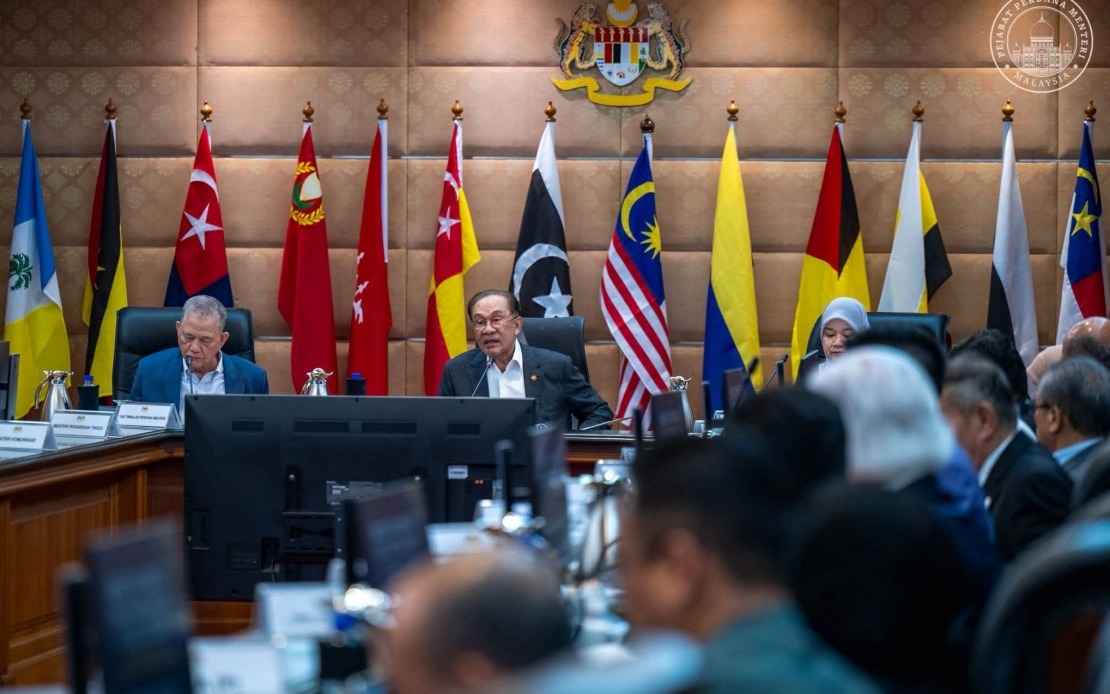
Prime Minister Datuk Seri Anwar Ibrahim has inaugurated a National Education Council tasked with orchestrating sweeping reforms across Malaysia's education landscape, from primary schools through tertiary institutions. The move signals the government's determination to reshape how the country educates its young population in an era of rapid technological change and evolving global competitiveness. Anwar announced the development following the inaugural meeting of the council, which convened to chart the strategic direction of national education policy across both traditional schooling and higher learning pathways.
The council's mandate extends beyond simple administrative reorganisation. Instead, it represents a comprehensive effort to ensure Malaysia's education infrastructure remains responsive to contemporary economic and social demands. According to Anwar, the initiative will concentrate on refining educational content and curriculum frameworks to better prepare students for the challenges and opportunities they will encounter in the workforce. This emphasis on relevance reflects growing concerns that portions of the existing system may have become disconnected from real-world application and industry needs.
Among the council's central objectives is the elevation of English proficiency across the student population, positioning the language as a critical second-language competency in an increasingly globalised economy. This focus recognises that English remains essential for international business, scientific collaboration, and technological advancement. However, the government has deliberately balanced this international orientation with a commitment to preserving Malaysia's cultural and linguistic identity. The council's framework explicitly protects the primacy of the national language and maintains space for the moral and cultural values that underpin Malaysia MADANI, the government's development framework.
The Bumiputera education agenda represents another significant pillar of the council's work. By empowering educational initiatives aimed specifically at indigenous Malays and other Bumiputera communities, the council seeks to ensure that educational opportunities and advancement remain equitably distributed across Malaysia's diverse population. This reflects longstanding policy commitments to social inclusion and the development of human capital among all communities.
Developing a robust STEM talent pipeline constitutes perhaps the most forward-looking dimension of the council's agenda. By deliberately cultivating expertise in science, technology, engineering, and mathematics, Malaysia aims to position itself competitively within Southeast Asia's rapidly evolving innovation economy. The council recognises that future economic resilience will depend heavily on the country's ability to generate skilled professionals capable of driving technological advancement and fostering research-led industries.
During the first formal council session, discussions examined how to elevate educational quality at the district level, ensuring that improvements in curriculum and teaching standards reach beyond major urban centres. This grassroots approach acknowledges that educational reform must translate into tangible changes in classrooms across all regions, not merely among elite or well-resourced institutions. The emphasis on district-level implementation suggests the government understands that sustainable reform requires structural support and capacity-building among local education authorities and school administrators.
Anwar has articulated a philosophy that rejects complacency with existing arrangements. His statements emphasise that accepting the status quo represents a threat to progress and that the education system must undergo continuous evaluation and refinement. This perspective challenges institutional inertia and signals political willingness to implement reforms even when they might prove contentious or require significant resource reallocation. The prime minister's framing positions educational transformation as an imperative rather than an optional enhancement.
The council's methodology emphasises objectivity and expert consultation. Rather than imposing top-down reform through ministerial decree, the framework incorporates diverse viewpoints and specialist knowledge to guide policy development. This collaborative approach aims to produce education strategies grounded in evidence and informed by practitioners, academics, and industry representatives who understand contemporary educational and economic realities.
For Malaysian readers, the establishment of this council carries several implications. Students may eventually encounter curricula that emphasise practical application and contemporary relevance. Educational institutions will likely face pressure to demonstrate how their programmes address national skills shortages and economic priorities. Universities and schools in less-developed regions may receive enhanced support to achieve parity with better-resourced counterparts. Parents concerned about their children's preparation for modern careers should anticipate greater emphasis on technical and language competencies.
Regionally, Malaysia's education reform effort positions the nation among Southeast Asian countries actively investing in human capital modernisation. Singapore, Vietnam, and Thailand have pursued similar strategies to develop STEM expertise and English proficiency. Malaysia's initiatives, therefore, reflect a competitive dynamic within the region, where countries compete to attract investment and talent by demonstrating educational excellence and workforce readiness. The council represents Malaysia's statement that it takes this competition seriously and intends to modernise educational outcomes accordingly.
The coming months will prove critical in determining whether the National Education Council translates strategic intent into classroom reality. Implementation will require coordination across multiple government agencies, substantial resource commitments, and sustained political backing. The council's success will ultimately be measured not by policy announcements but by whether Malaysian students graduate with enhanced English skills, stronger STEM competencies, and the cultural grounding necessary to thrive as citizens of a multicultural nation. The framework is now established; the execution phase will determine whether these ambitious educational aspirations materialise.

