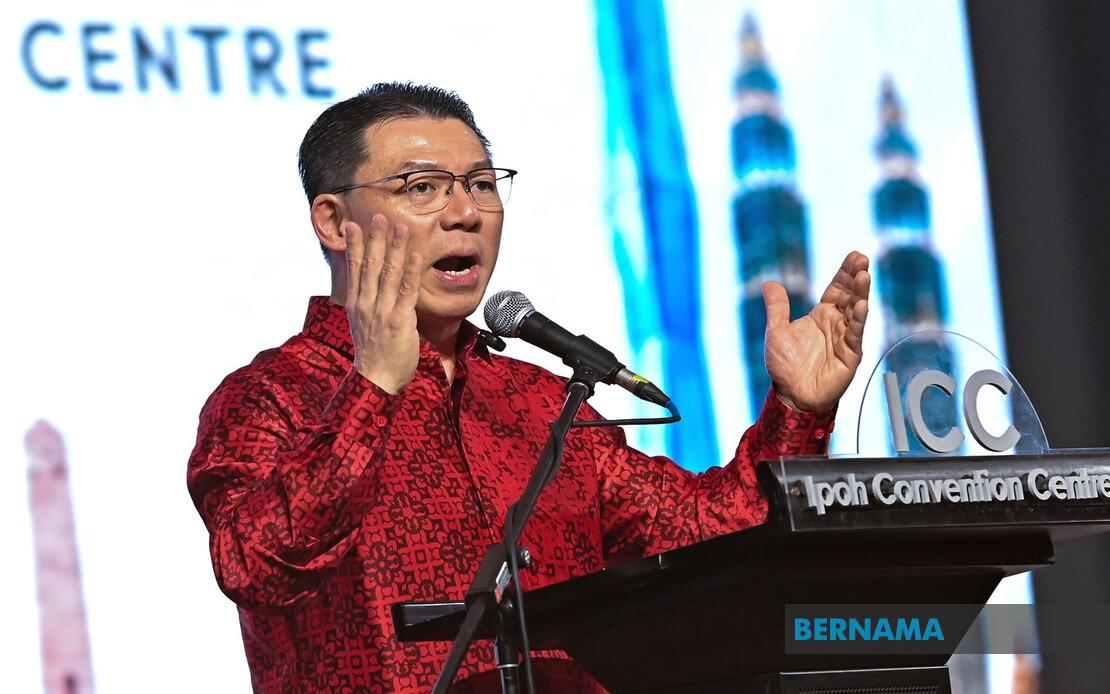
Malaysia's Ministry of Housing and Local Government has unveiled an ambitious framework to reimagine how public spaces are designed, managed, and used across the country. The MY Public Space initiative, announced during the 2026 National Landscape Day Celebration in Melaka with Prime Minister Datuk Seri Anwar Ibrahim in attendance, represents a fundamental shift in how the government approaches urban development and community wellbeing. Housing Minister Nga Kor Ming positioned the initiative as a partnership between the National Landscape Department and UN-Habitat, the United Nations agency focused on sustainable urban development, signalling Malaysia's commitment to aligning domestic practices with globally recognised standards.
The core motivation behind MY Public Space reflects growing recognition that public spaces serve as vital infrastructure for liveable cities. Beyond their obvious recreational function, well-designed parks, plazas, and gathering spaces contribute measurably to public health, social cohesion, and economic activity. The initiative explicitly targets four dimensions that have become central to modern urban planning: ensuring quality through professional design standards, promoting inclusivity so all demographics feel welcome, maintaining safety through thoughtful design and management, and building resilience in the face of climate and social pressures. For Malaysia, where rapid urbanisation has sometimes outpaced careful public space planning, this represents a course correction grounded in evidence-based approaches from around the world.
The strategic framework through which MY Public Space will be operationalised comprises four distinct pillars. The first involves establishing a national recognition system modelled on the Rosa Sinensis Award, creating a competitive incentive structure that encourages municipalities and developers to invest in quality public space creation. The second pillar focuses on a pilot phase for the MY Public Space Toolkit, a practical instrument designed to guide implementation at the local level. The third addresses governance and management practices, acknowledging that even superbly designed spaces deteriorate without ongoing stewardship. The fourth pillar commits to institutionalising these approaches by incorporating the toolkit into national guidelines and policies, embedding best practices into the regulatory framework that shapes all future landscape development.
Underlying this initiative is Malaysia's broader positioning within international sustainable development frameworks. As the current President of the UN-Habitat Assembly, Malaysia has committed to accelerating progress toward the United Nations Sustainable Development Goals, particularly those related to sustainable cities and communities. The MY Public Space initiative operationalises this commitment domestically, demonstrating that Malaysia not only participates in global conversations about urban sustainability but actively implements these principles at home. This dual role—as both assembly president and implementer—enhances Malaysia's standing among developing nations pursuing rapid urbanisation whilst maintaining environmental and social commitments.
A cornerstone of the broader vision is the MADANI Parks programme, which targets the creation or upgrade of 1,000 quality recreational parks nationwide by 2035. Recent performance suggests this ambitious target is achievable. Between 2024 and 2025, the government completed 217 MADANI Parks across the country, substantially exceeding the initial annual target of 100 parks. In Melaka alone, 10 parks have been developed, with three additional sites identified in Ayer Keroh and Masjid Tanah for the current year. This accelerated pace reflects both political commitment and institutional capacity, with the National Landscape Department evidently capable of coordinating implementation across diverse local authorities and state governments.
The economic dimension of Malaysia's landscape development strategy deserves particular attention, especially for policymakers and investors tracking the country's sectoral diversification. The government projects the national landscape industry will contribute up to RM40 billion to Malaysia's Gross Domestic Product by 2035, a significant figure that reflects the potential scale of employment, manufacturing, and service opportunities embedded in landscape development. Current export performance provides a foundation for this ambition. In 2025, Malaysia's landscape product exports reached RM534.3 million, distributed across premium markets including Singapore, Japan, Australia, and the United States. These figures indicate that Malaysian landscape products and services have already achieved competitive positioning in demanding international markets, positioning the sector for expansion as global demand for sustainable urban solutions intensifies.
To realise the RM40 billion GDP contribution target, the Ministry of Housing and Local Government is preparing the Malaysian Landscape Industry Blueprint, a strategic roadmap addressing multiple supply-side challenges. The blueprint encompasses workforce development—ensuring sufficient trained professionals in landscape design, horticulture, and management—and industry standardisation to reduce fragmentation and enhance quality consistency. Green technology innovation receives explicit attention, recognising that contemporary landscape development increasingly incorporates sustainable materials, water management systems, and climate-adaptive planting strategies. Strengthening the value chain from nurseries through installation to maintenance ensures that economic benefits accrue across the sector rather than concentrating in high-value segments. Finally, the blueprint addresses competitiveness for local industry players, both in defending domestic market share against imports and in expanding export capacity into regional and global markets.
For Southeast Asian policymakers, Malaysia's approach offers instructive lessons about integrating urban design, economic development, and international collaboration. The MY Public Space initiative demonstrates that public space development need not be positioned solely as a consumption of public resources; it can simultaneously be framed as an economic opportunity, an employment generator, and a lever for upgrading industry competitiveness. The explicit partnership with UN-Habitat signals how smaller nations can align domestic agendas with global frameworks, borrowing technical expertise and legitimacy whilst retaining the flexibility to tailor approaches to local contexts and aspirations.
The Malaysian strategy also illustrates pragmatic thinking about implementation sequencing. Rather than attempting to transform all public spaces simultaneously, the focus on a MADANI Parks target creates measurable, achievable milestones that build momentum and institutional learning. The toolkit approach—developing and piloting practical guidance before mandating national adoption—reduces the risk of top-down impositions failing because they ignore ground-level realities. This staged approach, combined with the recognition framework that incentivises local innovation, creates space for experimentation and adaptation whilst maintaining alignment toward national objectives.
Looking ahead, the success of MY Public Space will depend on sustained political commitment and adequate resourcing beyond the 2026 National Landscape Day celebration cycle. Public space development requires capital investment but also ongoing operational budgets for maintenance and management—an area where many governments across Southeast Asia have struggled. The explicit integration of management practices into the initiative framework suggests the Ministry recognises this challenge, though the detailed mechanisms through which long-term stewardship will be funded and staffed remain to be fully articulated.
The initiative also reflects changing expectations about what cities should provide their residents. As Malaysia continues its economic development and urbanisation trajectory, citizens increasingly expect public spaces that support not merely functional recreation but also environmental quality, cultural expression, and social inclusion. The MY Public Space framework, grounded in international evidence about what makes public spaces successful, positions Malaysia to meet these rising expectations whilst simultaneously building a competitive landscape industry and advancing its international development commitments.

