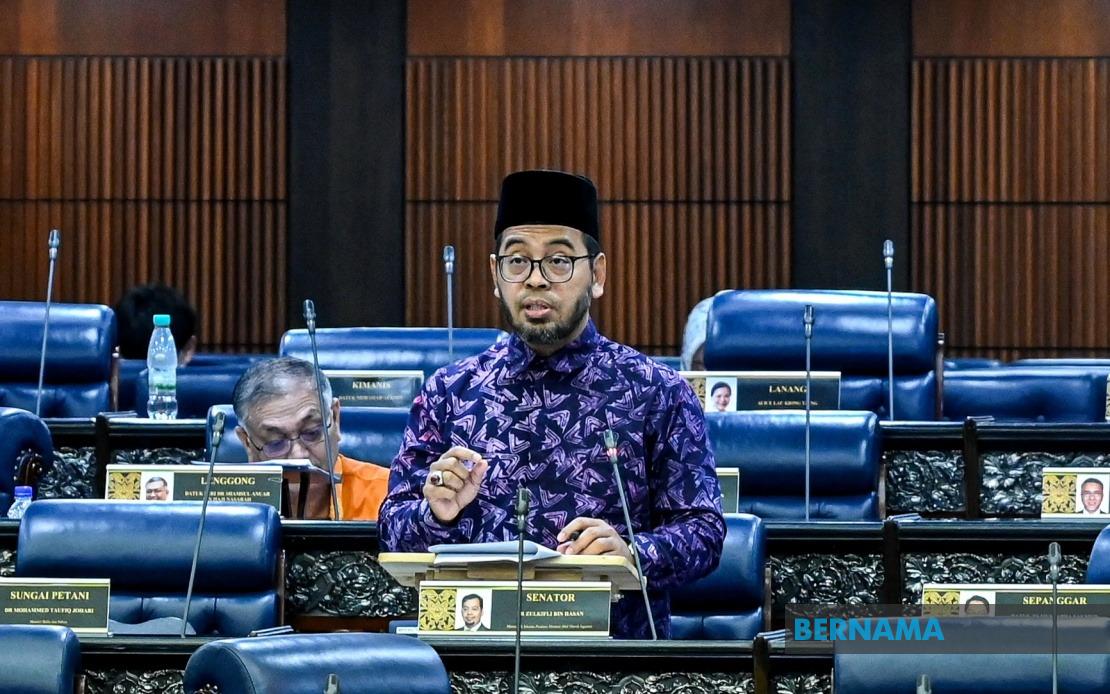
The Malaysian government is stepping up its response to what it views as heterodox Islamic teachings gaining traction through online channels and social media, shifting enforcement tactics to address how these movements have evolved beyond traditional clandestine gatherings. Dr Zulkifli Hasan, the Minister in the Prime Minister's Department (Religious Affairs), disclosed to Parliament that authorities are implementing a multi-agency approach to contain doctrines that deviate from the Ahli Sunnah Wal Jamaah school of thought, which represents Malaysia's orthodox Islamic mainstream. The minister's statement underscores growing official concern about how unorthodox groups are leveraging digital tools to circumvent traditional oversight mechanisms and reach new audiences across borders.
The enforcement challenge has transformed significantly in recent years, as authorities grapple with groups that have abandoned physical meeting places in favour of messaging applications and online platforms. These movements often obscure their religious intent beneath seemingly innocuous messaging about personal development, charitable work, wellness therapies and informal Quranic study circles. By wrapping their doctrines in motivational language, psychological frameworks and conspiracy narratives, proponents of these teachings exploit widespread interest in spirituality and self-improvement to disseminate ideas that officials argue contradict established Islamic doctrine. The sophistication of these marketing approaches has evidently caught official attention, prompting a reassessment of how the state monitors religious discourse in the digital age.
Recent enforcement operations illustrate the scale of the government's response. In May, authorities detained 288 followers of Ahmadiyya Qadiani in Sabah, a movement that orthodox Islamic authorities in Malaysia reject as incompatible with mainstream Islam. Additionally, a coordinated operation against a Syiah centre in Petaling Jaya resulted in the detention of 226 foreign nationals, signalling that enforcement extends beyond Malaysian citizens to migrant communities potentially vulnerable to these teachings. These actions reflect the government's willingness to deploy substantial enforcement resources in targeted operations, though questions remain about the long-term effectiveness of detention-based approaches.
The coordination required for these operations demonstrates the complexity of the challenge. JAKIM, the Department of Islamic Development Malaysia, works alongside state-level Islamic religious authorities, federal police, the Malaysian Communications and Multimedia Commission, the National Security Council, municipal governments, immigration officials and the National Registration Department. This sprawling bureaucratic apparatus reflects the cross-cutting nature of the problem, which touches on religious doctrine, national security, immigration control and telecommunications regulation simultaneously. The involvement of so many agencies also raises questions about operational efficiency and whether such a distributed approach allows for agile responses to rapidly evolving online movements.
Beyond enforcement, the government emphasises rehabilitation and educational intervention. Authorities have established pathways for counselling affected individuals and leaders, with Syariah courts able to mandate placement in faith rehabilitation centres. These programmes aim to reorient believers toward orthodox understandings of Islam under guidance from recognised Islamic authorities. The government has created a National Steering Committee to Address Threats to Faith, bringing together representatives from education, higher learning, internal security and religious departments to coordinate a youth-focused strategy.
The educational component of this strategy targets younger Malaysians through several initiatives. The Institut Pemantapan dan Perkaderan Akidah Malaysia operates programmes designed to strengthen Islamic understanding and identity among youth. The My Insaniah Programme and Rakan Masjid Programme operate in collaboration with the Ministry of Youth and Sports, attempting to engage young people through channels aligned with their developmental interests. Particularly significant is the overhaul of the KAFA 2.0 curriculum—the Quran and Fardu Ain (religious fundamentals) programme—which officials believe can inoculate young Muslims against appeals of unorthodox movements by providing robust grounding in orthodox doctrine and fostering stronger religious identity.
The framing of this challenge as a national concern rather than a marginal issue reveals shifting official perception of religious heterodoxy in Malaysia. Whereas previous years saw sporadic enforcement actions against specific sects, the current approach positions unorthodox teachings as a systemic threat requiring coordinated governmental response spanning security, education and religious institutions. This represents a more assertive stance by the state in defining and defending religious orthodoxy, operating from the premise that certain doctrinal positions fall outside acceptable boundaries of Islamic practice in Malaysia.
For Malaysian-based civil liberties advocates, the intensified monitoring and enforcement landscape raises tensions between security objectives and religious freedom. The reliance on detection and detention, coupled with expansive definitions of what constitutes "deviant" teachings, could create chilling effects on legitimate religious exploration and theological discussion. The involvement of communications regulators in monitoring online religious discourse introduces questions about surveillance scope and the potential for mission creep beyond addressing genuinely problematic movements. Additionally, the intersection of these policies with Malaysia's existing restrictions on Ahmadiyya, Syiah and other movements means enforcement typically targets groups already legally prohibited rather than addressing newly emergent movements.
The cross-border dimension of these teachings adds complexity to enforcement. Digital platforms enable connections across national boundaries, allowing adherents in Malaysia to participate in communities centred elsewhere. The detention of foreign nationals in the Petaling Jaya operation suggests that enforcement must address both the spread of teachings to Malaysian audiences and the presence of foreign practitioners operating within Malaysian territory. Immigration and national security frameworks have become tools for managing what are fundamentally religious questions, blurring the boundary between security and theology.
Looking forward, the sustainability of this approach depends on whether enhanced monitoring and enforcement can actually contain the spread of these teachings or whether they merely drive such movements further underground and further online. Historical experiences with religious heterodoxy in Malaysia and elsewhere suggest that enforcement alone rarely eliminates adherents; rather, it can entrench communities and potentially increase their sense of persecution. The emphasis on education and rehabilitation offers a potentially more constructive path, though success requires significant investment in developing compelling alternative narratives that appeal to those attracted to unorthodox movements—a task far more demanding than detection and detention.
The broader significance for Malaysia extends beyond religious doctrine to questions about the role of the state in managing pluralism and doctrinal boundaries. As digital technologies democratise religious knowledge and enable direct access to diverse interpretations of Islam, traditional gatekeeping mechanisms become less effective. The government's response suggests a determination to maintain state authority over religious orthodoxy, but the long-term viability of this approach in an increasingly connected and decentralised information environment remains uncertain. For Southeast Asian neighbours facing similar challenges with unorthodox movements, Malaysia's experience offers both a model of coordinated enforcement and a cautionary tale about the limits of top-down religious management.

