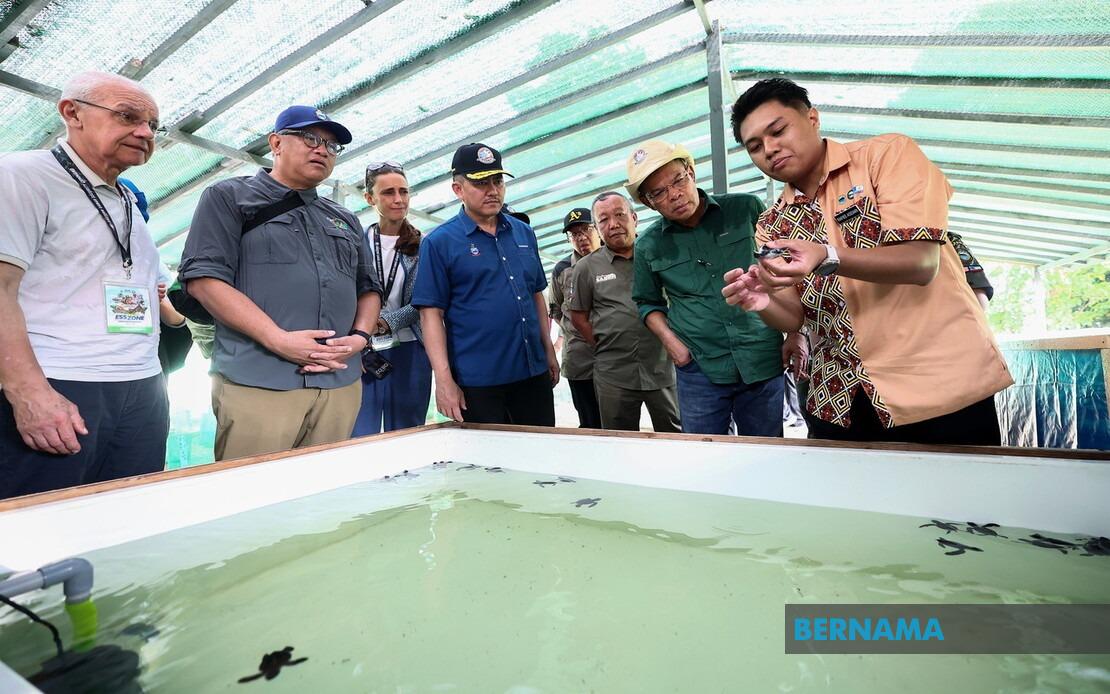
The Malaysian government is mounting a more aggressive enforcement campaign to prevent foreign tourists from exploiting their visitor status to engage in unlawful commercial ventures in Semporna, Sabah. Home Minister Datuk Seri Saifuddin Nasution Ismail announced the intensified crackdown during a visit to the Eastern Sabah Security Zone, signalling that authorities have identified a pattern of abuse that extends beyond isolated incidents to constitute a systematic threat to the integrity of Malaysia's immigration system and local economic interests.
The enforcement push targets a specific but growing phenomenon: foreigners entering Malaysia under tourist visas or social visit passes, then leveraging those visitor permits to establish or operate commercial enterprises. Saifuddin Nasution disclosed that investigators have uncovered instances where these individuals have acquired financial stakes in resort operations and tourism-related businesses, often through formal partnerships or arrangements with Malaysian nationals. This arrangement allows foreign investors to circumvent restrictions that prohibit non-citizens from owning or controlling certain businesses, effectively creating shadow ownership structures that undermine both immigration law and foreign investment regulations.
To combat the practice, Saifuddin Nasution has tasked multiple agencies under the Home Ministry's purview, notably the Eastern Sabah Security Command (ESSCOM), to coordinate enforcement sweeps with local authorities and other relevant government bodies. This multi-agency approach reflects recognition that addressing the problem requires simultaneous action across immigration, security, local government, and potentially customs and business regulatory domains. The government is deploying several enforcement tools simultaneously: investigation units are opening formal case files, compliance officers are issuing administrative compounds (fines), and the Attorney General's office is pursuing criminal prosecution against confirmed offenders. The comprehensive strategy signals that authorities view this as a serious breach warranting both administrative sanctions and criminal accountability.
The Home Minister emphasised that Malaysia's welcoming stance toward legitimate international tourism does not extend to visitors who disregard the country's legal framework. His statement that "while our country welcomes visitors, they must abide by our laws" establishes a clear line: those who cross from tourism into undisclosed business activity face consequences. The distinction is crucial for maintaining order—Malaysia relies substantially on tourism revenue and values its reputation as a safe, rule-governed destination, but this openness cannot be allowed to enable economic exploitation or regulatory evasion. The enforcement campaign represents an attempt to preserve the benefits of tourism while eliminating the subset of visitors whose conduct undermines local economic opportunity and state authority.
The crackdown gained urgency following a Bernama Special Report titled "Semporna: Emergence of a Shadow Threat" released on the same day as Saifuddin Nasution's announcement. The investigative report documented how foreign investment—channelled through nominally local intermediaries—has allegedly captured significant portions of Semporna's tourism value chain, concentrating wealth extraction outside the local community while creating security vulnerabilities. The report framed this as a dual threat: economically, it denies local Malaysians equitable participation in tourism development and marginalises small operators unable to compete with larger foreign-controlled entities; strategically, it creates pockets where foreign influence in remote border areas may outweigh state governance capacity. Semporna's location within the Eastern Sabah Security Zone, an area that has historically faced piracy and security challenges, amplifies these concerns.
Despite the enforcement operations, Saifuddin Nasution reported that international confidence in the Eastern Sabah Security Zone's security posture and tourism prospects remains robust. He cited visitor statistics showing that the zone received 129,492 tourist arrivals through June, a figure he interpreted as vindication of the region's improving security environment and rising international perception of safety. This optimistic framing serves multiple purposes: it demonstrates that security improvements under the ESSCOM mandate have tangible economic benefits, it reassures international tour operators and investors of the zone's viability, and it contextualises the enforcement action not as a sign of systemic failure but as routine regulatory oversight of inevitable edge cases. The government's position suggests that the illegal business activity by certain foreign visitors does not reflect broader instability but rather opportunism by individuals seeking to exploit ambiguities or weak enforcement.
For Malaysian stakeholders, the enforcement initiative carries significant implications. Local entrepreneurs in Semporna and surrounding areas face both opportunity and competition: the government's move against foreign-controlled shadow operations theoretically levels the playing field, but it also implies that authorities will scrutinise business structures to ensure ownership and control remain genuinely local. Legitimate foreign investors operating through transparent channels and following foreign investment guidelines face no threat, though the heightened regulatory attention may necessitate clearer documentation and compliance procedures. Regional tourism operators, particularly those in Sabah and wider Southeast Asia, should expect that Malaysia will increasingly verify the legitimacy of visitor activities and may impose penalties for visa status misuse more readily. The enforcement campaign also reflects broader scrutiny of visa abuse patterns across the region, where social visit passes and tourist visas are sometimes exploited for labour, business, or investment purposes that contradict their stated purpose.

