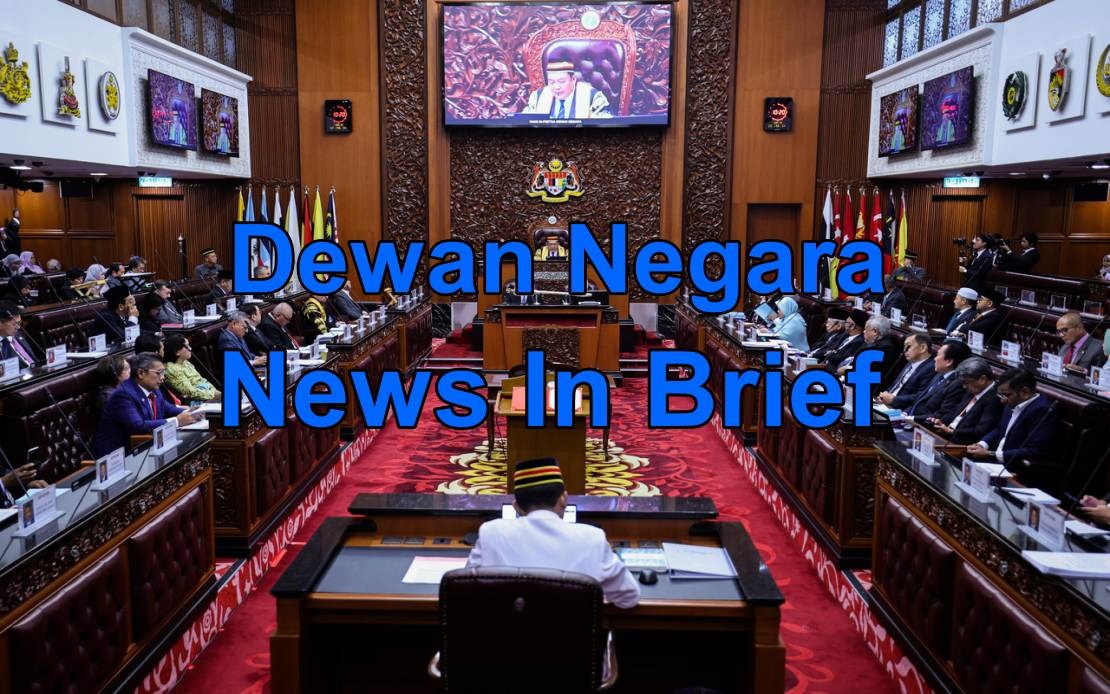
The Malaysian government has ramped up its climate adaptation efforts through an aggressive cloud seeding campaign designed to shield the nation from the lingering effects of the El Nino phenomenon, which is expected to persist through early 2027. Between February and June, authorities executed 35 cloud seeding operations at strategically selected locations across the country, coordinating efforts through the National Disaster Management Agency and the Royal Malaysian Air Force to enhance rainfall and bolster water reserves at critical dam sites. Deputy Minister of Natural Resources and Environmental Sustainability Syed Ibrahim Syed Noh outlined this initiative during parliamentary Question Time, framing the operations as essential infrastructure protection against prolonged dry spells that have historically strained water supplies and exacerbated haze conditions in the region.
The cloud seeding programme represents Malaysia's multi-layered response to climate volatility, addressing not merely water scarcity but interconnected challenges spanning public health and agricultural productivity. El Nino's warming effects have proven particularly disruptive across Southeast Asia in recent years, and Malaysia's proactive stance signals recognition that reactive measures alone prove insufficient. The operations hinge on favourable atmospheric conditions—a crucial variable that limits deployment frequency—and underscore the importance of real-time meteorological coordination between civilian and military agencies. For Malaysian readers, this reflects a growing consensus among policymakers that climate adaptation warrants substantial resource allocation and inter-agency collaboration.
On the labour front, Malaysia's Progressive Wage Policy has delivered tangible improvements for lower-income workers, marking a rare policy success in wage advancement. The initiative has raised median monthly wages for entry-level employees from RM1,900 to RM2,200, representing a 15.79 per cent increase that exceeds initial participation targets. Economy Minister Akmal Nasrullah Mohd Nasir disclosed that 51,363 workers have benefited thus far, surpassing the original goal of 50,000 participants and demonstrating broader employer buy-in than anticipated. Non-entry-level workers under the scheme have similarly experienced gains, with median wages climbing 10.86 per cent from RM2,199.15 to RM2,438 monthly—a RM238.86 monthly boost that, while modest, compounds meaningfully over time for households operating on tight budgets.
The wage policy's expansion reflects a deliberate government strategy to address income inequality whilst maintaining employer participation. Four thousand and twenty-five employers have enrolled in the initiative, buoyed by a RM300 million government allocation spanning 2025 through 2027. This financial commitment demonstrates political will to sustain the programme beyond pilot phases, a critical factor for worker confidence and employer predictability. The government has commissioned a comprehensive impact assessment to evaluate feasibility of broader implementation, signalling intention to scale the model should evidence support expansion. For Southeast Asian economic observers, Malaysia's willingness to intervene in wage-setting contradicts prevailing neoliberal orthodoxy, positioning the nation as an experimental laboratory for inclusive labour market reforms.
Cultural preservation initiatives have also commanded parliamentary attention, with the Tourism, Arts and Culture Ministry signalling openness to designating Malaysian Tamil music and songs as National Heritage under the 2005 Act. Deputy Minister Chiew Choon Man clarified that recognition requires rigorous documentation, research and evaluation procedures aligned with heritage legislation, ensuring that designations rest on defensible artistic and historical foundations. This procedural approach prevents ad-hoc heritage declarations whilst creating pathways for marginalised cultural traditions to achieve formal state recognition. Senator K. Saraswathy's query reflected longstanding concerns within Malaysia's Tamil-speaking communities regarding equitable cultural representation within national narratives, and the ministry's receptiveness indicates evolving institutional sensitivity to minority heritage concerns.
The government's stance on heritage recognition carries implications beyond symbolic affirmation; formal National Heritage status confers protection mechanisms, research funding eligibility and educational integration opportunities that strengthen cultural transmission to younger generations. Malaysia's multicultural composition has historically rendered heritage discussions politically delicate, yet this response demonstrates administrative capacity to navigate such sensitivities constructively. The emphasis on documented significance rather than quota-based allocation provides a principled framework that can accommodate diverse cultural traditions without creating perception of favouritism.
Finance administration has concurrently undergone scrutiny regarding the Sumbangan Asas Rahmah (SARA) assistance programme and its merchant discount rate structure. Finance Minister II Datuk Seri Amir Hamzah Azizan committed to periodic reviews of the one per cent MDR imposed on participating retailers, acknowledging potential hardship for small traders under the current arrangement. The mechanism channels retail transaction deductions to Yayasan MyKasih, covering system infrastructure, merchant training and operational expenses associated with distributing cash assistance. This cost-shifting arrangement ensures aid recipients encounter no direct fees whilst distributing implementation expenses across merchant networks—a design choice that inevitably privileges larger retailers capable of absorbing margin compression against smaller operators with lower transaction volumes.
The government's willingness to revisit MDR rates signals receptiveness to stakeholder feedback regarding policy implementation equity, a critical consideration for small and medium enterprise sustainability. Malaysia's retail sector remains concentrated among larger chains, yet small traders constitute essential economic infrastructure in secondary and tertiary markets where consumer density does not support hypermarket operations. Periodic review mechanisms demonstrate adaptive governance capacity whilst acknowledging inherent distributional tensions within social assistance programmes. For Malaysian business communities, this indicates official recognition that policy generosity toward aid recipients requires corresponding attention to distribution network viability.
Collectively, these parliamentary disclosures reveal a government grappling with interconnected challenges spanning environmental resilience, economic inclusion, cultural recognition and social assistance programme design. Climate adaptation through cloud seeding addresses immediate vulnerabilities from El Nino persistence, whilst wage policy interventions acknowledge market failures in entry-level compensation. Cultural heritage initiatives extend state recognition to previously marginalised traditions, and merchant discount rate flexibility reflects administrative pragmatism regarding programme implementation costs. These initiatives collectively suggest a governing approach that combines market mechanisms with targeted interventions, accepting some government expenditure to address perceived equity gaps or environmental vulnerabilities.

