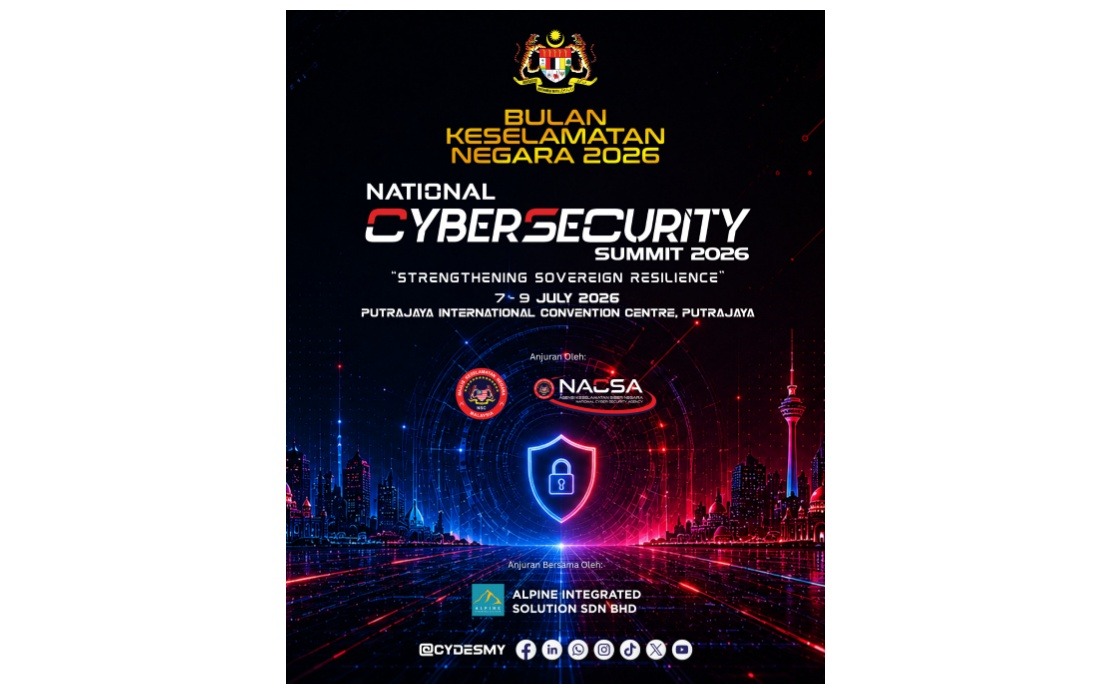
Malaysia is preparing to host a landmark cybersecurity conference this month at the Putrajaya International Convention Centre, underscoring the government's intensifying focus on protecting the nation's digital infrastructure. The National Cyber Security Summit (NCSS) 2026, scheduled for July 7 to 9, will be coordinated by the National Cyber Security Agency (NACSA), which operates under the National Security Council of the Prime Minister's Department. The timing reflects a critical juncture in Malaysia's approach to digital threats, arriving just days after the Dewan Rakyat approved the Cybercrimes Bill 2026 on July 1.
The summit represents a convergence of policy momentum and operational necessity. The passage of the cybercrime legislation signals parliamentary backing for tougher legal frameworks against digital threats, while the conference itself demonstrates how those frameworks must be implemented and enforced across government agencies and private enterprise. By bringing together policymakers, corporate executives, technical practitioners and academic researchers, the National Security Council is attempting to build consensus around Malaysia's evolving cyber defence posture during a period when regional digital threats are escalating in sophistication and frequency.
Under the theme "Strengthening Sovereign Resilience," the summit will pivot around Malaysia's broader cyber strategy. The event builds directly from the Malaysian Cyber Security Strategy (MCSS) 2025-2030, a comprehensive national roadmap designed to guide the country's digital defence investments and institutional reforms over the next five years. This strategic framework represents years of planning and inter-agency coordination, positioning cyber security as a cornerstone of national security infrastructure rather than a technical afterthought. The summit serves as both a showcase and a working conference where theory meets implementation.
The scale of the gathering reflects the government's serious commitment to this agenda. Organisers expect 3,000 participants, including 250 distinguished local guests, alongside 96 speakers and panellists drawn from government ministries, law enforcement agencies, the private technology sector, universities and specialised cybersecurity firms. The international dimension is equally significant: 122 companies will participate, with 44 firms arriving from seven countries outside Malaysia. This foreign representation is deliberate, allowing Malaysian organisations to benchmark their defensive capabilities against global standards and to establish cross-border information-sharing relationships essential for countering transnational cyber operations.
The programme itself demonstrates how comprehensive cybersecurity governance must be. The summit will feature 41 distinct sessions spanning multiple domains: forums dedicated to the national cyber security strategy, dedicated sessions on cyber criminality, conventions for information and communications technology security officers, initiatives focused on women's participation in cybersecurity careers, and highly technical workshops on emerging threats. This breadth reflects the reality that cyber threats transcend traditional boundaries, requiring coordinated responses across criminal justice, technical operations, policy development and workforce development.
Of particular significance is Prime Minister Datuk Seri Anwar Ibrahim's scheduled role in launching three major policy initiatives during the conference. The National Security Policy (DKN) 2026-2030 will establish overarching security doctrine, while the National Cryptography Policy (MyKriptografi) and its accompanying action plan will determine how Malaysia develops and deploys encryption technologies across government and critical infrastructure. Perhaps most notably, the Artificial Intelligence Systems Cybersecurity Framework (AISCF) will address how Malaysia's increasingly AI-dependent systems can be protected against novel attack vectors that traditional cybersecurity approaches may not anticipate.
The conference's alignment with National Security Month (BKN) is strategically intentional, transforming a month-long awareness campaign into a substantive policy event. This consolidation serves multiple audiences: it signals to the general public that cyber threats merit the same attention as physical security, demonstrates to international partners Malaysia's institutional seriousness about digital governance, and provides industry stakeholders with clarity about government intentions that should guide their own security investments.
For Malaysia's business community, the summit carries direct implications. The concentration of corporate participation suggests that private sector organisations recognise cyber resilience as central to competitive advantage and operational sustainability. The inclusion of both local and international firms creates opportunities for knowledge transfer and partnership development, particularly for Malaysian technology companies seeking to enter regional and global cybersecurity markets. Companies investing in compliance with emerging standards and in workforce capabilities in cyber defence will find the summit a natural forum for demonstrating readiness and establishing credentials.
The geopolitical context amplifies the summit's importance. Southeast Asian nations face intensifying cyber threats from both state and non-state actors, with Malaysia's strategic location and economic significance making it an attractive target. Regional peers including Singapore and Thailand have made comparable investments in cyber governance infrastructure, creating implicit competitive dynamics that shape how Malaysian policymakers approach the issue. By hosting a major international cybersecurity conference, Malaysia positions itself as a regional leader in digital defence thinking and practice.
Looking forward, the policy outputs from this summit will likely shape Malaysian cybersecurity priorities for years. The frameworks to be launched—particularly MyKriptografi and the AISCF—will establish technical standards and governance principles that government agencies and regulated industries must implement. This creates both opportunity and obligation: organisations that align early with these frameworks may gain advantage, while those that lag risk future compliance burdens.
The summit also underscores how cybersecurity has evolved from a technical specialty into a matter of national governance requiring leadership attention at the highest level. The presence of Prime Minister Anwar in a keynote capacity demonstrates that Malaysia now recognises cyber defence as integral to state capacity and national competitiveness. This elevation of cybersecurity in political discourse should translate into sustained funding, institutional authority and cross-sector cooperation necessary to implement the ambitions outlined in the 2025-2030 strategy.

