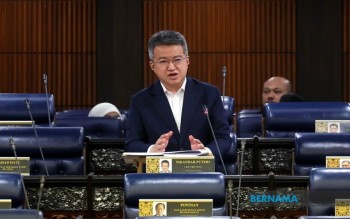
The Malaysian government sees no pressing need to overhaul its fiscal planning for 2027 at this stage, even as rising crude oil prices have strained the national budget with an additional RM40 billion in fuel subsidy expenditure during the first half of 2026. Deputy Finance Minister Liew Chin Tong delivered this reassurance to Parliament, signalling that current economic projections remain viable barring further deterioration in global conditions. The administration will continue its close watch on economic developments until the new budget is formally presented in October, allowing policymakers time to incorporate the latest data before finalising their fiscal framework.
The mounting subsidy burden reflects the complex relationship between Malaysia's economy and international energy markets. Every dollar increase in world crude oil prices translates into approximately RM300 million in additional petroleum-related revenue for the federal government, Liew explained, setting this gain against the rising subsidy costs. This mechanism provides the government with a natural hedge: as fuel prices climb internationally, driving up domestic subsidy obligations, revenue streams from petroleum sales simultaneously expand. Excluding Petronas' dividend contributions, these petroleum revenues help to partially offset the subsidy pressures, though the RM40 billion additional cost still represents a significant budgetary drag.
The geopolitical backdrop to Malaysia's fiscal position cannot be overlooked. The ongoing conflict in West Asia has created genuine uncertainty around energy supply chains and global commodity markets, prompting the government to adopt a monitoring posture rather than making definitive budgetary commitments prematurely. Liew addressed concerns raised in Parliament by Bachok MP Mohd Syahir Che Sulaiman about whether the subsidy burden might necessitate fresh taxation measures or further erode Malaysia's already-stretched fiscal position. The deputy minister's response emphasised the government's capacity to absorb shocks through existing mechanisms, at least for the current cycle.
The administration has deployed what it describes as immediate, comprehensive, and structured intervention initiatives designed to contain overall government expenditure whilst protecting the country's broader fiscal health. Rather than rushing to announce tax increases or sweeping spending cuts in response to near-term volatility, Kuala Lumpur is taking a measured approach grounded in continuous assessment of revenue performance and economic indicators. This stance reflects confidence—whether well-founded or otherwise remains subject to debate—that Malaysia's medium-term fiscal consolidation strategy can withstand the current pressures.
Central to this confidence is the government's targeted subsidy framework, which aims to direct support more efficiently toward those most in need rather than implementing blanket fuel price controls. By restructuring subsidy delivery, the authorities believe they can moderate costs whilst maintaining social stability. Equally important are efforts to improve expenditure efficiency across government agencies and to boost revenue collection and tax compliance. These are long-standing policy objectives that have taken on heightened significance as the government grapples with conflicting demands: maintaining spending on development and social programmes whilst gradually reducing the fiscal deficit.
Parliament's questioning reflects legitimate public anxiety about Malaysia's fiscal trajectory and the extent to which external shocks might force abrupt policy reversals. The 2026 fiscal deficit target, whilst not formally disclosed in Liew's response, remains a reference point for assessing whether the government is making progress on its consolidation goals. The deputy minister's emphasis on regular revenue monitoring and the continued operation of the crisis management task force under the National Economic Action Council suggests that contingency planning is actively underway, even if formal budget revisions are not yet warranted.
For Malaysian businesses and consumers, the implications are twofold. The government's stated commitment to maintaining energy supply security and protecting basic necessities signals that fuel prices are unlikely to spike dramatically in the near term, preserving operational predictability for industries dependent on energy inputs. Simultaneously, the fiscal pressures facing Kuala Lumpur—however temporarily absorbed—ultimately constrain the government's capacity to fund new initiatives or expand existing programmes. These trade-offs between short-term stability and longer-term sustainability will shape the environment in which businesses and households operate.
The regional dimension also warrants attention. Malaysia's fiscal discipline, or perceived lack thereof, influences perceptions of Southeast Asian economic stability more broadly. Neighbouring countries and international investors monitor Kuala Lumpur's fiscal management as a barometer of regional resilience. The deputy minister's calm assurance that projections remain intact, despite palpable external pressures, is thus partly a signal to international markets that Malaysian policymaking remains credible and deliberate. This confidence-building function is important, particularly given global economic uncertainty and the risk of sudden capital outflows from emerging markets.
Look ahead, the October tabling of Budget 2027 will be the critical moment when the government must reconcile its near-term optimism with concrete numerical commitments. At that point, legislators and analysts will examine whether the projected revenue gains, expenditure controls, and subsidy targeting measures add up to a fiscally sustainable path. Liew's current posture—holding the line pending fresh data—buys time for a more complete assessment of first-half 2026 performance and for the geopolitical situation to clarify further. Should oil prices moderate or the West Asia conflict ease, Malaysia's fiscal outlook brightens noticeably. Conversely, further deterioration in those areas would almost certainly force the government to recalibrate projections and possibly introduce revenue-raising measures.
The government's reliance on revenue from oil and petroleum products illustrates a structural vulnerability in Malaysia's fiscal position. Whilst the current oil price environment provides some revenue offset to subsidy costs, this dependence ties Malaysia's budget firmly to global commodity cycles. Achieving durable fiscal consolidation ultimately requires reducing this reliance through economic diversification, broadening the tax base, and improving the efficiency of government services. Deputy Finance Minister Liew's remarks reflect awareness of these challenges, pointing to targeted subsidies and expenditure restructuring as part of the solution, yet the sustainability of Malaysia's fiscal trajectory remains contingent on successful execution of these longer-term reforms alongside the near-term management of volatile external conditions.

