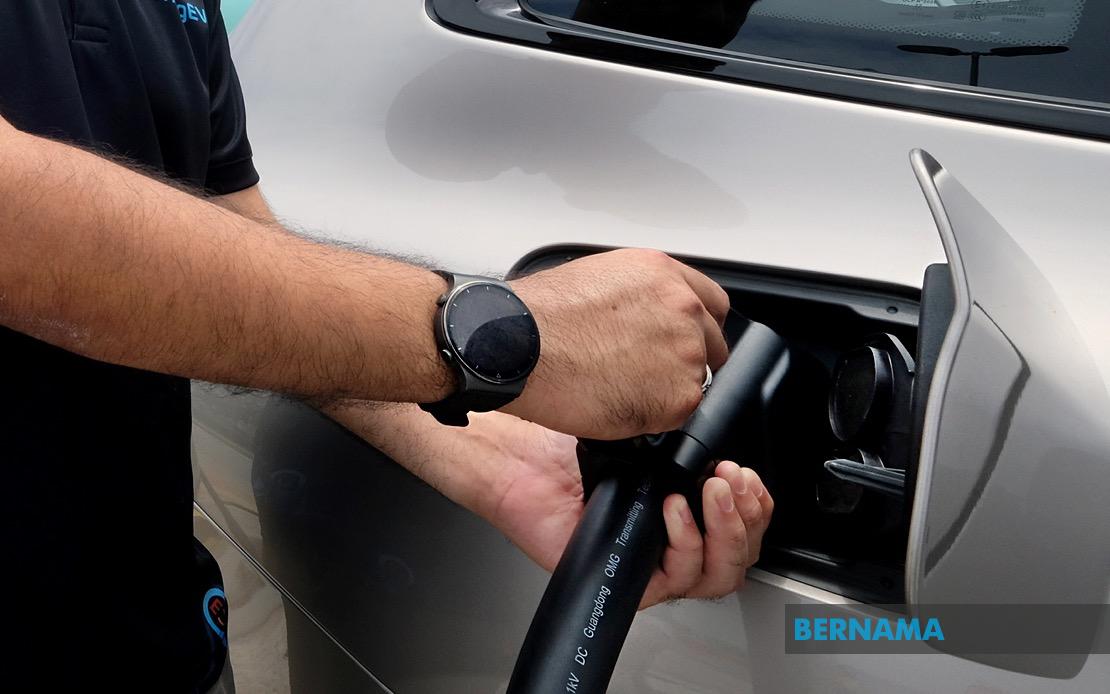
Malaysia's public EV charging infrastructure has reached a significant milestone, with 6,416 chargers now operational across the country as of May 31, 2026, the Ministry of Investment, Trade and Industry revealed in a parliamentary response. The deployment consists of 2,143 direct current fast chargers capable of rapid vehicle charging and 4,273 alternating current chargers suited for longer parking durations, creating a diversified network to serve different user needs and travel patterns.
This expansion reflects growing recognition within government circles that charging infrastructure remains a critical enabler for electric vehicle adoption in Malaysia. The pace of deployment signals a shift from the previous bottlenecks that constrained EV market growth, particularly in urban and suburban areas where consumer confidence in charging availability directly influences purchasing decisions. For Malaysian drivers, the increasing availability of public charging points addresses a key anxiety that has historically deterred adoption of battery-powered vehicles compared to their petrol-powered counterparts.
The government has identified infrastructure gaps as a major challenge and has implemented structural reforms to accelerate deployment. PLANMalaysia's EV Charging Bay Planning Guidelines represent a particularly streamlined approach, reducing the approval process from what was previously a lengthy bureaucratic exercise to as little as 14 working days. This administrative innovation removes a significant friction point that previously discouraged private operators and municipalities from rapidly expanding their charging networks, creating a more responsive ecosystem.
Central to the infrastructure push is a whole-of-government coordination mechanism that brings together diverse stakeholders. Local authorities, the Energy Commission, Tenaga Nasional Bhd as the primary utility provider, independent charging point operators, the EV Charging Industry Association, and the Malaysia Zero Emission Vehicle Association collectively work to identify gaps and deploy solutions. This multi-stakeholder engagement ensures that charging networks account for both commercial viability and equitable geographic coverage, preventing infrastructure from concentrating only in affluent urban zones.
Beyond physical charging infrastructure, Malaysia's strategic priority centres on developing a competitive local EV manufacturing ecosystem. The National EV Project, spearheaded by Perodua under the New Industrial Master Plan 2030 framework, has mobilised 62 domestic supplier companies and engaged more than 300 Malaysian automotive engineers and technical specialists in developing a nationally branded electric vehicle. This initiative goes beyond vehicle assembly to build indigenous capability in battery technology, electric drive motor design, and advanced driver assistance systems.
Proton's parallel EV initiative targets the involvement of 40 local companies within its supply chain, creating multiple pathways for Malaysian firms to participate in the emerging EV value chain. By deliberately structuring these projects to maximise domestic content and involve local manufacturers, the government aims to prevent Malaysia from becoming merely an assembly hub for imported components while establishing genuine technological capabilities. This approach recognises that sustainable competitive advantage in the global EV market depends on mastering design, engineering, and critical component manufacturing.
The emphasis on domestic supply chain integration serves multiple strategic objectives simultaneously. It accelerates technology transfer from multinational original equipment manufacturers and global technology providers to Malaysian companies, enabling local firms to leapfrog developmental stages. Companies embedded within Perodua and Proton's supply chains gain direct exposure to world-class manufacturing standards, quality protocols, and innovation practices, capabilities that extend beyond those two projects to strengthen the broader Malaysian automotive sector.
Integrating Malaysian companies into the global EV supply chain represents another dimension of this strategy. Rather than confining local companies to serving only domestic assembly operations, the government encourages suppliers to achieve global export competitiveness. A Malaysian battery manufacturer or motor producer supplying not just Perodua or Proton but other international manufacturers creates sustainable, high-value employment and positions the country as a credible node in global EV manufacturing networks. This orientation prevents Malaysia from becoming locked into a low-skill assembly role as electric vehicle manufacturing increasingly decentralises from traditional automotive hubs.
The dual focus on infrastructure expansion and supply chain development addresses the fundamental precondition for meaningful EV adoption. Consumer willingness to transition from internal combustion engines depends partly on tangible charging availability but equally on vehicle affordability and product quality. By developing local manufacturing capability and supply chain depth, Malaysia can reduce vehicle costs compared to complete imports while establishing quality assurance mechanisms that build consumer confidence in domestically produced EVs.
The alignment between charging infrastructure deployment and industrial policy reflects sophisticated understanding of system-level barriers to EV market transformation. Many countries have found that simply mandating EV purchases or importing vehicles without building supporting infrastructure and domestic manufacturing capacity creates market distortions without achieving sustainable transitions. Malaysia's integrated approach—simultaneously addressing the physical infrastructure, manufacturing capability, and technology development—creates reinforcing dynamics where each element strengthens the others.
From a Southeast Asian perspective, Malaysia's strategic positioning matters considerably. As the region's most industrialised economy with established automotive manufacturing traditions, Malaysian success in developing competitive EV manufacturing has implications for the broader regional transition to electric mobility. Supply chain development and technology transfer efforts could generate spillover benefits to regional neighbours, while establishing Malaysia as a credible EV technology and component source strengthens its competitive positioning against regional rivals like Thailand and Vietnam.
The low-carbon mobility agenda underlying these initiatives connects to Malaysia's international climate commitments and domestic sustainability objectives. Reducing dependence on fossil fuel imports addresses both environmental imperatives and energy security considerations, particularly significant for a nation managing finite petroleum reserves. As transport electrification accelerates globally, countries that fail to develop domestic EV capability risk becoming dependent on foreign technology and components, potentially constraining future competitiveness and autonomy in critical energy sectors.
Moving forward, success depends on whether the current infrastructure deployment pace can meet anticipated demand as EV market penetration increases. The 6,416 chargers represent progress, but sustained consumer adoption will likely require substantially denser networks, particularly in secondary cities and rural areas. Equally, the supply chain initiatives must translate into viable commercial enterprises producing components that compete globally on cost and quality metrics. The next phase will reveal whether Malaysia's coordinated industrial and infrastructure strategy can overcome the structural challenges that have historically limited developing nations' automotive competitiveness in transformative technological transitions.

