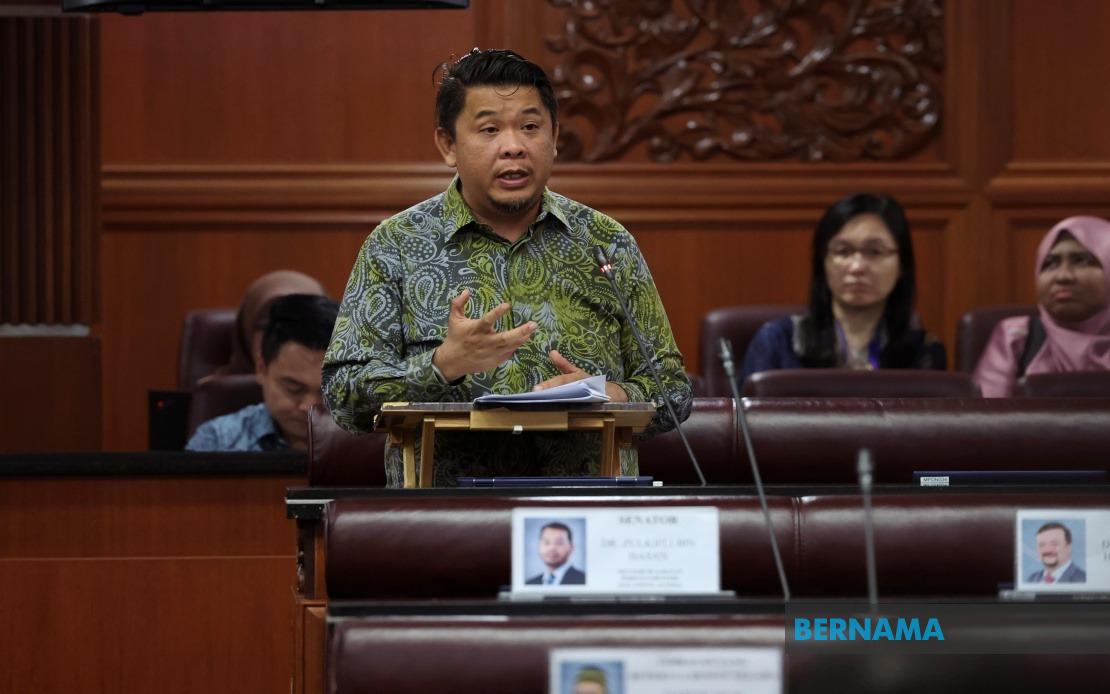
The Malaysian government has taken a significant step in reshaping its refugee management landscape by directing the United Nations High Commissioner for Refugees to suspend all new registrations temporarily. Deputy Foreign Minister Datuk Lukanisman Awang Sauni announced the directive, which was approved by Cabinet, as part of a broader effort to centralise refugee data under a government-administered system known as the Refugee Registration Document programme.
The move represents a fundamental shift in how Malaysia intends to handle refugee affairs, moving away from reliance on UNHCR's independent registration process towards direct state supervision. By implementing the DPP framework, Malaysian authorities argue they will achieve significantly greater oversight of refugee populations, enabling more systematic data collection, identity verification, and ongoing monitoring. This restructuring reflects growing concerns within the government about the management of refugee populations and the associated social implications for local communities.
Lukanisman's comments came in response to parliamentary questioning about Malaysia's approach to addressing the protracted situation of Rohingya refugees, many of whom lack formal identity documentation and recognition from Myanmar. He clarified that the new registration protocol will operate through rigorous procedures involving multiple enforcement agencies, designed to verify the eligibility of individuals seeking refugee status while simultaneously blocking pathways for undocumented migrants to exploit the system.
The government's emphasis on independent data management underscores Malaysia's position that it should not depend on external organisations for critical information about foreign nationals residing within its borders. Officials view this capability as essential to national security and border management, particularly given the country's vulnerability to irregular migration flows. The restructuring also serves to reduce Malaysia's administrative reliance on international bodies, a consideration that gains weight given Malaysia's non-ratification of the 1951 Refugee Convention.
This decision carries particular weight when considering the broader Southeast Asian context. Malaysia hosts one of the region's largest refugee populations, with hundreds of thousands of individuals from Myanmar, Palestine, and other conflict zones having sought sanctuary within its borders. The strain on public services, housing, and employment opportunities has become increasingly visible in urban centres, creating political tension and public discourse around integration and resource allocation.
Parallel to the registration halt, Malaysian authorities are pursuing repatriation initiatives targeting undocumented Myanmar nationals currently held in immigration detention facilities. Approximately 5,000 individuals are scheduled for return to Myanmar following assurances from the Myanmar government that it will accept their repatriation. The logistics of this operation will involve naval vessels, with the process subject to resolution of specific procedural requirements between the two governments.
The timing of this announcement reflects broader Malaysian diplomatic engagement with Myanmar and other ASEAN neighbours regarding the Rohingya crisis. Rather than viewing refugee management as a purely domestic humanitarian matter, Kuala Lumpur increasingly frames it as a multilateral challenge requiring coordinated regional responses. By pursuing dialogue with ASEAN partners and Myanmar directly, Malaysia is signalling that responsibility for addressing displacement crises should be distributed across the region rather than concentrated among countries adjacent to conflict zones.
Lukanisman's statements emphasise that Malaysia's non-signatory status to international refugee conventions provides the government with greater flexibility in determining its own policies. This legal position allows officials to prioritise national interests and domestic stability over internationally established refugee protection frameworks. The government contends that this approach is necessary given the country's development status, population density, and existing social infrastructure constraints.
The suspension of UNHCR registrations is likely to affect thousands of individuals currently awaiting refugee status determination. Many are likely from Myanmar's Rohingya population, whose situation remains one of the world's most pressing humanitarian crises. The inability to access formal registration may intensify their vulnerability to exploitation and marginalisation within Malaysian society, even as authorities work to implement the new system.
Implementing the DPP programme will require significant capacity building within Malaysian enforcement and administrative agencies. The government will need to establish protocols for identity verification, data security, and inter-agency coordination. Success depends on training personnel across multiple departments and ensuring consistent application of standards nationwide, a substantial undertaking that may extend implementation timelines beyond initial expectations.
The policy shift also signals Malaysia's growing assertiveness in managing its migration portfolio independently of international oversight. While engagement with UNHCR may continue in some capacity, the government is clearly intent on reasserting direct control over who receives recognition as a refugee and what rights such recognition confers. This represents a departure from the model established over previous decades, where UNHCR played a primary role in refugee identification and protection.
For regional observers and international humanitarian organisations, Malaysia's approach offers a cautionary lesson about the vulnerability of refugee protection systems when they depend substantially on external actors without strong domestic legal frameworks. The suspension period will likely extend significantly, with the full DPP rollout potentially taking months or longer. During this interim phase, asylum seekers face uncertainty regarding their status and prospects for formal recognition, creating a complex humanitarian environment.

