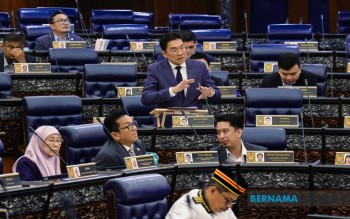
Malaysia is embarking on a comprehensive overhaul of its electric vehicle framework, with Deputy Investment, Trade and Industry Minister Sim Tze Tzin revealing that the government intends to streamline policies and incentives to speed up the maturation of the EV ecosystem. Speaking during parliamentary proceedings in Kuala Lumpur on July 8, Sim outlined an ambitious agenda that extends beyond vehicle incentives to tackle the fundamental infrastructure challenges constraining widespread adoption across the nation.
The crux of the government's strategy rests on a critical realisation: charging facilities cannot operate without adequate electrical infrastructure. This has prompted authorities to work closely with Tenaga Nasional Bhd, the country's primary power utility, to construct additional substations that will supply the necessary electrical capacity for a proliferating network of public and private charging points. The collaboration highlights how EV adoption in Malaysia has shifted from a purely automotive policy matter into a broader infrastructure challenge requiring coordination across multiple sectors and stakeholders.
Recognising that infrastructure investments alone are insufficient, the government is simultaneously exploring financial incentives for charging facility operators. Officials are engaged in discussions aimed at making it economically attractive for both private companies and entrepreneurs to invest in charging infrastructure, particularly in regions where commercial viability might otherwise be questionable. This dual approach—combining direct government investment in substations with market-based incentives for operators—reflects a pragmatic understanding that the EV transition cannot succeed through one mechanism alone.
Sim's parliamentary remarks came in response to questioning about the government's concrete steps to address what has become a critical bottleneck in EV adoption: the scarcity of publicly accessible charging facilities. The stark reality is that without a robust charging network, consumers remain reluctant to purchase electric vehicles, fearing limited options for maintaining their vehicles during daily use or long-distance travel. This chicken-and-egg problem—where EV uptake depends on charging availability, yet charging infrastructure requires sufficient EV adoption to be commercially viable—is precisely what the government is attempting to break through.
The initiative also connects to Malaysia's broader climate commitments, particularly the nation's pledge to achieve net-zero greenhouse gas emissions by 2050. EVs represent a cornerstone of this strategy, as transport accounts for a significant portion of Malaysia's carbon footprint. However, government officials acknowledge that progress requires time and cannot be rushed through policy pronouncements alone. The emphasis on improving implementation mechanisms suggests that previous initiatives may have fallen short, and that a more comprehensive, coordinated approach is necessary.
Parallel to infrastructure expansion, the government is also refining the regulatory framework governing EV imports, particularly regarding requirements imposed on completely built-up (CBU) vehicles. A minimum cost, insurance and freight (CIF) value of RM200,000 and minimum power output of 180 kilowatts currently apply to imported EVs. These thresholds reflect a deliberate policy choice distinct from how Malaysia regulates internal combustion engine (ICE) vehicles, which have long been governed by engine capacity restrictions.
The rationale behind this differentiated approach lies in the vastly different industrial maturity levels of each sector. ICE vehicle policies have been entrenched for decades, with Malaysia's automotive industry built around established import restrictions and local assembly operations. EVs, conversely, represent an emerging sector where Malaysia still lacks substantial local manufacturing capacity. The government faces the simultaneous challenge of encouraging EV adoption among consumers while nurturing domestic assembly capabilities and supply chain development, ensuring Malaysia becomes a production hub rather than merely a consumption market.
Tax structure differences further complicate the regulatory landscape. EVs currently face an excise duty rate of only 10 per cent, substantially lower than the graduated rates applied to ICE vehicles, which depend on engine capacity and localisation level. This preferential treatment aims to make electric vehicles more affordable for Malaysian consumers. However, the lower duty rate creates vulnerability to tax evasion through under-declaration of import values, a problem that straight-forward enough to prevent through regulatory mechanisms.
Setting minimum CIF values emerges as a practical solution to this challenge. By establishing a floor below which EVs cannot be officially imported, authorities reduce opportunities for traders to artificially declare lower values and correspondingly lower tax assessments. This mechanism protects government revenue while simultaneously pursuing the policy objective of promoting EV adoption through tax incentives. It represents a nuanced balancing act: making EVs attractive through reduced duties without sacrificing fiscal integrity or creating loopholes that undermine the tax base.
For Malaysian consumers, the confluence of lower excise duties, infrastructure expansion, and operator incentives should theoretically translate into more affordable vehicle options and greater confidence in purchasing decisions. The commitment to developing the entire ecosystem signals that policymakers recognise that successful EV transitions depend on comprehensive approaches rather than isolated measures. This integrated framework—spanning tax policy, infrastructure investment, industrial development, and regulatory governance—positions Malaysia to potentially emerge as a Southeast Asian leader in electric vehicle adoption.
However, the timeline remains uncertain. Sim's acknowledgement that the process requires time suggests a gradualist approach rather than sudden transformation. Implementation challenges will likely emerge as various agencies and private stakeholders navigate the complex coordination required. The success of these initiatives will ultimately depend on how effectively different government bodies, TNB, private operators, and consumers align around a shared vision of Malaysia's electrified transportation future.

