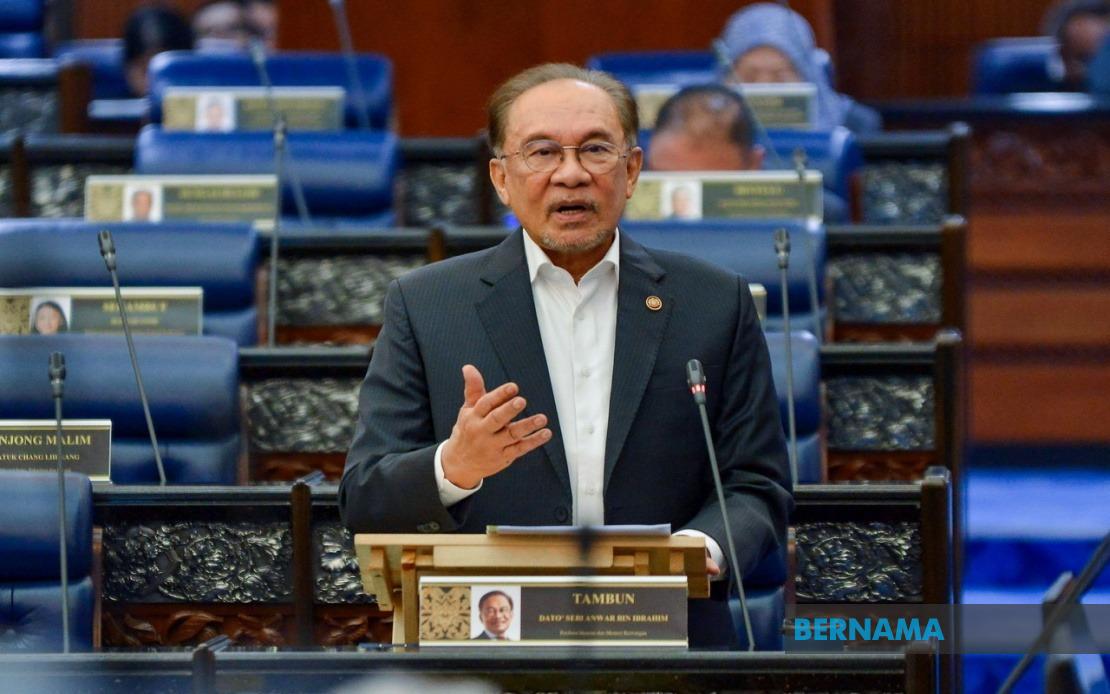
Malaysia will continue anchoring its approach to maritime boundary disputes in multilateral negotiation and the 1982 United Nations Convention on the Law of the Sea (UNCLOS), Prime Minister Datuk Seri Anwar Ibrahim declared on July 14, signalling the government's preference for sustained diplomatic engagement over confrontational postures. Speaking in parliament, Anwar emphasised that this framework—coupled with the International Maritime Organization's supporting role—provides the clearest available legal pathway for addressing contentious maritime claims across Southeast Asia.
While acknowledging the International Maritime Organization's importance in maritime governance, Anwar clarified that the IMO itself operates within the constraints of UNCLOS 1982, which supplies the convention text that binds all signatories. The Prime Minister's remarks underscored a nuanced reality: although UNCLOS furnishes universal principles governing maritime zones, territorial seas, and exclusive economic rights, the document's interpretation remains contested among states with competing strategic interests. This interpretative divergence, Anwar suggested, means UNCLOS alone cannot serve as a complete solution to every boundary dispute—a pragmatic acknowledgment that legal frameworks must be supplemented by political will and commercial incentives.
The South China Sea represents perhaps the most complex arena for this Malaysian approach. Anwar outlined how ASEAN member states have collectively agreed to use UNCLOS as the negotiating foundation while simultaneously working with China to develop a Code of Conduct (COC) designed to manage tensions and prevent unintended escalation. This dual-track strategy reflects the bloc's recognition that legal certainty and operational confidence-building measures must move in tandem. However, Anwar noted that discussions involving the Philippines present additional complications stemming from the unresolved Sabah territorial question—a separate historical claim that intersects with maritime boundary discussions and defies simple resolution through convention provisions alone.
Malaysia's diplomatic methodology, according to Anwar, prioritises repeated negotiating rounds over deadlock or withdrawal. When discussions reach an impasse, the Malaysian government prefers to adjourn and reconvene rather than allow disputes to harden into permanent confrontation. This patient, cyclical approach reflects a broader conviction that maritime neighbours must eventually coexist and cooperate, making the relationship's long-term health more valuable than tactical victories in individual boundary disputes. The philosophy stands in sharp contrast to more assertive regional postures that treat maritime claims as zero-sum competitions requiring military or administrative assertion.
Malaysia's experience with joint development mechanisms illustrates this cooperative premise in practice. Anwar highlighted the success of bilateral Joint Development Authorities with Thailand and Vietnam, where economic cooperation has proceeded despite unresolved sovereignty questions. In the Vietnamese case, Malaysia and Hanoi established a framework allowing both nations to develop disputed areas and share resulting benefits while each side maintained its legal claims without prejudice. This arrangement demonstrates that maritime disputes need not paralyse bilateral relations or prevent mutually beneficial resource extraction and commercial activity—a model potentially applicable to other boundary disagreements across the region.
The geographic scope of Malaysia's maritime challenges is substantial and multifaceted. Anwar identified active boundary issues involving six neighbouring countries: Brunei, Thailand, Indonesia, Singapore, the Philippines, and China. Each pairing presents distinct historical contexts, legal arguments, and geopolitical sensitivities requiring tailored diplomatic approaches rather than uniform solutions. The sheer number of overlapping claims underscores why Malaysia has consistently chosen diplomacy and sustained engagement as its primary risk-mitigation strategy, preferring managed uncertainty to escalatory tactics that could simultaneously inflame multiple bilateral relationships.
Progress on specific boundary negotiations varies considerably. Discussions with Brunei have advanced substantially, with resolution achievable on most points, though a limited number of areas involving the Sarawak state government remain contentious. Malaysia's internal federal structure—particularly the constitutional autonomy of Sabah and Sarawak—adds layers of complexity that foreign governments must navigate, requiring consultation with state leaderships alongside federal authorities. Talks with Indonesia similarly centre on Sabah-related maritime areas and proceed with careful input from the state government, recognising that regional sensitivities about sovereignty cannot be sidestepped by federal-level agreements alone.
The Straits of Malacca question, which prompted the parliamentary exchange, carries dimensions beyond bilateral boundary definition. As one of the world's most critical shipping corridors, the strait's security and management affect international commerce, energy supplies, and naval operations extending far beyond Malaysia's borders. Anwar's response implicitly acknowledged that while Malaysia possesses legitimate interests in defining its maritime domain, the international significance of waterways transiting its jurisdiction creates a broader constituency for stability. This recognition shapes Malaysia's preference for cooperative frameworks over unilateral assertion—a position that balances national interest with acknowledgment of global interdependencies.
Anwar's comprehensive parliamentary statement reflects a deliberate messaging strategy designed to reassure both neighbouring governments and international stakeholders that Malaysia will not abandon diplomatic channels in favour of military posturing or administrative pressure. For Malaysian regional partners, the message signals reliability and consistency in pursuit of boundary resolutions that do not threaten their own territorial integrity. For distant maritime powers with interests in Southeast Asian freedom of navigation, the statement provides comfort that Malaysia will not weaponise shipping routes or convert boundary disputes into broader geopolitical confrontations. The carefully calibrated tone balances firmness on Malaysia's sovereignty claims with demonstrated patience regarding their implementation.
The emphasis on UNCLOS and negotiation also reflects Malaysia's assessment that the international legal environment and power distributions favour sustained dialogue over military solutions. Unlike some regional actors pursuing island-building programmes or administrative assertions in disputed waters, Malaysia's approach relies on internationally recognised legal frameworks and the assumption that time favours resolution through cumulative agreements rather than dramatic unilateral moves. Whether this patient, institutionalised approach yields satisfactory boundary definitions within Malaysia's preferred timeframe remains an open question, but Anwar's parliamentary address confirms the government's commitment to this course regardless of diplomatic setbacks or negotiating delays.

