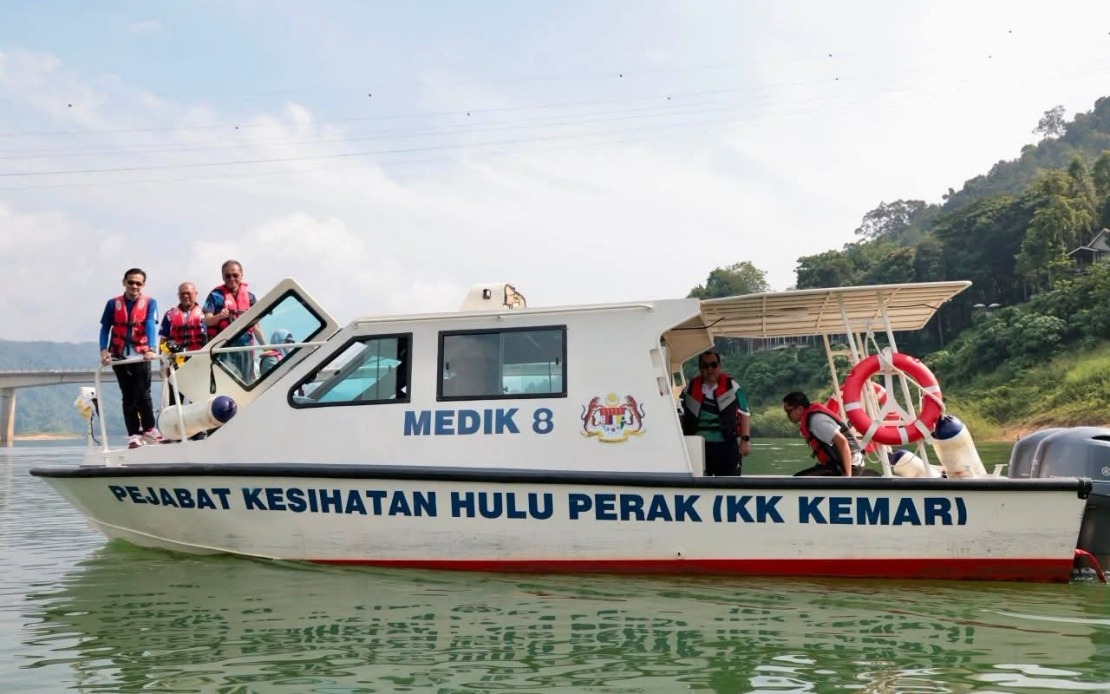
The Ministry of Health has taken a significant step toward equitable healthcare delivery by introducing Medic Boat 8, a RM350,000 vessel designed to improve medical access for indigenous communities in Hulu Perak. The 12-passenger multipurpose craft launched at Belum Rainforest Resort jetty represents a direct response to the unique challenges faced by Orang Asli populations living in river-dependent settlements, particularly those in the Kemar Resettlement Scheme near Gerik, where conventional road-based ambulance services prove inadequate.
The addition of this vessel expands the Ministry's existing operational fleet to seven boats, underscoring a growing commitment to address healthcare inequities in Malaysia's most geographically challenging regions. With more than 4,500 Orang Asli residents depending almost exclusively on waterways for transportation and access to essential services, the new boat service promises to substantially compress emergency response times that have historically plagued remote communities. Health Minister Datuk Seri Dr Dzulkefly Ahmad emphasised during the launch that sophisticated medical infrastructure cannot function without personnel willing to operate in demanding conditions, acknowledging the critical role of frontline workers in bridging the urban-rural healthcare divide.
The initiative reflects a deliberate policy direction aligned with Malaysia MADANI's principle that healthcare accessibility should transcend geographical limitations. Orang Asli communities in interior Perak face considerable barriers to medical care, where river currents and seasonal weather variations regularly isolate settlements from conventional healthcare networks. The challenges are particularly acute during monsoon periods when traditional transport routes become impassable and conditions deteriorate. By deploying dedicated medical boats, the government acknowledges that one-size-fits-all healthcare delivery models fundamentally fail indigenous populations living in hydraulically-connected environments.
The operational implications of this expansion deserve careful consideration. Adding a single vessel to service a population of 4,500 across sprawling river systems indicates that demand will likely exceed capacity during peak periods. Each boat carries twelve passengers, suggesting that non-emergency medical consultations and health promotion activities must be carefully scheduled to prevent backlogs that could exacerbate existing access problems. The Ministry's approach suggests recognition that healthcare in remote areas demands creative infrastructure solutions rather than conventional metropolitan assumptions about hospital proximity and road accessibility.
Human resource dimensions complement the infrastructure investment. Medical personnel operating these boats—including doctors, nurses, and boat operators—must possess specialised training in river navigation, emergency medical response in isolated settings, and the unique health profiles of Orang Asli populations. The Minister's public acknowledgment of these workers' commitment to operating in challenging environmental conditions signals organisational awareness that remote healthcare delivery requires exceptional professional dedication. Retaining such specialised staff in rural postings remains an ongoing challenge for Malaysia's health system, suggesting that career incentives and support mechanisms merit equal priority alongside equipment procurement.
For Southeast Asian context, Malaysia's approach to river-based healthcare delivery echoes strategies employed by neighbouring nations facing similar geographic constraints. Thailand, Indonesia, and Vietnam have each developed water-transport medical services in regions where riverine geography dominates settlement patterns. However, Malaysia's formalisation of these services within a national health ministry framework, complete with dedicated budgeting and equipment standardisation, represents a more institutionalised approach than many regional counterparts have achieved. This model may offer valuable lessons for other developing democracies managing indigenous healthcare access across diverse topographies.
The Orang Asli populations served by these vessels represent approximately 0.4 percent of Malaysia's total population, yet their health outcomes have historically lagged national indicators across multiple domains including maternal mortality, communicable disease prevalence, and treatment of chronic conditions. The healthcare access barriers in Hulu Perak exemplify systemic inequities that conventional policy responses have struggled to address. By directly investing in transportation infrastructure specifically designed for waterborne populations, the Ministry tackles a root cause rather than merely treating symptoms of delayed care delivery.
Sustainability considerations warrant attention as implementation proceeds. Medical boats require regular maintenance, specialist fuel supplies, trained operators, and coordination with shore-based health facilities. The RM350,000 capital investment in Medic Boat 8 represents acquisition costs only; ongoing operational expenditure for fuel, maintenance, staffing, and spare parts must be secured through recurrent budgets. Long-term commitment to these services depends on maintaining political will and budget allocation priorities across government cycles, a challenge that has historically undermined innovative health initiatives in rural Malaysia.
The geographic specificity of this intervention highlights how health system planning must accommodate Malaysia's remarkable diversity of settlement patterns. From high-density urban areas served by integrated hospital networks to maritime communities dependent on coastal transport and interior populations using river systems, no single healthcare delivery model suffices. The deployment of Medic Boat 8 acknowledges this reality explicitly, treating waterborne access as a legitimate healthcare infrastructure category deserving dedicated resources. As Malaysia pursues universal health coverage objectives, similar creative adaptations across other geographies—whether island communities, highland settlements, or other isolated populations—will increasingly determine whether equity commitments translate into measurable improvements in health outcomes.
Looking forward, the Ministry's river healthcare expansion invites examination of whether similar dedicated services should extend to other underserved populations and regions. While Hulu Perak's Orang Asli communities benefit from this intervention, numerous other indigenous and marginalised populations face comparable access challenges. Scaling successful models while maintaining service quality and financial sustainability represents the next frontier for health equity policy in Malaysia.

