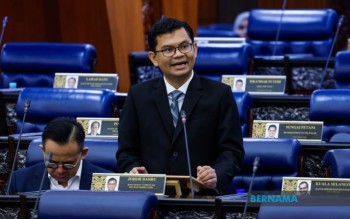
The Malaysian government is deploying a comprehensive 120-point intervention strategy to shield the nation's economy from the ongoing global supply crisis, Economy Minister Akmal Nasrullah Mohd Nasir announced in Parliament this week. Speaking before members of the Dewan Rakyat, he outlined the scale and scope of the National Economic Action Council's (MTEN) response, detailing how the government is balancing immediate relief measures with longer-term structural adjustments. Of the total decisions, 27 have already been fully implemented, while the remaining 93 are currently in various stages of execution, signalling an accelerating pace of intervention across multiple economic sectors and policy domains.
The breadth of this response reflects the government's assessment that supply chain disruptions represent a prolonged challenge rather than a temporary shock. Rather than waiting passively for global conditions to normalise—a process that could take years—the administration has adopted what officials describe as a realistic, data-driven approach grounded in ongoing monitoring and adaptive management. This stance acknowledges the interconnected nature of modern supply networks and recognises that Malaysia, as a trade-dependent economy deeply embedded in regional and global value chains, cannot insulate itself from international turbulence simply through policy declarations. Instead, the focus is on building resilience, protecting vulnerable sectors, and minimising the spillover effects on ordinary Malaysians and the business community.
The interventions are specifically designed to address three interconnected concerns: the immediate impact on households and small businesses, the continuity of essential goods supply, and the broader preservation of macroeconomic stability. Micro, small and medium enterprises, which form the backbone of Malaysia's employment and entrepreneurial ecosystem, face particular vulnerability during supply disruptions because they often lack the financial buffers and alternative sourcing networks available to larger corporations. By targeting MSMEs alongside direct public support, the government is attempting to prevent supply shocks from triggering a secondary wave of business failures and job losses. Energy security remains a central preoccupation, given its foundational role in manufacturing, transportation and utilities.
According to the minister's parliamentary briefing, energy markets are projected to stabilise gradually beginning in the third quarter of 2026, contingent on two critical variables: geopolitical stability and the normalisation of major maritime trade routes. This timeline reveals an implicit acknowledgment that current geopolitical tensions—whether in the Middle East, Eastern Europe, or the South China Sea—continue to disrupt predictable energy flows and elevate shipping costs and delivery times. Even after the middle of next year, however, the government anticipates that uncertainty surrounding energy prices and supply will persist for another one to two years, suggesting officials view the 2024-2028 period as a transition zone requiring sustained vigilance and policy flexibility rather than a return to pre-disruption normality.
The minister's emphasis on transparency and stakeholder collaboration underscores a shift in how the government frames its economic stewardship during turbulent periods. By regularly communicating with Parliament, sharing information with the public as situations evolve, and soliciting cooperation from businesses, civil society and labour organisations, the administration appears intent on building broad-based confidence rather than relying solely on top-down directives. This inclusive framing is particularly relevant for Malaysia, where consumer and investor sentiment significantly influence spending and capital allocation decisions. If the public perceives government management as opaque, panic-driven or improvised, confidence can erode rapidly, potentially amplifying the crisis's economic impact through self-fulfilling prophecy effects.
From a regional perspective, Malaysia's proactive supply-chain strategy carries implications for its neighbouring economies and trading partners. As a major player in semiconductor manufacturing, palm oil production, petrochemicals and electronics assembly, Malaysia's ability to maintain stable supply flows directly affects supply chains throughout Southeast Asia and beyond. A Malaysian supply disruption could cascade across the region, affecting Thailand's automotive sector, Vietnam's electronics exports and Indonesia's integrated manufacturing networks. Conversely, successful mitigation helps stabilise the broader regional economy and preserves Malaysia's competitive position as a reliable supplier during a period when supply reliability has become a strategic asset.
The government's characterisation of its approach as simultaneously vigilant, realistic, and proactive reflects an attempt to navigate between complacency and alarmism. Complacency risks allowing problems to fester until they become crises; alarmism risks undermining confidence and triggering unnecessary economic contraction through reduced spending and investment. The minister's language suggests policymakers are conscious of these opposing dangers and attempting to calibrate messaging and intervention intensity accordingly. This balancing act will test the credibility of government institutions, particularly MTEN and the relevant implementing agencies, which must demonstrate both competence in execution and transparency in reporting progress and challenges.
The data-driven emphasis in the government's stated approach is noteworthy given Malaysia's historical reliance on more discretionary, political interventions in economic management. By anchoring policy in quantifiable metrics, established decision-making processes and structured monitoring mechanisms, officials are signalling a commitment to governance standards expected by international investors and rating agencies. For a country whose credit ratings and borrowing costs are sensitive to perceptions of policy consistency and institutional effectiveness, this framing matters considerably. It also provides a framework for evaluating policy success or failure beyond political rhetoric.
Looking forward, the success of Malaysia's 120-measure response will likely hinge on three factors: the actual pace of implementation relative to stated timelines, the effectiveness of inter-agency coordination across MTEN's various mandates, and the government's ability to adjust course if global conditions deteriorate unexpectedly. Supply chain crises have historically exposed inefficiencies in government bureaucracies and highlighted gaps between policy announcement and operational delivery. Malaysia's track record here will shape both immediate economic outcomes and longer-term investor confidence in the country's crisis management capabilities.

