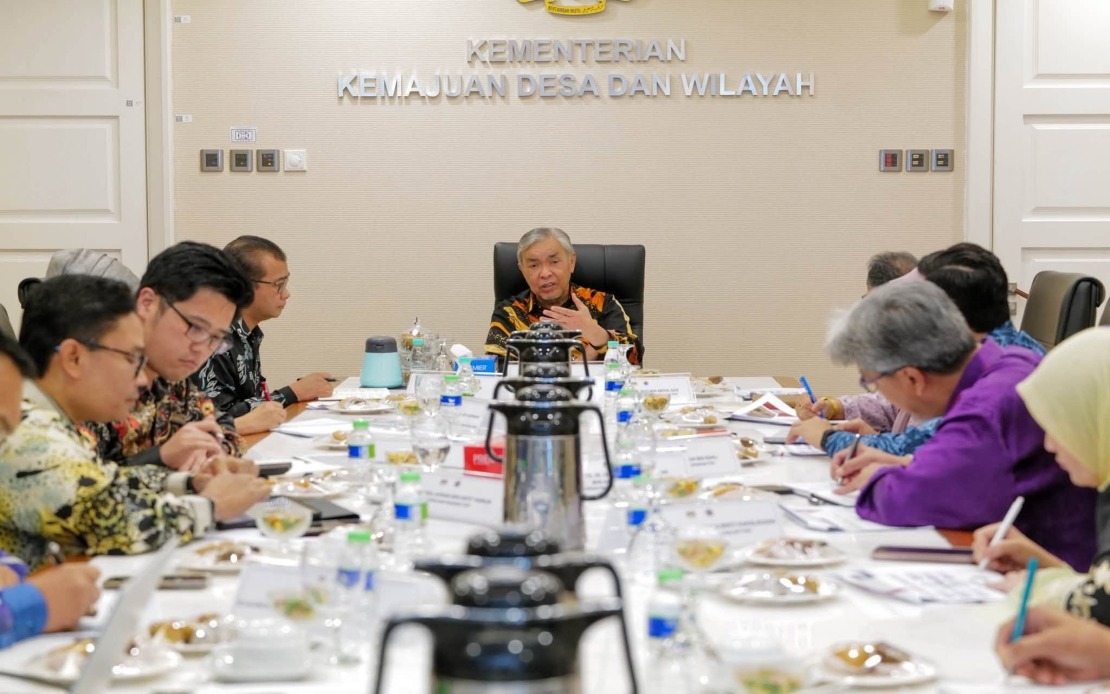
Deputy Prime Minister Datuk Seri Dr Ahmad Zahid Hamidi has announced the establishment of a comprehensive governance structure designed to modernize Malaysia's Technical and Vocational Education and Training sector through 2035, marking a significant pivot in how the country approaches skills development and workforce preparation. The Strategic TVET 2.0 Task Force, supported by ten thematic committees, represents an institutional commitment to making vocational pathways more responsive to industry requirements and economic shifts that will shape the next decade.
The task force initiative underscores a fundamental recognition within government that Malaysia's traditional education system alone cannot adequately prepare workers for a rapidly evolving economy. By establishing dedicated committees focused on specific dimensions—from governance reform to industry partnerships to financial sustainability—policymakers are attempting to address fragmentation that has historically plagued Malaysia's TVET ecosystem. The structure reflects international best practices where coordinated, multi-stakeholder approaches have proven more effective than siloed departmental efforts.
The Strategic TVET 2.0 Task Force is chaired by UCSI University president and vice-chancellor Emeritus Professor Datuk Dr Siti Hamisah Tapsir, whose academic background signals an emphasis on evidence-based policy development. This leadership choice contrasts with purely bureaucratic oversight, suggesting that strategic direction will be informed by higher education perspectives on labour market trends and pedagogical innovation. The composition of the broader committee structure similarly demonstrates intentional diversity, bringing together governance specialists, industry representatives, and advocates for traditionally underrepresented populations.
Among the ten committees, the TVET Governance and Institutional Reform Committee, chaired by Datuk Dr Asyraf Wajdi Dusuki, will address structural barriers that have long constrained the sector's development. This committee faces the substantial challenge of harmonizing standards across multiple training providers, many of which operate under different regulatory frameworks and funding mechanisms. Effective governance reform could unlock significant productivity gains by reducing duplication and improving progression pathways for students moving between institutions.
The TVET Industry and Employers Committee, helmed by Datuk Khairul Azwan Harun, tackles a perennial disconnect between classroom instruction and workplace requirements. Malaysian employers have consistently reported gaps between graduate competencies and job-ready skills, a dynamic that undermines both individual employment prospects and sectoral productivity. By formalizing employer engagement through dedicated committee structures, the framework creates mechanisms for continuous feedback that should theoretically improve curriculum relevance across all training levels.
Financial sustainability represents another critical dimension addressed through the TVET Financing and Sustainability Committee, chaired by Ramelle Ashram Ramli. TVET funding in Malaysia has historically fluctuated with government budget cycles, creating instability that deters both institutional investment and student commitment. A dedicated financing committee signals intent to develop more resilient funding models, potentially incorporating private sector contributions, industry levies, or alternative revenue mechanisms that reduce dependence on annual budgetary allocations.
The Women Empowerment in TVET Committee, chaired by Datuk Dr Masilla Kamalrudin, addresses a significant equity challenge within Malaysia's vocational landscape. Despite comprising roughly half the population, women remain underrepresented in many technical fields, reflecting both systemic barriers and societal perceptions about vocational work. This committee's explicit mandate suggests recognition that inclusive TVET policies are both ethically imperative and economically necessary, as Malaysia faces demographic headwinds that will require fuller participation across all population segments.
Ahmad Zahid, in his capacity as Minister of Rural and Regional Development alongside his chairmanship of the National TVET Council, positioned the TVET 2.0 framework as central to the MADANI government's human capital development strategy. This ministerial linkage between rural development and TVET is strategically significant, as many vocational training programmes serve rural populations lacking access to traditional university pathways. Regional development objectives and skills training become mutually reinforcing when properly integrated, as improved technical education in rural areas simultaneously addresses equity concerns and supports decentralized economic development.
The ten-year planning horizon through 2035 reflects realistic timeframes for systemic educational transformation, departing from shorter political cycles that have previously constrained long-term TVET strategy. This extended outlook permits substantial investment in institutional capacity building, curriculum redesign, and educator training—interventions that require multi-year implementation periods to generate measurable results. For Malaysia, which competes regionally with Singapore, South Korea, and increasingly Vietnam for skilled talent, a sustained decade-long commitment signals seriousness about maintaining competitive advantages in technical workforce development.
From a Southeast Asian perspective, Malaysia's TVET modernization carries regional implications as labour mobility within ASEAN increases. Skills standards and recognition frameworks developed through this strategic process could become templates for cross-border workforce certification, potentially enhancing Malaysia's position as a regional vocational education hub. The emphasis on industry responsiveness also aligns Malaysia with broader shifts toward competency-based training models gaining traction across advanced and upper-middle-income Asian economies.
The task force structure acknowledges that TVET transformation cannot succeed through government action alone. By institutionalizing roles for employers, educators, financing specialists, and equality advocates, the framework creates accountability mechanisms that transcend typical bureaucratic silos. Implementation effectiveness will depend substantially on whether these committees secure adequate resources, institutional autonomy, and political protection from electoral cycles that might otherwise undermine continuity.
Malaysia's TVET 2.0 initiative represents both continuity and departure from previous approaches. While vocational education has received policy attention for decades, the systematic coordination structure now in place, combined with explicit outcome orientation, signals a maturation of institutional thinking about how technical training drives broader economic competitiveness. Success will ultimately be measured not through committee structures themselves but through observable improvements in graduate employment rates, wage progression, and industry satisfaction—metrics that should anchor evaluation throughout the 2026-2035 implementation period.

