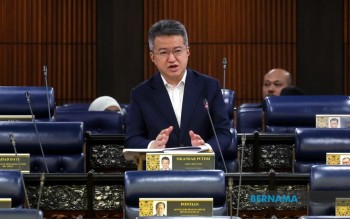
Malaysia has moved forward with establishing a National Trust Fund through legislation tabled in the Dewan Rakyat this week, marking a significant step toward creating a dedicated, long-term financial reserve designed to benefit both present and future generations of Malaysians. Deputy Finance Minister Liew Chin Tong introduced the National Trust Fund Bill 2026 for its first reading, with plans already underway for the second reading during the current parliamentary session. The framework seeks to create institutional discipline around how the nation manages and invests substantial portions of its resource wealth and government revenues, addressing long-standing concerns about intergenerational equity and fiscal sustainability.
The legislation establishes the National Trust Fund (KWAN) and creates a corporate entity, the National Trust Fund (Incorporated), to serve as the primary administrator responsible for all operations related to the fund's accumulation, management, and investment activities. This separation between the fund itself and its governing body follows international best practices seen in other sovereign wealth mechanisms across the region and globally. The institutional design aims to insulate investment decisions from short-term political pressures while maintaining appropriate government oversight through the Finance Ministry.
Central to the fund's financial architecture are three mandatory contribution streams from federal government sources. The government must allocate a minimum of 0.1 per cent of its projected annual revenue each financial year, establishing a baseline contribution that grows automatically as the economy expands. Additionally, the government commits to channelling at least two per cent of all dividends received from Petronas into the fund, tapping into one of Malaysia's most significant revenue sources. The third component captures a portion of non-renewable resource wealth through a requirement that no less than two per cent of export duties collected on depleting resources—after setting aside any state-level allocations—flow into the trust fund.
This multi-source funding model reflects a deliberate policy choice to bind the fund's growth to Malaysia's natural resource endowment and fiscal capacity. By linking contributions to Petronas dividends and resource export duties, the mechanism acknowledges that hydrocarbon revenues are finite and benefit from being preserved rather than consumed entirely in the present budget cycle. The 0.1 per cent threshold from general government revenue ensures that even as oil and gas production eventually declines, the fund receives ongoing contributions from the broader tax base, creating a more durable funding stream for the long term.
The bill incorporates transparency and accountability mechanisms requiring that all contributed amounts be recorded in the Federal Government's annual financial statement presented to parliament. This parliamentary visibility ensures that lawmakers can monitor whether contribution obligations are being met and track the fund's growth over time. The Finance Minister is granted discretionary authority to specify the precise implementation date through a gazette notification, allowing flexibility for coordination with other fiscal and administrative reforms.
State governments whose economies depend on petroleum or mineral extraction are invited to make voluntary contributions to the trust fund, creating potential partnership opportunities between federal and state authorities. This provision acknowledges the competitive advantages that resource-rich states possess while encouraging them to adopt the same long-term savings philosophy. Such participation could substantially expand the fund's capital base while fostering a shared commitment to intergenerational responsibility across Malaysia's federal system.
The governing board of the National Trust Fund (Incorporated) will be responsible for formulating a strategic asset allocation framework that charts the fund's long-term investment direction. This governance structure recognizes that a truly enduring fund requires explicit, documented investment strategies rather than ad-hoc decisions. The board's mandate encompasses not merely capital preservation but active investment management designed to generate returns that outpace inflation and expand the fund's real purchasing power across decades. Such an approach positions Malaysia's trust fund more as a growth vehicle than a simple piggy bank.
Administrative operations, including board member compensation, staff remuneration, and all costs associated with the fund's day-to-day management and investment activities, will be drawn from the fund itself. While this creates some drag on net returns, it ensures operational independence and removes the fund from annual appropriations politics. The legislation empowers the Finance Minister to demand comprehensive reporting on fund activities, assets, and returns, maintaining a crucial accountability link between the governing board and the elected government.
For Malaysian policymakers and observers, the trust fund represents an attempt to institutionalize fiscal discipline around resource wealth at a time when many developing economies struggle with the resource curse—the tendency for commodity-rich nations to underinvest surpluses and experience economic stagnation. The fund's establishment follows the model of successful sovereign wealth vehicles in Norway, Singapore, and the Gulf states, though Malaysia's approach incorporates mandatory contribution percentages rather than relying on discretionary appropriations. This rigidity has advantages and disadvantages; it guarantees funding but potentially constrains flexibility during economic downturns when governments face competing budget pressures.
The regional implications merit consideration as well. Malaysia's move toward institutionalized long-term saving may influence how other Southeast Asian resource producers approach their own sovereign wealth strategies. As the region collectively grapples with the challenges of transitioning away from hydrocarbon dependence while managing present-day development needs, mechanisms that preserve fiscal space for future generations become increasingly valuable. The success or failure of Malaysia's National Trust Fund could offer lessons for neighbors like Indonesia and Brunei contemplating their own long-term resource management frameworks.
Implementation challenges will determine whether this legislation achieves its intergenerational ambitions. The fund's effectiveness depends crucially on whether successive governments actually transfer the legislatively mandated contributions on schedule, whether investment returns meet or exceed projections, and whether political pressure to raid the fund during crises can be successfully resisted. The current parliamentary session will test whether the second reading proceeds smoothly, providing an early indication of whether the initiative enjoys broad multiparty support necessary for long-term credibility.

